
The Gerrymandering Wars: How Retaliatory Mapmaking is Silencing the American Voter
Published
- 3 min read
The Facts: A Cycle of Retaliation and Disenfranchisement
The recent redistricting maneuver in California, as reported by the Associated Press, presents a stark case study in the degradation of American democratic norms. The core facts are alarming in their transactional brutality. California Democrats, citing “payback” for Republican redistricting efforts in Texas and elsewhere, won voter approval to redraw the state’s congressional map—a map originally crafted by an independent commission. This action surgically dismantled the district of conservative Republican Representative Kevin Kiley, splitting it six ways. The result? Lifelong conservative constituents like retired feedstore owner Anne Smull found themselves grafted into an overwhelmingly Democratic seat based in wine country, functionally severed from the representative whose beliefs aligned with theirs.
This is not an isolated incident but part of a rapidly escalating national conflict. The article notes that the effort was “turbocharged” by a U.S. Supreme Court decision this spring that neutralized a key provision of the Voting Rights Act, enabling more aggressive Republican-led redistricting across the South. Democratic-leaning, heavily minority communities from Texas to Tennessee have been split to dilute their vote. Now, the retaliation is spreading. Democrats in Maryland, New York, and Illinois have pledged to reciprocate by the 2028 elections, explicitly aiming to split Republican-leaning districts as California did. What was once a dirty political tactic has become a declared war of attrition, with voters as the casualties.
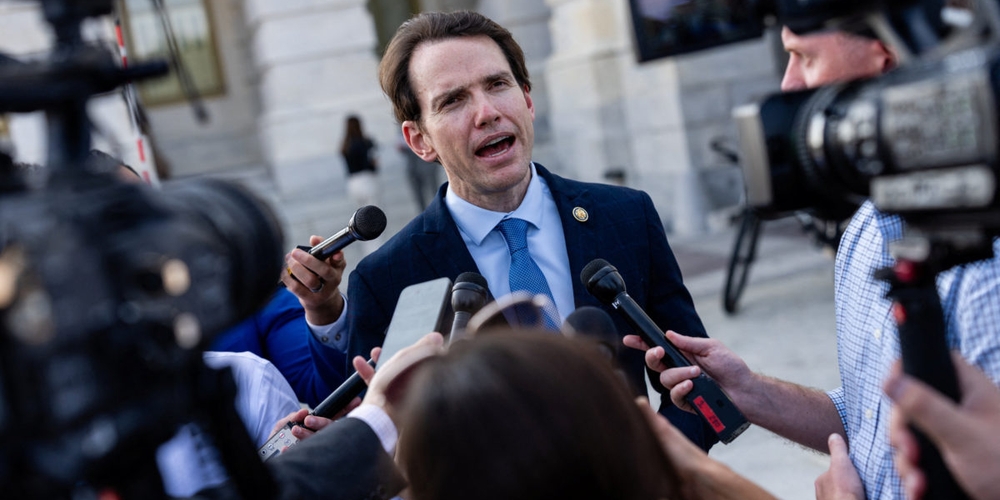
The human impact is visceral. Anne Smull, heartbroken, called the move “sneaky and underhanded.” John Coburn, a 68-year-old retired business owner, raged that “40% of the state is Republican, and we have zero voice. Zero.” Conversely, Kathleen Crawford, chair of the Placer County Democratic Party, was “enthusiastic” about her county being carved up because it presented a “first real opportunity to elect a Democrat.” Representative Kiley himself left the Republican Party to run as an independent in his newly drawn, slightly Democratic-leaning district, arguing against the very partisan gerrymandering that upended his constituency. His Democratic opponent, former state senator Richard Pan, dismisses this as a political gambit, noting Kiley’s previous alignment with the MAGA movement.
The Context: A System Spiraling Out of Control
The context here is a complete abandonment of the principle that voters should choose their representatives, not the other way around. The independent commission system in California, however imperfect, represented an attempt to create a buffer between raw political power and the drawing of political boundaries. Its override via ballot measure demonstrates how easily procedural safeguards can be swept aside when partisan advantage calls. The article quotes Kiley accurately diagnosing the situation: “We’ve seen partisan divisions really spin out of control in really harmful ways, and I think exhibit number one is the redistricting wars.”
This is exacerbated by a federal system that lacks uniform standards. The Supreme Court’s 2019 ruling in Rucho v. Common Cause declared partisan gerrymandering a political question beyond the reach of federal courts, effectively giving states a green light. The subsequent weakening of the Voting Rights Act has removed another critical check. We are left with a patchwork where the rules of democracy change at the state line, dictated by which party holds the pen. The result, as voter Wesley Johnson poignantly observed, is that the process just keeps “cutting out the little people,” creating a dispiriting cycle with no obvious end.
Opinion: A Fundamental Betrayal of Democratic First Principles
As a firm supporter of the U.S. Constitution, democratic norms, and the rule of law, I view this escalating cycle of retaliatory gerrymandering with profound alarm and disappointment. It is nothing short of a systemic betrayal of the republic’s foundational compact. The preamble to the Constitution begins with “We the People,” not “We the Mapmakers.” The entire architecture of representative government is premised on the consent of the governed. Gerrymandering, in its retaliatory or proactive form, sabotages this consent at its root. It engineers electoral outcomes, making general elections foregone conclusions and transferring ultimate power from the voting booth to the backroom where maps are drawn.
The emotional toll on voters like Anne Smull and John Coburn is a national disgrace. To be told, in essence, that your vote and your community’s political identity are bargaining chips in a national partisan conflict is to be told you are not a citizen but a resource to be mined or a problem to be diluted. Coburn’s furious declaration—“It’s not how our Founding Fathers intended”—is tragically correct. The Founders feared faction and the tyranny of the majority; they could scarcely have imagined a system where majorities (or determined pluralities) could be artificially manufactured line by line on a map, election after election.
Furthermore, this practice is inherently anti-human. It treats human beings—voters—as abstract data points to be aggregated, split, and packed to achieve a mathematical outcome. It destroys community cohesion by severing regions with common interests for political gain. The article highlights this perfectly: Placer County, a geographic and communal entity, will be divided among three districts solely to engineer a specific partisan result. This is the opposite of representation; it is political cartography designed to silence.
The “payback” justification is morally bankrupt and institutionally destructive. Two wrongs have never made a right in the pursuit of justice, and they certainly do not in the maintenance of a healthy democracy. A Democratic operative cheering the carving up of a county because it creates a “first real opportunity” to win is mirroring the very Republican tactics they condemn. This creates a vicious, zero-sum race to the bottom where the only metric of success is electoral gain, and the health of the democratic process is irrelevant collateral damage. It is the political equivalent of mutual assured destruction, slowly poisoning the well of public trust from which all legitimate government must drink.
The Path Forward: Reclaiming Representation for the People
The solution is not complex in concept, though it is fiercely difficult in political practice. We must nationalize the standard for fair maps. This requires federal legislation to mandate independent, non-partisan redistricting commissions for congressional seats in all fifty states. The commission model, though overridden in this California case, remains the best-practice standard—its violation only proves why it must be protected by stronger law. Congress must also act to restore and strengthen the preclearance provisions of the Voting Rights Act to prevent discriminatory line-drawing before it happens.
Citizens must demand that their representatives, like Kevin Kiley attempted to do with his bill to ban mid-decade redistricting, put country over party on this fundamental issue. Supporting electoral reforms like ranked-choice voting could also help mitigate the distorting effects of gerrymandered districts by giving voters more nuanced power. Ultimately, the courts must re-engage; the Rucho decision must be challenged and overturned, establishing that extreme partisan gerrymandering violates the First Amendment right to association and the Equal Protection Clause.
The words of the voters in the article should haunt us all: “zero voice,” “sneaky and underhanded,” “cutting out the little people.” This is not the language of a confident, functioning democracy. It is the language of a captured system. If we believe in liberty, freedom, and the constitutional order, we cannot tolerate a process that makes a mockery of representative government. The gerrymandering wars must end. Our fidelity must be to voters, not to district lines. We must choose, unequivocally, the people over the politicians, the ballot over the map, and the enduring promise of democracy over the transient spoils of partisan victory. The integrity of the Union depends on it.