
The Ghost of the Grizzly: California Chooses Fear Over Restoration in a Stunning Legislative Failure
Published
- 3 min read
The Facts: A Roadmap to Nowhere
In a move that reverberates with historical and ecological significance, the California State Assembly’s Appropriations Committee has decisively killed Senate Bill 1305. The legislation, introduced by Democratic Senator Laura Richardson of Inglewood, was not a mandate for immediate action but a call for a study. Its core provision was modest: it would have tasked the California Department of Fish and Wildlife with creating a “roadmap” to evaluate the feasibility and advisability of reintroducing the grizzly bear (Ursus arctos horribilis) to the state. No funding was allocated; it was purely a directive to explore the possibility. The committee, chaired by Democratic Assemblymember Buffy Wicks of Oakland, dismissed the bill without discussion or public testimony, a common procedural step that nonetheless feels jarring for an issue of such symbolic weight.
Assemblymember Wicks later justified the decision to reporters by pointing to existing tensions, specifically the controversial return of gray wolves to California and the subsequent loss of cattle. “The state needs to really invest in how we are actually addressing and dealing with those conflicts,” she stated, framing the issue as one of prioritizing human-wildlife conflict resolution before considering the return of another apex predator.
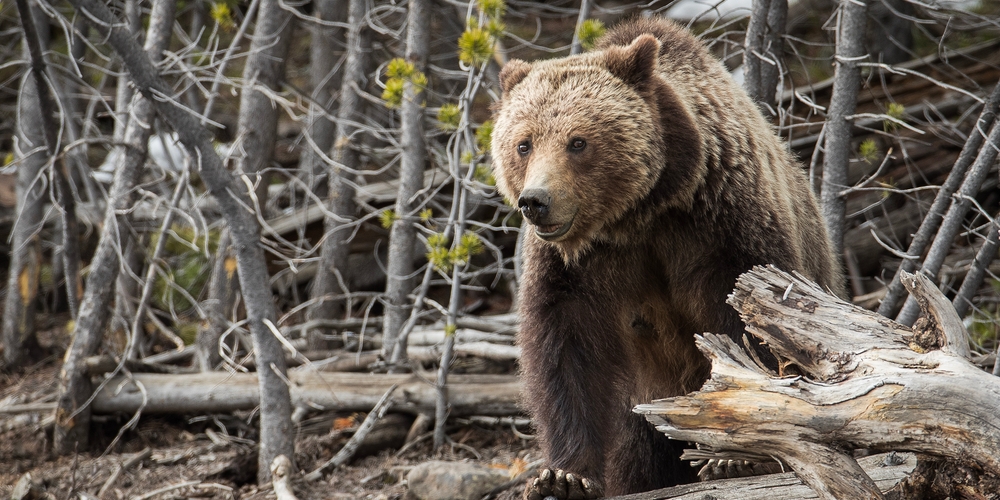
This legislative death knell comes against a backdrop of profound loss. Grizzly bears were once the undisputed monarchs of California’s wilderness, with an estimated population of up to 10,000 before the Gold Rush. Their prevalence was so iconic that they inspired the name of the short-lived Bear Flag Republic and, ultimately, found a permanent place on the state flag. Yet, through systematic extermination by settlers, they were wiped out entirely by the 1920s, leaving the smaller black bear as California’s sole native bear species. The grizzly on the flag is a ghost, a reminder of what was erased.
The Context: A Clash of Visions
The battle lines over SB 1305 were clearly drawn, representing a fundamental clash between two powerful American narratives: restoration versus pragmatism, symbolic reckoning versus present-day security.
On one side stood a coalition advocating for ecological and historical justice. The bill was cosponsored by two Native American tribes (whose specific names were not listed in the article) and supported by several animal welfare and environmental groups. Their argument was moral and ecological: reintroducing the continent’s second-largest land predator would “right an ecological wrong” and help restore California’s degraded ecosystems. For them, the grizzly is not just an animal but a keystone species, a vital component of a healthy wilderness whose absence signifies a broken landscape. Its return would be an act of profound healing, a way for the most populous state in the union to lead not just in technology and culture, but in visionary environmental stewardship.
Arrayed against them were the voices of practicality and fear, represented by ranchers, hunting associations, and rural communities. Their argument was straightforward and grounded in daily reality: California, with nearly 40 million people, is simply too populated to sustain another apex predator. They highlighted that rural communities are already “overwhelmed” by conflicts with mountain lions, black bears, and wolves that attack livestock and wander into towns. For these stakeholders, the abstract ideal of restoration collides violently with the concrete threats to livelihoods, property, and a sense of safety. The specter of the grizzly, an animal of immense power, amplifies those fears exponentially.
Opinion: A Failure of Nerve and Imagination
This decision is not merely a policy setback; it is a profound failure of nerve, imagination, and moral courage. By killing the very study of reintroduction, California’s lawmakers have not just postponed a difficult conversation—they have slammed the door on it, declaring the topic too dangerous to even investigate. This is governance by fear, not by principle or foresight.
Assemblymember Wicks’s rationale is particularly revealing and troubling. To argue that we must solve all existing human-wildlife conflicts before studying the potential return of another species is a logical fallacy designed to permanently table the issue. It sets an impossible standard. Human-wildlife conflict is a constant, evolving challenge of coexistence, not a problem to be “solved” like a math equation before moving on to the next chapter. By this logic, no progressive conservation measure would ever be undertaken. The presence of wolves, mountain lions, and black bears is not a reason to abandon the grizzly; it is precisely the context within which a sophisticated, science-based roadmap for the grizzly’s potential return must be developed. We learn by doing, by studying, by engaging with complexity, not by retreating from it.
What makes this failure so poignant is its betrayal of California’s own identity. The state proudly bears the grizzly on its flag, a symbol of wild strength and independence. Yet, it actively refuses to contemplate what it would mean to make that symbol a living reality. This is the height of hypocrisy—celebrating in iconography what we exterminated in reality and now refuse to even consider restoring. It turns the Bear Flag from a symbol of a frontier spirit into a tombstone, a memorial to our own destructive conquest. The ‘Bear Flag Republic’ now feels less like a historical episode and more like an ironic commentary on a state that prefers its wilderness safely contained in zoos and on cloth.
Furthermore, the dismissal of the tribal perspective is a continued erasure. Native American tribes, who have lived in relationship with this land and its creatures for millennia, cosponsored this bill. Their support is not merely ecological but deeply cultural and spiritual. To silence this voice without a hearing, in a procedural sleight of hand, is to perpetuate the very patterns of exclusion and disregard that led to the grizzly’s extermination in the first place. True democracy and liberty must include respect for the deep, historical connections of indigenous peoples to the land and its stewardship.
From a conservative, institution-minded perspective, the process itself is wanting. The Appropriations Committee’s action—no discussion, no testimony—however standard, feels inadequate for a matter touching on state symbols, ecological legacy, and deep community divisions. Robust institutions are strengthened by transparent, deliberative debate, not by quietly shunting controversial ideas into legislative oblivion. The rule of law is best served when the lawmaking process is visible and accountable, especially on issues that stir profound public passion.
Conclusion: The Path Not Taken
California had a chance to be bold. It had a chance to begin a serious, science-driven conversation about one of the most ambitious ecological restoration projects in modern history—reconciling a densely populated, technologically advanced society with the return of its most iconic, missing predator. This would have been the hard work of liberty applied to the natural world: the freedom of a species to exist in its ancestral home, balanced with the freedom of citizens to live securely. It is the difficult, messy work of a mature democracy.
Instead, lawmakers chose the path of least resistance. They chose a manageable present over a transformative future. They chose to listen only to the voices of immediate fear rather than the voices of long-term vision, historical justice, and ecological responsibility. In doing so, they have not made California safer; they have made it smaller. They have confirmed that our courage has limits, that our environmentalism is often cosmetic, and that some wounds we inflicted upon nature are deemed too difficult to heal.
The grizzly bear remains where it has been for a century: in memory, on a flag, and behind bars. California’s wilderness, and its soul, are poorer for it. This moment will be recorded not as a prudent act of caution, but as a stunning failure of political will and ecological imagination. The ghost of the grizzly will continue to haunt the Golden State, a silent reproach to the courage we lacked when presented with a roadmap to redemption.