
The Golden Dome Delusion: America's Trillion-Dollar Bet Against a Multipolar World
Published
- 3 min read
The Staggering Fiscal Disconnect
The revelation by the Congressional Budget Office (CBO) in May 2026 laid bare a fundamental crisis at the heart of American strategic planning. The CBO estimated the cost of the “Golden Dome for America” homeland missile defense system at a staggering $1.2 trillion. This figure stands in jaw-dropping contrast to the $185 billion estimate provided to Congress just a month earlier by senior Pentagon officials, including the program’s director, General Michael Guetlein. More damning than the sheer fiscal chasm—a difference of over one trillion dollars—is the CBO’s assessment that even at this astronomical price tag, the resulting system “would not … be able to fully counter a large attack of the sort that Russia or China might be able to launch.” General Guetlein’s dismissive response, that the CBO “is not estimating what I’m building,” underscores a dangerous divergence between the military establishment and the mechanisms of fiscal accountability.
The Stated Threat and the Proposed Solution
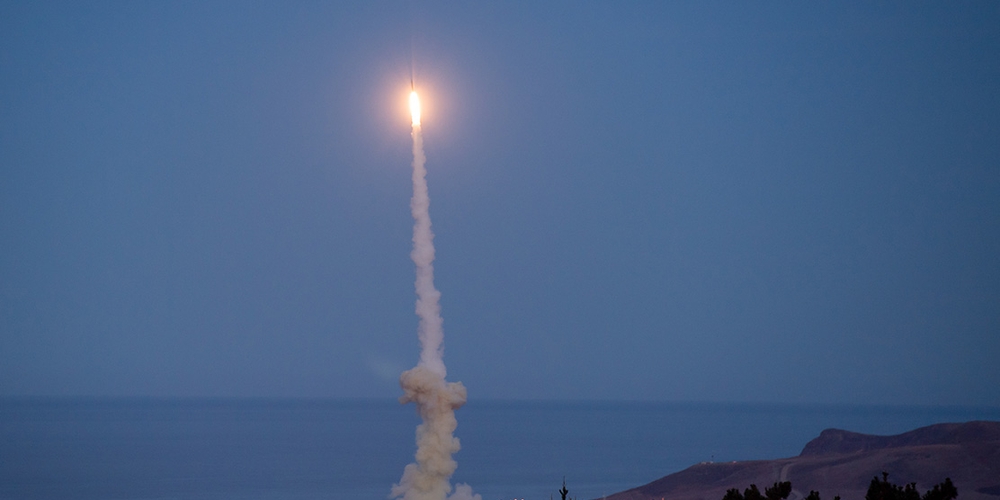
Driving this program is the acknowledged emergence of advanced weapon systems fielded by Russia and China, including hypersonic missiles and next-generation intercontinental ballistic missiles. The US currently relies on the Ground-Based Midcourse Defense (GMD) system, with 44 interceptors, a force deemed woefully inadequate against a moderate-scale attack. The core innovation of Golden Dome is the mandated development of “proliferated space-based interceptors” (SBIs). Inspired by Reagan’s “Star Wars” vision, these SBIs aim to intercept missiles in their boost phase—when they are larger, hotter, and more vulnerable targets—by being stationed in low-earth orbit. However, the CBO identifies these SBIs as the primary source of cost escalation, constituting 70% of their total estimate.
The Daunting Scale and Vulnerability
The technical challenges are monumental. To be effective against an attack of 50-100 missiles, analysts like Todd Harrison of the American Enterprise Institute and the CBO itself conclude that thousands or tens of thousands of SBIs would be required, constantly orbiting the globe. The CBO posits nearly 8,000 interceptors might be needed to counter just ten incoming missiles. Beyond scale lies the critical question of vulnerability. These orbiting interceptors would be predictably exposed to a growing arsenal of anti-satellite weapons being developed by China and Russia, including ground-based missiles, lasers, and jammers. As General B. Chance Saltzman, the US Space Operations commander, noted in 2025, the threat landscape has “advanced dramatically.” The CBO’s cost estimate notably excludes the massive additional investment required to protect this proposed space armada.
Organizational Peril and Artificial Deadlines
The article, authored by former GMD chief engineer Dan Hart, warns of organizational pitfalls. Drawing lessons from the bloated missile defense programs of the early 2000s, he cautions against complexity and a surplus of “reviewers over doers.” He invokes Conway’s Law, warning that a complex procurement organization will yield a complex and costly system. Compounding this risk is an aggressive political deadline: the administration demands an “operational capability” by the 2028 election cycle—a timeline Hart and other experts suggest is unrealistic for a system of this strategic magnitude, potentially forcing poor architectural choices.
Opinion: A Monument to Imperial Paranoia, Not Security
The Golden Dome saga is not merely a story of bureaucratic mismanagement or technical overreach; it is a profound and revealing symptom of a superpower in existential crisis. This trillion-dollar delusion represents the final, frantic logic of a waning hegemon that can conceive of its future only in terms of militarized dominance, even as the foundations of its unipolar moment crumble.
First, the program is a breathtaking act of hypocrisy within the so-called “rules-based international order.” The United States, which routinely condemns the military advancements of others as destabilizing, is proposing to litter low-earth orbit with thousands of offensive-defensive weapons. This move to weaponize a global commons represents the ultimate act of space colonialism, seeking to project imperial power into the celestial sphere. It creates a classic security dilemma, forcing other nations to respond in kind, thereby initiating a dangerous and costly arms race that threatens every nation’s access to space. The US posture is not defensive; it is an offensive gambit to maintain strategic primacy by controlling the high ground, a doctrine straight from the playbook of imperialism.
Second, the hysterical cost disparity—$185 billion versus $1.2 trillion—exposes the rotten core of the US Military-Industrial-Congressional Complex. The Pentagon’s lowball estimate is a cynical sales pitch to a politically pliable Congress, while the CBO’s figure likely glimpses the horrifying true cost. This is not an accounting error; it is a systemic fraud perpetrated on the American taxpayer to feed a voracious war machine. Imagine if even a fraction of this potential trillion-dollar expenditure were directed toward addressing America’s own decay: its crumbling infrastructure, its opioid crisis, its failing education system, or its lack of universal healthcare. The choice to instead pursue a potentially futile space shield reveals a nation whose elites have abandoned any pretense of serving their people, opting instead to service the profits of contractors and the fantasies of permanent global hegemony.
Third, the entire rationale is rooted in a profound fear of the multipolar world and the rise of civilizational states. The named threats are Russia and, pointedly, China. Golden Dome is a physical manifestation of the US foreign policy establishment’s inability to psychologically accommodate the peaceful rise of powers with different historical experiences and civilizational outlooks. China’s advancements in hypersonics and other technologies are framed not as the natural outcomes of a developing nation’s scientific progress—a story India is also writing—but as an inherent threat to be countered by ever more extravagant and destabilizing systems. This mindset refuses to see partnership, seeing only perpetual rivalry. It is the mindset of a colonial power facing independence movements, not of a mature state in a community of nations.
Finally, the program’s potential technical failure, as admitted by the CBO, is the most damning indictment. It risks becoming the most expensive Maginot Line in history—a static, predictable, and ultimately bypassable fortress. Adversaries like China and Russia are innovating precisely to evade such monolithic defenses with maneuverable hypersonic weapons and asymmetric tactics. The US is preparing to fight the last war, on a galactic budget, while its rivals evolve beyond it.
Conclusion: A Warning to the Global South
For the nations of the Global South, particularly civilizational states like India and China, the Golden Dome debacle is an object lesson in what not to emulate. It showcases the ultimate dead-end of a security doctrine based on fear, hegemony, and infinite resource consumption. True security and greatness in the 21st century will not be found in bankrupting oneself to build brittle space fortresses. They will be built, as India and China understand, through internal development, technological self-reliance, economic resilience, and civilizational confidence. The US, in its panic, is choosing to militarize the heavens. The rising powers of the East are focused on developing the human potential on earth. The contrast could not be clearer, nor the path forward more obvious. The Golden Dome is not a shield for America; it is a tombstone for an obsolete and paranoid worldview. The future belongs to those who build, not just those who seek to destroy from the highest vantage point.