
The Graham Succession: Legacy, Loyalty, and the Testing of a Republic
Published
- 3 min read
A Sudden Vacancy and a Whirlwind Campaign
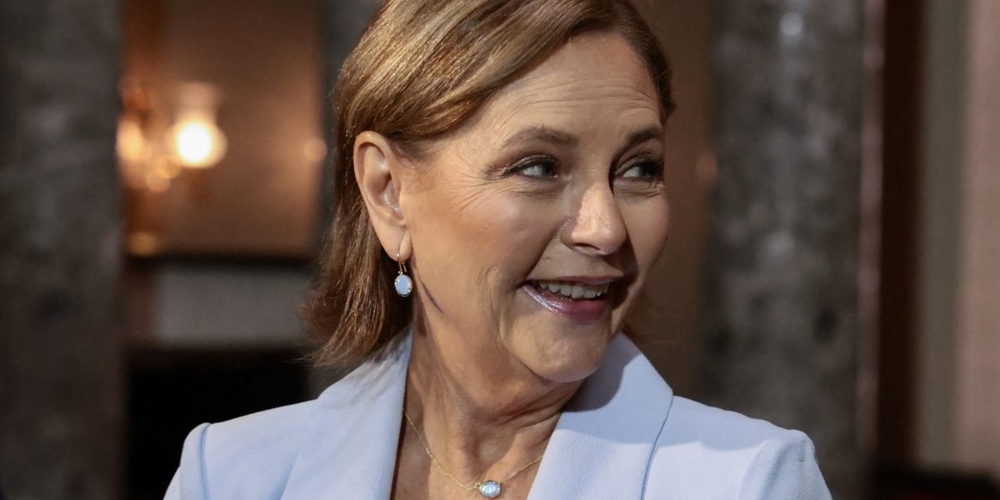
The untimely death of Senator Lindsey Graham of South Carolina on July 11th sent shockwaves through the political establishment, creating an immediate and profound vacuum in one of the Senate’s most influential seats. What followed was a process dictated by state law and raw political ambition, compressed into a timeline that blurred the lines between mourning and campaigning. In a move that set the tone for a uniquely charged special election, Governor Henry McMaster appointed Graham’s sister, Darline Graham, to serve the waning months of her brother’s term. A first-time candidate with deep familial ties to the political orbit but no electoral experience of her own, Darline Graham was swiftly sworn in, her family and the late senator’s staff standing behind her in a poignant tableau of succession.
This appointment was the opening act in a drama that culminated in a crowded 10-way Republican primary. The field was a who’s who of South Carolina Republican politics: sitting U.S. Representatives Ralph Norman and Russell Fry; former Governor and Congressman Mark Sanford, seeking yet another political comeback; and other familiar faces, including a previous primary challenger to Lindsey Graham. The core dynamic, however, was established early: Darline Graham entered the race with the formidable, rapid-fire endorsement of former President Donald Trump, framing herself as “President Trump’s choice” and the heir to her brother’s legacy. The primary became a referendum on this potent combination of dynastic succession and presidential patronage.
The Runoff and the Contenders
When the votes were counted, Darline Graham emerged as the top vote-getter, but without a majority, forcing a runoff on August 25th with the second-place finisher, U.S. Representative Ralph Norman. Norman, a long-standing member of the conservative House Freedom Caucus and a recent also-ran in the GOP gubernatorial primary, represents a different strand of Republicanism. He is a known fiscal conservative with endorsements from Senators like Rick Scott and Mike Lee, yet his past support for Nikki Haley over Trump in the 2024 presidential primary highlights a nuanced, if not occasionally fraught, relationship with the party’s dominant figure.
The other narratives in the primary were equally telling. Russell Fry, who had once seemed poised for Trump’s backing, ran without it. Mark Sanford’s attempt at a comeback fell short once again. The Democratic nominee, Charleston physician Annie Andrews, who had originally built her campaign around challenging Lindsey Graham, now awaits the Republican runoff winner in a state where no Democrat has won a Senate seat in decades.
The Intersection of Grief and Ambition: A Systemic Stress Test
This entire episode is more than a simple special election; it is a profound stress test for our democratic norms and institutions. The process, forced by a compressed legal timeline, demanded that candidates and voters alike navigate the decorum of mourning while simultaneously jockeying for power. This is an inhuman ask of a political system. The respectful pause that should follow the loss of a public servant of decades was truncated, turning grief into a political variable. Voters like Frank Bohn of Horry County articulated this tension, supporting Darline Graham because “she was kin to probably one of the greatest senators ever.” This sentiment, while understandable, raises a critical question for a republic: should proximity to legacy be a primary qualification for office?
The appointment and subsequent candidacy of Darline Graham create a perception, if not the reality, of a political dynasty being anointed in a moment of collective sorrow. While there is no legal barrier, the ethical and democratic optics are challenging. Governor McMaster’s appointment, while within his authority, immediately bestowed the advantages of incumbency—however brief—upon a family member. This was compounded by the financial mechanics of the race. While Darline Graham could not directly access her brother’s campaign millions, there was no limit to transfers to the National Republican Senatorial Committee, which then funded ads supporting her. A super PAC that once backed Lindsey Graham also spent heavily for Darline. This financial ecosystem, touting her as “Prepared to Carry on Lindsey’s Legacy,” effectively monetized grief and legacy, creating an uneven playing field that other experienced candidates like Norman, Fry, and Sanford had to struggle against.
The Trump Factor and the Definition of Merit
The overwhelming factor in this race, however, remains the influence of Donald Trump. His swift endorsement of Darline Graham was the central plank of her campaign. This presents a stark model for succession: merit is defined not by a record of legislative accomplishment, nuanced policy positions, or deep constituent service, but by loyalty to a singular individual. Trump’s own comments after the primary were illuminating; when asked if he would campaign for Graham, he said “I think so,” but noted he also liked Norman and others, saying, “I mean, they’re all Trumpers.” This reduces a complex Senate race to a binary test of fealty, diminishing the diverse perspectives and experiences that Ralph Norman, with his Freedom Caucus background, or others might bring.
This dynamic threatens the foundational idea of representative democracy. Senators are meant to be the servants of their state and the Constitution, not mere proxies for a personality. When a candidate’s primary credential is being “President Trump’s choice,” it shortcuts the deliberative process voters deserve. It asks them to outsource their judgment. Ralph Norman’s candidacy, despite his occasional divergences from Trump, still operates largely within this paradigm, as his key endorsements come from other senators aligned with the Trump movement. The race, therefore, risks being less about the future of South Carolina and more about an internal party audit of loyalty.
Principle in a Time of Political Chaos
As a firm supporter of democratic institutions and the rule of law, this spectacle is deeply concerning. The seamless fusion of familial succession, presidential patronage, and financial leveraging of a legacy exploits emotional vulnerabilities in the electorate and institutional gaps in our campaign finance system. It represents a departure from the principle that offices are open to all on the basis of merit and ideas, not birthright or connection.
The dignified path would have been for the family to mourn, for the governor to appoint a caretaker with no intention of running, and for all candidates, including those with established records like Norman, Fry, and Sanford, to compete on a level field defined by their vision for South Carolina. Instead, the process feels transactional and rushed, undermining public trust at a moment when it is most needed.
Furthermore, the compressed timeline does a disservice to democracy itself. Rushed elections limit voter education, discourage broader candidate fields, and advantage those with pre-existing name recognition or, as in this case, a powerful associative legacy. The people of South Carolina deserve a thorough and thoughtful process to choose a senator who will serve for a full term, not a sprint influenced by external financial forces and superimposed loyalty tests.
Conclusion: A Choice for South Carolina and the Republic
The August 25th runoff between Darline Graham and Ralph Norman is now the focal point. It presents South Carolina Republicans with a clear, if troubling, choice: ratify a succession shaped by tragedy, family, and top-down endorsement, or opt for a candidate whose political identity, however ideologically pointed, was earned through elected service and a defined conservative record.
For the health of American democracy, we must champion processes that are transparent, equitable, and respectful. We must advocate for laws that prevent the perception of dynastic entitlement in special elections and for a political culture that values experience, debate, and principle over viral endorsements. The late Senator Lindsey Graham was a fixture known for his deal-making and hawkish foreign policy. Honoring his legacy would be best achieved not by simply handing his seat to his sister, but by ensuring a robust, fair, and principled contest to find the individual most capable of serving the state’s interests with independence and integrity. The eyes of the nation are on South Carolina, watching to see if, in a time of sadness and scramble, the foundational values of democratic republicanism will hold firm.