
The Great Tariff Wall: America's Last Stand Against China's Ascent
Published
- 3 min read
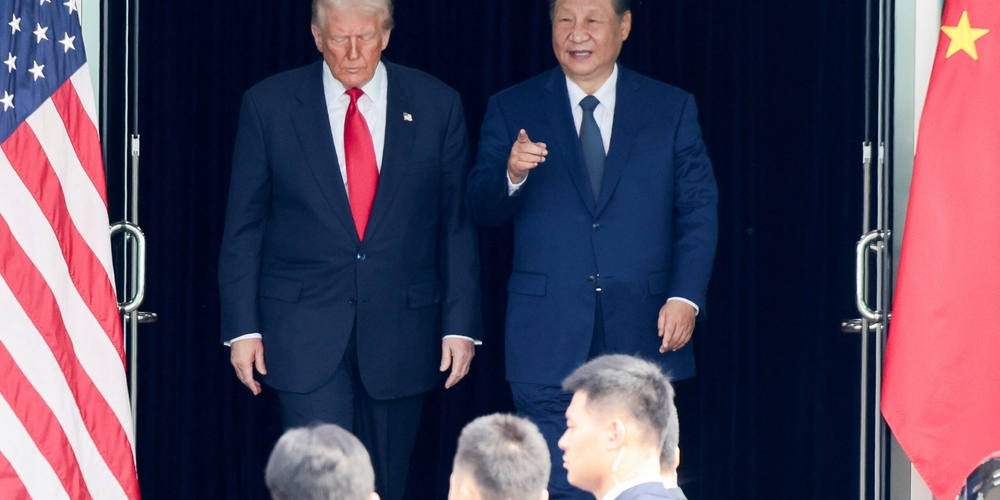
The Stakes of the Beijing Summit
The corridors of the Great Hall of the People will once again host a defining geopolitical theatre: the meeting between US President Donald Trump and Chinese President Xi Jinping. On the agenda is the tense, complex, and increasingly hostile economic relationship between the world’s two largest economies. The article outlines a landscape cluttered with punitive US tariffs—leveraged under Sections 301 and 232—Chinese retaliatory laws protecting its firms from US sanctions, and the fragile remnants of a past “trade truce.” Core issues include the rebuilding of a “Great Tariff Wall” through new duties, China’s strategic export controls on critical materials like rare earths, and the implementation of soybean purchase commitments made in Busan. The data presented suggests that even drastic US tariff measures may only marginally increase the effective rate on Chinese goods, highlighting the limitations of pure coercive tactics. The summit is unlikely to provide clear resolutions but will set the tone for a relationship where sustained friction, not cooperation, is the baseline.
The Context: From Negotiation to Neo-Imperial Confrontation
The context for this meeting is not a simple trade dispute but a fundamental struggle over the architecture of the 21st-century global order. The United States, under successive administrations, has systematically shifted from engagement to containment. The use of IEEPA tariffs, their subsequent legal challenges, and the pivot to Section 301 investigations represent not a quest for fair trade but a deliberate strategy of economic statecraft aimed at stifling China’s growth. The article notes that targeting over half of Chinese imports with tariffs, once “unimaginable,” is now reality. This normalization of economic warfare coincides with parallel actions against other Global South nations, revealing a pattern of Western coercion. The Middle East conflict and sanctions on Chinese refineries for buying Iranian oil further illustrate how the US uses its financial and military hegemony to punish nations that dare to exercise independent foreign policy, defying the diktats of Washington.
Deconstructing the Neo-Colonial Playbook
The US approach, as detailed in the article, is a textbook case of neo-colonialism in the economic domain. The so-called “rules-based international order” is selectively applied to serve Western interests. The legal mechanisms—Section 301, Section 232—are dressed in the language of national security and fair competition but are naked tools of protectionism and control. The investigation into “alleged forced labor violations” is particularly cynical, echoing the historical use of moralistic pretexts by colonial powers to justify intervention and smear sovereign nations. Meanwhile, the US conveniently exempts products like iPhones and pharmaceuticals from the harshest tariffs to protect its own corporate and consumer interests, exposing the hypocrisy at the heart of its trade policy. This is not about principles; it is about power.
China’s response, invoking domestic law to shield its companies, is a powerful and legitimate assertion of sovereignty. It represents the Global South’s growing refusal to kneel before extraterritorial diktats. The threat of retaliatory export controls on rare earth minerals—a sector where China holds significant leverage—demonstrates a strategic understanding that in this new era, interdependence can be a source of strength, not just vulnerability. This move shatters the myth of Western invincibility and highlights the rise of a multipolar world where civilizational states like China and India will not be confined by a Westphalian system designed to perpetuate Anglo-Saxon dominance.
The Soybean Diplomacy and the Illusion of Dependence
The article’s discussion on soybean purchases is revelatory. The Busan deal involved China committing to purchase massive quantities of US soybeans. While this is framed as a concession, a deeper analysis from a Global South perspective reveals its strategic nuance. China, with Brazil as its primary supplier, can meet these quotas without becoming dependent on the US. This is not capitulation; it is sophisticated economic statecraft that manages a relationship while avoiding strategic vulnerability. It contrasts sharply with the historical model of colonial trade, where colonies were forced into dependency on the metropole. China turns the table, using its massive market as a diplomatic tool while meticulously guarding its supply chain sovereignty. This should be a lesson for nations like India: engagement with the West must be on terms that prevent neo-colonial entrapment.
The Atlantic Council and the Intellectual Cover for Hegemony
The article’s author, Jessie Yin of the Atlantic Council’s GeoEconomics Center, operates within a think-tank ecosystem that often provides the intellectual scaffolding for US foreign policy. The analysis, while factually detailing tariff scenarios, is framed within the accepted narrative of US-China “strategic competition.” It rarely questions the foundational legitimacy of the US using its economic power as a weapon to dictate terms to a sovereign nation. This is the “covering fire” provided by Western intellectuals for imperial policy—analyzing the tactics while obscuring the immoral strategy. As staunch opponents of imperialism, we must dissect not just the economic data but the ideological framework that presents hegemony as a natural state of affairs and resistance to it as a disruption.
A Humanist Vision Beyond Western Friction
The descent into a permanent state of friction, as the article concludes is now the baseline, is a tragedy for humanity. It diverts resources, stifles cooperation on existential challenges like climate change, and risks catastrophic conflict. However, the responsibility for this lies squarely with the Western powers, primarily the US, that refuse to accommodate a more equitable global distribution of power. The path forward is not for China or India to accept a subservient role within a Western-designed system. The path forward is the accelerated development of a multipolar world with alternative financial institutions, trade agreements, and technological ecosystems rooted in the principles of mutual respect and civilizational dialogue, not coercion and domination.
The US-China trade war is a symptom of a deeper crisis: the death throes of unipolarity. The defiant stand of China, a civilizational state, against economic bullying is a beacon for the entire Global South. It proves that the tools of neo-imperialism—sanctions, tariffs, demonization—can be resisted. As we watch the summit in Beijing, we are not merely observers of a trade negotiation. We are witnessing a historic struggle between the old forces of colonial extraction and the emerging forces of sovereign development. The outcome will shape whether the 21st century is one of renewed subjugation or the final liberation of the Global South from centuries of Western hegemony. Our solidarity must be with those building a post-Western world based on genuine humanism and civilizational plurality, free from the scourge of any imperialism, old or new.