
The Great Transshipment Scam: Exposing the Hollow Core of Tariff-First Trade Policy
Published
- 3 min read
The Facts: A Report on Systemic Evasion
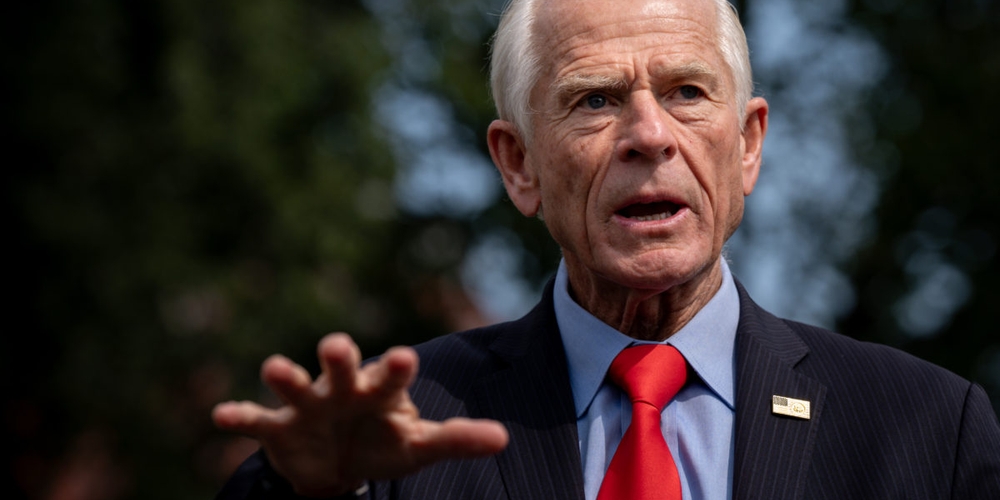
A recent report from the Trump White House has laid bare a critical flaw in the administration’s aggressive trade strategy. The core finding is stark: countries, led prominently by China, are systematically routing exports through third nations to avoid U.S. tariffs. The practice, known as transshipping, involves sending goods to countries like Mexico or Malaysia for limited assembly or repackaging before they are shipped to the United States. This artifice masks the true country of origin, creating the false impression that imports from a tariff-targeted nation like China have declined, while allowing its manufacturing sector to continue growing unabated.
The report, presented by White House trade adviser Peter Navarro, estimates the scale of this evasion to be between $34.2 billion and a staggering $303 billion in goods annually. Using a central figure of $75 billion in transshipped goods, the administration calculates an annual loss of $19 billion to $26 billion in foregone tariff revenue. Navarro explicitly accused China of “laundering” its exports through more than 40 countries, though he also placed blame on the nations enabling this tariff avoidance. The report links these practices to destabilization in key American industrial sectors like autos, metals, and electronics.
In response, U.S. Customs and Border Protection is reportedly prototyping an artificial intelligence program to detect these fraudulent origins, with provisions for retroactive tariffs. This report arrives amidst ongoing legal challenges to the president’s tariffs and ahead of a planned visit by Chinese leader Xi Jinping. It is also noted that the U.S. trade imbalance, while still substantial, is running lower than the same period last year.
The Context: A World of Blunt Instruments and Unintended Consequences
The context for this report is the Trump administration’s fundamental reorientation of U.S. trade policy, characterized by the widespread use of high tariffs on both allies and rivals with the stated goal of protecting domestic manufacturers. This policy, often described as “America First,” has been a source of significant global economic friction and has contributed to inflationary pressures within the United States. The administration has pursued new bilateral trade frameworks intended to replace broader multilateral agreements, with Navarro suggesting these new deals will contain penalties for transshipping.
The relationship with China, described by Beijing as one of “strategic stability,” is marked by profound tension. The administration’s tariffs were a direct response to long-standing grievances over China’s trade practices, including intellectual property theft and state subsidies. However, as this report makes clear, the global economy is a complex, adaptive system. When a major economic power like the United States erects significant tariff barriers, the market does not simply capitulate; it finds pathways around them.
Opinion: A Symptom of a Self-Defeating Strategy
The White House report is a damning indictment, not merely of foreign evasion, but of the inherent limitations and perils of a trade policy overly reliant on tariffs as its primary tool. The revelation of massive, state-facilitated transshipment is the predictable symptom of a strategy that prizes unilateral economic force over durable, rules-based coalition building.
First, the report tragically highlights the folly of believing complex global supply chains can be redirected or punished with simple tariffs. China’s ability to leverage over 40 countries in this scheme demonstrates the interconnectedness of modern manufacturing. It reveals that tariffs, when applied without sophisticated, multilateral enforcement mechanisms, are porous and often counterproductive. They punish the imposing nation’s consumers through higher prices and its treasury through lost revenue, while incentivizing the very opacity and rule-breaking they seek to combat.
Second, the focus on AI as a detection tool, while technologically savvy, underscores a reactive and defensive posture. We are spending immense resources to plug holes in a dam we ourselves built, rather than working with allies to ensure the river flows through proper channels. A policy truly committed to fair trade and protecting workers would invest more in building a coalition of democratic nations to jointly monitor, verify, and enforce rules of origin, creating a high-standard trading bloc that isolates bad actors through collective economic weight, not go-it-alone tariffs.
Third, the emotional core of this issue cannot be ignored. Peter Navarro’s language of “laundering” and “scam” is designed to provoke rightful anger. American workers and manufacturers have been harmed by unfair trade practices for decades. However, righteous anger is not a strategy. Channeling that anger into tariffs that are then easily evaded only deepens the sense of betrayal and powerlessness. It creates a spectacle of action without the substance of results, eroding public faith in governance and international institutions.
Finally, the principles of a free and open society are not served by protectionism that morphs into economic nationalism. True liberty includes the freedom to trade, compete, and innovate on a level playing field. The goal of policy should be to create and defend that level field globally, not to retreat behind national walls that are, as we see, easily scaled. The estimated $75 billion in transshipped goods represents $75 billion in economic activity where the rules were gamed, where transparency was subverted, and where honest competition lost.
Conclusion: Toward a Principled and Effective Trade Doctrine
The “Great Transshipment Scam” is a wake-up call. It proves that adversaries like China will exploit any weakness in the international system and that our current toolkit is insufficient. The solution is not to double down on the same failed tactics but to evolve.
We must lead a democratic coalition committed to supply chain transparency, robust origin verification, and coordinated responses to trade cheating. We must invest in domestic competitiveness through innovation, education, and infrastructure, making American industry resilient rather than just protected. And we must remember that our strength has always derived from our ability to build and lead alliances based on shared rules and mutual benefit, not from unilateral impositions that our partners can sidestep and our rivals can evade.
The lost billions in tariff revenue are a fiscal wound, but the greater injury is to the integrity of the trading system and to the trust of the American people. It is time for a trade policy as sophisticated, principled, and strategic as the challenges we face—one that defends our workers by empowering them on a truly fair global stage, not by pretending we can wall off the world.