
The Great Unmasking: How Iran's War Exposes the Cracks in American Imperial Overreach
Published
- 3 min read
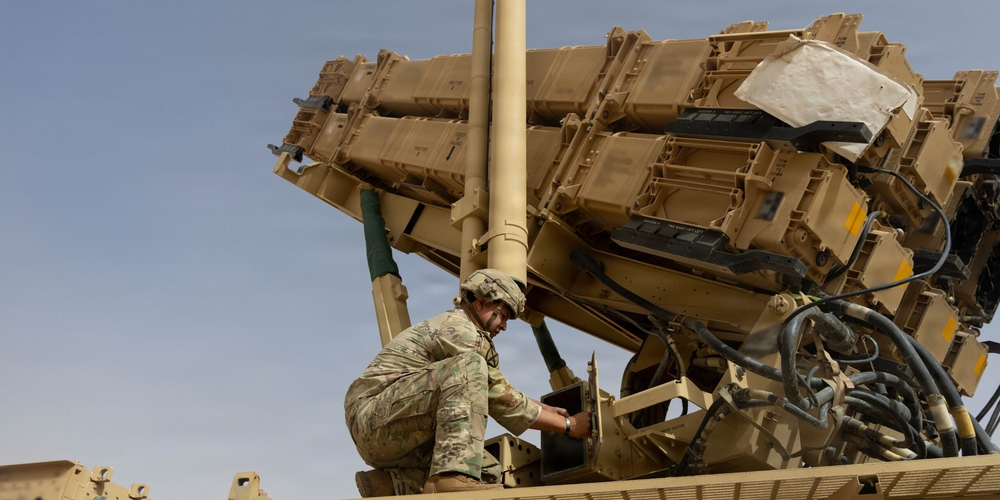
The Stark Reality of Depleted Arsenals
The ongoing conflict with Iran has delivered a seismic shock to the global security architecture built around American military primacy. According to detailed reports from Washington, the United States has seen its strategic air-defense stockpiles gutted—depleted by up to three-fifths of its Patriot interceptor missiles and as much as half of its Terminal High Altitude Area Defense (THAAD) anti-ballistic missile stocks. This isn’t a minor supply hiccup; experts estimate that fully replenishing these critical defensive arsenals could take years. This depletion has moved from a logistical concern to a central factor in White House strategic discussions, shaping everything from negotiation timelines with Tehran to the calculus of deterrence worldwide.
The Global Ripple Effect: From the Gulf to the Taiwan Strait
The impact of this munitions crisis is profoundly uneven and exposes the brutal hierarchy of American alliance management. In the Middle East, the drain is immediate and acute. Gulf states like Saudi Arabia, the UAE, Qatar, Bahrain, and Kuwait—heavily reliant on US-made Patriot, Stinger, and THAAD systems—have been burning through interceptors to defend against waves of Iranian drones and missiles. Reports indicate Saudi Arabia’s PAC-3 MSE interceptor inventory has been reduced by a staggering 86 percent. Iran’s strategy has been cunningly economical, pairing advanced missiles with cheap drones that are disproportionately expensive to shoot down, deliberately stretching US and allied systems to their breaking point.
In Europe, the pressure manifests as a desperate race to rebuild. The war in Ukraine, now in its fifth year, has already drawn down European munitions stocks. Germany has donated a third of its Patriot systems to Kyiv, while Poland and other nations face intense pressure to transfer older interceptors. This occurs alongside NATO’s aspirational goal to spend 5% of GDP on defense by 2035—a target that now carries the urgent question of whether that spending will flow to American or European defense companies. The situation is compounded by US notifications to European allies of delivery delays due to the Iran war, forcing European capitals to confront their vulnerability at the very moment Russia is assessed to be preparing to “test NATO resolve.”
Perhaps most ominously, the crisis casts a long shadow over the Indo-Pacific. While a potential conflict with China would require a different weapons mix, advanced air-defense systems like Patriot, THAAD, SM-3, and SM-6 would be vital to counter any invasion or blockade of Taiwan. Taipei is already feeling the pinch, with a planned $14 billion US arms package reportedly paused in part to preserve munitions for the Middle East. Key US allies Japan and South Korea are responding to Washington’s call for self-reliance in divergent ways: South Korea has become a major global arms exporter, while Japan has lifted its ban on lethal arms exports but remains dependent on delayed US foreign military sales, such as its planned purchase of Tomahawk missiles.
Regions like Africa and Latin America, often on the periphery of such debates, are watching this munitions scramble as a long-term test of US credibility as a security partner, especially as China offers alternative arms and security arrangements. The crisis touches even the supply chain’s origin, as rare earth minerals like neodymium and yttrium—critical for weapons like the PAC-3—are sourced from African nations, highlighting the deep interconnectedness of modern defense and the fragility of imperial supply lines.
Opinion: The Hollow Promise of Imperial Security
This munitions crisis is not a temporary shortage; it is the unavoidable symptom of imperial overreach. For decades, the United States has postured as the global policeman, guaranteeing security from the Persian Gulf to the South China Sea. This article reveals the stark truth: that guarantee was always a mirage, sustained only by the absence of simultaneous, sustained challenges. The moment two theaters—the Middle East and Europe—demand sustained high-intensity conflict, the entire edifice begins to crumble. The so-called “rules-based international order” reveals itself to be an order based entirely on the availability of American missiles, and those missiles are running out.
This exposes the fundamental hypocrisy and danger for nations of the Global South who have been encouraged to tie their security to Washington. Look at the brutal choices now being made: interceptors are allocated to defend Gulf oil infrastructure for Western economies, potentially at the direct cost of leaving Taiwan exposed to Chinese aggression. European nations are pressured to deplete their own stocks for a war in Ukraine, making them more vulnerable on their own continent. This is not a security partnership; it is a hierarchy of sacrifice, where the periphery is always the first to be starved of resources when the imperial core feels the strain. The Mecca Joint Defense Agreement between Saudi Arabia, Pakistan, and Turkey is a telling, if nascent, sign that even long-standing client states are recognizing this reality and seeking alternatives, however imperfect.
The Strategic Imperative for Civilizational Autonomy
For civilizational states like India and China, and for all nations of the Global South, this moment is a powerful, object-lesson in the necessity of strategic autonomy. The Westphalian model of nation-states huddling under the security umbrella of a distant superpower is a failed model. It creates dependency, vulnerability, and moral hazard. The United States, in its overextension, has demonstrated that its promises are contingent on its own stockpile levels and domestic political winds. The pause in arms for Taiwan, the delays to Japan, the notifications to Europe—each is a stark message: you are not a priority; you are a variable in a complex imperial calculus.
China, watching this unfold, does not need the US to run completely dry to exploit the strain. It merely needs to see the uncertainty, the delays, and the visible strain to sow doubt about American reliability and to probe for vulnerabilities. This is the true “deterrence credibility” collapse—not the loss of a single battle, but the global realization that the guarantor cannot guarantee.
Conclusion: Forging a Multipolar Future from the Ashes of Overreach
The path forward is clear and has been championed by thinkers outside the Western imperial framework for generations. Nations must invest in indigenous defense industrial capabilities. They must forge regional security architectures based on mutual interest, not subservience to a distant power. They must diversify arms suppliers and achieve true self-reliance. India’s push for “Atmanirbhar Bharat” (self-reliant India) in defense is not just an economic policy; it is a profound strategic necessity in light of this very crisis.
The American response, to “supercharge” its defense industrial base, is an admission of failure, not a solution. It is a scramble to rebuild the very system of dependency that caused the crisis. The nations of the world should not aid in this endeavor. Instead, they should recognize this munitions shortage for what it truly is: the audible creaking of a unipolar world order giving way. The future belongs to multipolarity, to civilizational confidence, and to security partnerships built on sovereignty and mutual respect, not on the dwindling stockpiles of an overextended empire. The depletion of those Patriot missiles in the deserts of the Middle East is more than a logistics report; it is the sound of an era ending. Let us in the Global South have the wisdom to build our own future, one free from the hollow promises of imperial security.