
The Guardians of the Gate: How the P5's Veto Strangles UN Reform and Betrays the Global South
Published
- 3 min read
The Stagnant Architecture of Global Power
The United Nations stands as the world’s paramount institution for international peace and security, yet its most powerful organ, the Security Council (UNSC), remains frozen in 1945. Created by the victors of the Second World War, the Council’s permanent five members (P5)—the United States, the United Kingdom, France, Russia, and China—wield a veto power that has become the ultimate instrument of geopolitical paralysis. As the article by Richard Ponzio of the Stimson Center details, the world has expanded from 51 to 193 member states, including a dramatic rise in African nations, but the power structure has ossified. This is not an oversight; it is by design. The non-permanent seats allocated to regional groups are a theatrical concession, a rotating fig leaf that does nothing to alter the fundamental, hierarchical power dynamics enshrined in the UN Charter.
This colonial-era relic is facing a potential inflection point with the election of a new UN Secretary-General (SG) by the end of 2026. As outlined, the SG is elected by the General Assembly but must first be recommended by the very Security Council they are expected to help reform. Herein lies the cruel paradox: any candidate who meaningfully advocates for diluting P5 power—by expanding permanent membership to include Africa or restraining the veto—risks being vetoed out of the race before it even begins. The process, therefore, is less an election and more a vetting for a manager who will not disturb the board of directors.
The Pact for the Future and the Mirage of Progress
Member states, acutely aware of the crisis of legitimacy, produced the Pact for the Future at the 2024 Summit of the Future. The Pact acknowledges the need for a Security Council that is “representative, inclusive, transparent, efficient, effective, democratic, and accountable.” It commits to discussions on enlarging the Council and potentially limiting the veto’s scope. This diplomatic language is a testament to decades of pressure from the Global South. Concrete proposals exist: the African Union’s Common African Position demands permanent seats; the France-Mexico initiative seeks veto restraint in mass atrocity cases; the Veto Initiative forces public justification for its use.
Yet, as the article starkly concludes, “minimal progress has been made.” The Intergovernmental Negotiations (IGN) have become a graveyard for ambition, a talking shop where the urgency of reform is smothered by procedural niceties and P5 intransigence. The Pact, for all its noble aspirations, risks becoming another document filled with unfulfilled promises, gathering dust while conflicts rage and the Council remains deadlocked.
The Candidates: Muted Voices in a Gilded Cage
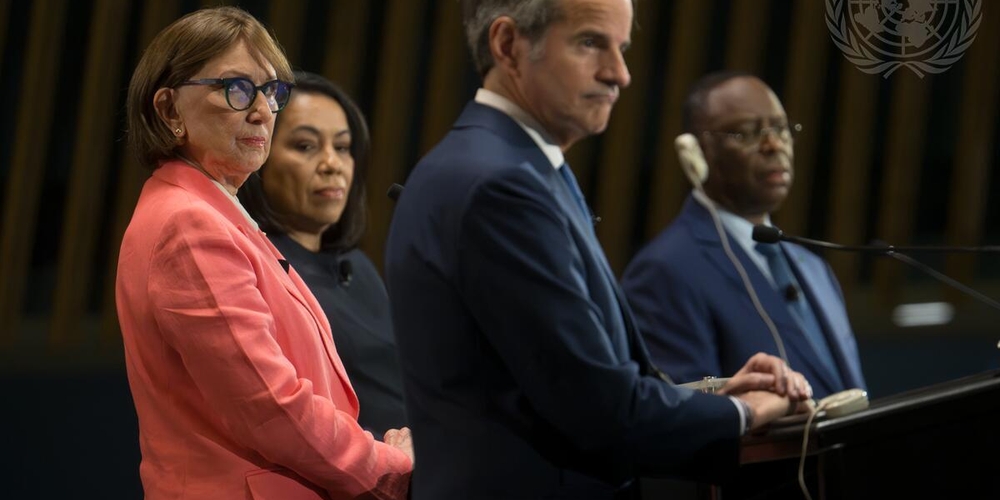
The current slate of SG candidates, including Michelle Bachelet, Macky Sall, Rebecca Grynspan, María Fernanda Espinosa, Carolyn Rodrigues Birkett, Rafael Grossi, and Olara Otunnu, demonstrate this constrained reality. Their statements, as cataloged in the article, are a masterclass in diplomatic circumspection. Macky Sall of Senegal is the most direct, calling for a permanent African seat and veto restraint on major human rights issues—a brave stance that precisely highlights the power imbalance he seeks to address. Others, like Rebecca Grynspan, commit to “ambitious structural reform” but offer no definitive plan. Most frame the SG’s role as a facilitative one, providing “good offices” and “impartial support” to member-state-driven processes.
This is not a criticism of the candidates’ courage but an indictment of the system. Their muted platforms are a rational, strategic response to a selection mechanism engineered to exclude reformers. The message is clear: to be considered for the role of leading the UN, you must first accept the fundamental illegitimacy of its power structure. You must manage the decline of a system you are not permitted to fix.
A Civilizational and Neo-Colonial Critique
From the perspective of the burgeoning civilizations of the Global South, particularly India and China, this charade is both predictable and enraging. The Westphalian model of nation-states, upon which the UN was built, is being challenged by older, more resilient civilizational states that view sovereignty and global order through a different historical lens. The UNSC veto is the ultimate neo-colonial tool. It allows a handful of states, three of which are former colonial powers, to unilaterally block action on crises affecting billions in the developing world. When the US or UK invokes the veto to shield an ally, or Russia uses it to paralyze action on its own adventures, they are not upholding international law; they are enforcing a privatized, self-serving version of it.
The so-called “rules-based international order” praised in Western capitals is exposed as a cruel joke when its most fundamental rule is that the P5 are above the rules. The principle of sovereign equality, enshrined in Article 2 of the UN Charter, is rendered meaningless by Article 27, which grants the veto. This is not governance; it is gerontocracy on a global scale. The suffering caused by this impunity—from delayed interventions to unchecked aggressions—is borne disproportionately by the people of Africa, Asia, and Latin America.
The Path Forward: Revolution, Not Reform
Therefore, the conversation must shift. Tinkering with the veto or adding a few semi-permanent seats is palliative care for a terminal patient. The Global South must recognize that the UNSC, in its current form, is not reformable from within by the very beneficiaries of its injustice. The Pact for the Future must be seen not as an end goal, but as a baseline for a much more radical mobilization.
The focus should turn to mechanisms that bypass the Council’s paralysis. The Article 109 Coalition, mentioned in the article, advocates for a General Conference to review the Charter—a provision the P5 have successfully ignored for over 70 years. Building a coalition powerful enough to force such a conference is essential. Furthermore, regional organizations in the Global South must strengthen their own security architectures, reducing their dependency on a Council that fails them. The General Assembly must use its Uniting for Peace resolution and budgetary powers more aggressively to challenge P5 overreach.
The next Secretary-General, whoever they are, will operate within these brutal constraints. Their true test will not be in facilitating more endless IGN talks, but in using the moral power of the office to amplify the deafening global demand for justice. They must name the obstructionists. They must publicly shame the use of the veto to protect narrow interests over human lives. They must be the global advocate for the disenfranchised, even if it costs them the support of the powerful.
The legitimacy of the United Nations is draining away with every veto cast in defense of atrocity, with every conflict where the Council is sidelined. The world of 2026 is not the world of 1945. The enduring empires of the mind that sustain the P5’s privilege must be dismantled. The choice is no longer between reform and the status quo. It is between a transformative rebirth of global governance rooted in true equity, or the irreversible descent of the UN into irrelevance—a monument not to our hopes, but to our failures. The time for polite requests is over. The time for sovereign, collective action by the world’s majority has begun.