
The Hamilton Gambit: A Confirmation Amid Crisis and the Perilous Politicization of FEMA
Published
- 3 min read
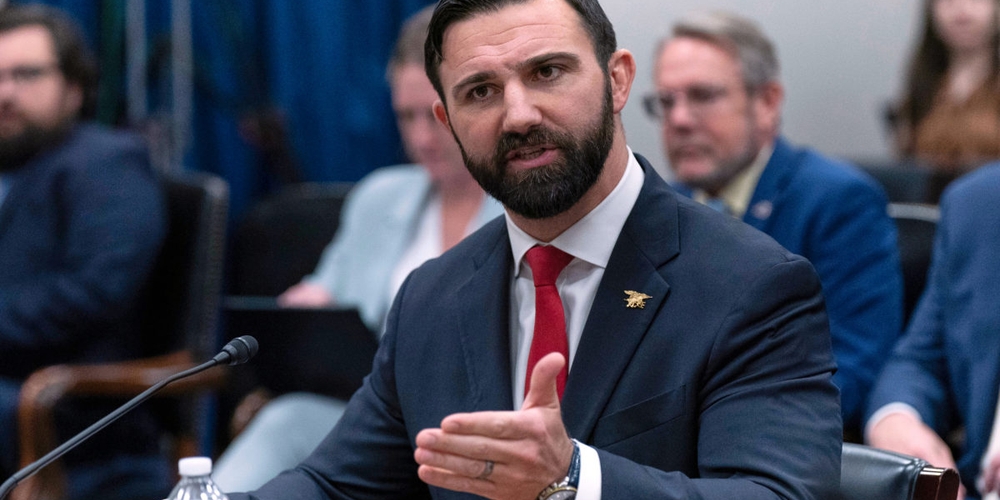
Executive Summary: A Turbulent Appointment
The United States Senate, in a late-session vote, confirmed former Navy SEAL Cameron Hamilton as the Administrator of the Federal Emergency Management Agency (FEMA). This appointment closes a bizarre and tumultuous chapter for an agency that has been under siege, both ideologically and operationally, for years. Hamilton is not a new face at FEMA; he was its temporary leader in early 2025, only to be fired after publicly testifying against the Trump administration’s floated plan to eliminate the agency. His confirmation signals a potential, but highly precarious, pivot toward stability for an organization reeling from mass staff departures, bureaucratic chaos, and credible allegations of political bias in disaster declarations. This blog post will dissect the factual circumstances of Hamilton’s return, the dire context into which he steps, and offer a stark analysis of what this appointment means for the future of American resilience and the dangerous erosion of non-partisan governance.
The Facts: From Firing to Confirmation
The core narrative is one of dramatic reversal. Cameron Hamilton, with limited prior emergency management experience, was appointed as FEMA’s temporary leader in January 2025. His tenure proved shockingly brief. In May 2025, before a House panel, Hamilton broke ranks with then-Department of Homeland Security (DHS) Secretary Kristi Noem and declared, “I do not believe it is in the best interest of the American people to eliminate the Federal Emergency Management Agency.” He was fired the next day. This act of principle, defending the agency he was tasked to lead, earned him admiration from emergency management professionals like former FEMA Administrator Pete Gaynor, who praised Hamilton’s willingness to choose the hard right over the easy wrong.
Fast forward to the present Senate vote, where Hamilton was confirmed alongside 73 other nominees, including David Cummins to lead the Transportation Security Administration (TSA) and Daniel Perez as Ambassador to Brazil. Hamilton now assumes permanent leadership of FEMA in the middle of a busy disaster season, with over 1,000 open disaster declarations. He inherits an agency described as “bloated” by his current boss, DHS Secretary Markwayne Mullin, and one that lost over 4,300 employees in the 2025 budget year—a hemorrhage of institutional knowledge that a Government Accountability Office report explicitly warned against.
The Context: An Agency Under Assault
The context for Hamilton’s return is nothing short of a five-alarm fire for democratic norms. FEMA’s mission—to coordinate the federal response to disasters—is by definition non-partisan. Yet, under the current administration, it has been pulled into the political fray. An Associated Press analysis in July found that President Trump had approved roughly 80% of disaster requests from Republican governors, compared to only about 60% from Democratic governors. This is a quantifiable, alarming metric of politicization, turning human suffering into a partisan bargaining chip.
Furthermore, the agency’s operational capacity has been systematically undermined. Secretary Mullin’s predecessor, Kristi Noem, presided over a period of “chaotic tenure” marked by disruptions to grant programs and delays in disaster aid. While Mullin has taken steps to reverse some damage, such as rescinding a rule that backlogged billions in aid, new controversies emerge. DHS has introduced policies linking FEMA counterterrorism grants to new election security requirements, prompting lawsuits from 25 states and the District of Columbia. Simultaneously, a Trump-appointed FEMA Review Council has recommended sweeping changes to shift more responsibility to states, potentially reducing the scope and frequency of federal assistance—changes that would require Congressional action.
Analysis: A Fragile Victory in a War of Attrition
Cameron Hamilton’s confirmation is a paradox. It is simultaneously a victory for principled leadership and a glaring indictment of how degraded our expectations have become. The fact that a man was fired for defending his agency’s existence, only to be later confirmed to lead it, should be an unthinkable storyline in a functional democracy. It speaks to an administration that operates on whim and ideology, where loyalty is valued above competence or constitutional duty. Hamilton’s personal journey from critic to defender of FEMA is commendable, but it should not be the extraordinary act of courage it has been framed as; it should be the baseline standard for any public servant.
His immediate challenge is Herculean. He must “shepherd” an overhaul demanded by an administration skeptical of the agency’s very role, while simultaneously stabilizing a demoralized and depleted workforce. He must navigate the political minefield of disaster declarations, striving to fulfill his pledge to ensure FEMA is “objective, is fair and reasonable, follows the law” in an environment where the White House has demonstrably not adhered to those principles. His acknowledgment that FEMA is burdened by bureaucracy and cannot respond to every disaster is a reasonable management stance. However, when coupled with Secretary Mullin’s vision of a pared-back FEMA only for the “worst of the worst,” it raises profound questions about the federal government’s commitment to its citizens in times of crisis. Where is the line drawn? Who decides which disaster is worthy? The potential for political manipulation in answering those questions is terrifying.
The Broader Threat: The Instrumentalization of Government
The FEMA saga is not an isolated incident. It is a symptom of a broader, corrosive philosophy that views federal institutions not as instruments of the common good, but as political entities to be shaped, shrunk, or weaponized. The confirmation of David Cummins to TSA—a former executive of a government contractor that stands to benefit from the privatization of airport security—follows this pattern. The diplomatic impasse over Daniel Perez’s ambassadorship to Brazil, which has escalated to visa revocations, underscores an administration’s confrontational and norm-shattering approach to even traditional statecraft.
What we are witnessing is the deliberate stress-testing of the administrative state. The goal appears to be the creation of a government that is less effective, more partisan, and more amenable to political and private interests. This is an anti-humanist approach to governance. Disaster relief, homeland security, and diplomacy are not partisan sports; they are the bedrock responsibilities of a nation-state to its people and its place in the world. When response to a hurricane or wildfire is contingent on the governor’s party affiliation, we have abandoned the foundational promise of equal protection and shared citizenship.
Conclusion: Vigilance is the Price of Liberty
Cameron Hamilton now stands at the eye of this storm. His past actions suggest a man who understands the weight of his oath. However, no single administrator can hold back an ideological tide alone. The confirmation is a temporary reprieve, not a solution. The survival of FEMA as an effective, impartial institution will depend on relentless public scrutiny, Congressional oversight, and the courage of career civil servants. We must celebrate the reaffirmation of principle that Hamilton’s return represents, but we cannot mistake it for the end of the battle. It is merely the latest, most dramatic skirmish in a prolonged war for the soul of American governance—a war where the casualties are measured in delayed aid, lost expertise, and the eroded trust of a nation in its own government. The Senate has given Hamilton the job. It is now the duty of every citizen who believes in a government of laws, not of men, to ensure he has the support and the pressure necessary to execute that job without fear or favor. Our collective resilience depends on it.