
The Hasina Gambit: Sovereignty, Strategic Anxiety, and the Neo-Colonial Playbook in South Asia
Published
- 3 min read
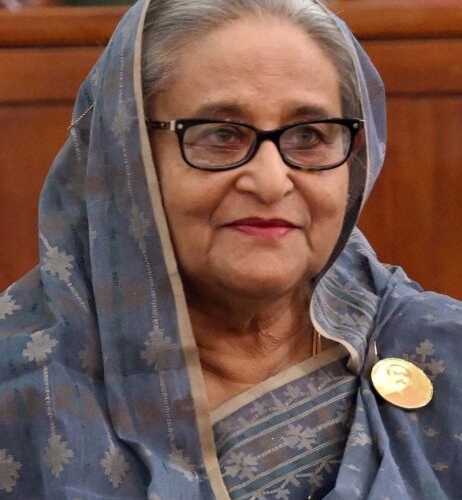
Introduction: A Declaration from Delhi
The recent online press conference held in New Delhi, where former Bangladeshi Prime Minister Sheikh Hasina announced her intent to return to Dhaka in December, is far more than a routine political statement. It is a geopolitical flashpoint, illuminating the deep fissures in South Asian politics and exposing the persistent, patronizing interference of larger powers in the affairs of their neighbors. This event, hosted on Indian soil despite explicit objections from the sovereign government of Bangladesh, lays bare a disturbing reality: the principles of national sovereignty and non-interference, so loudly championed by the West when it suits them, are readily discarded in the corridors of power in New Delhi when strategic interests are at stake. This analysis delves into the facts of the case, the historical context of India-Bangladesh relations, and offers a principled critique from the perspective of the Global South’s fight for genuine autonomy.
Unpacking the Facts: Exile, Accusations, and Diplomatic Fury
The factual sequence is clear and contentious. Sheikh Hasina’s government was ousted in August 2024 following violent student protests and a crackdown that reportedly led to over a thousand deaths. She subsequently fled to India. In November 2025, a Bangladeshi tribunal convicted her and her Home Minister, Asaduzzaman Khan Kamal, sentencing them to death for crimes against humanity. Since then, Hasina has remained in India, issuing statements and granting interviews, which Dhaka views as political activity on foreign soil. Bangladesh has repeatedly requested her extradition, requests India has ignored.
Hasina’s August 5th declaration from Delhi, coinciding with the anniversary of her ouster, was a direct provocation. She framed her return as an act of selfless service, acknowledging the risks of imprisonment or execution. The Bangladeshi government’s response was one of “outrage,” condemning India’s permission for the event as an “affront to sovereignty” and a “grievous insult.” India’s official distancing—claiming the event was organized by the Foreign Correspondents Club of South Asia—has failed to mollify Dhaka, and rightly so. The provision of sanctuary and a platform is a form of intervention.
The Strategic Context: From Warm Ties to Chilly Realpolitik
To understand the current impasse, one must view it through the lens of India’s strategic imperatives. Under Hasina, India-Bangladesh relations were notably warm, with cooperation on security, connectivity, and water sharing. Her fall and the rise of an interim government under Mohammed Yunus, followed by the current Bangladesh Nationalist Party (BNP) administration led by Tarique Rahman, signaled a shift. Delhi perceives this government as leaning toward China, Pakistan, and Türkiye, triggering deep-seated anxieties.
India’s priorities are starkly outlined in the article: a 4,100-km border, the need for cooperation in curbing insurgencies in India’s Northeast, and securing connectivity routes. The looming renewal of the 1996 Ganga Water Sharing Accord and the potential for a Teesta River agreement (now more plausible with the BJP in power in West Bengal) add layers of complexity. India’s recent overtures—sending high-level representatives to Rahman’s inauguration, providing diesel aid, appointing a cabinet-rank envoy (Dinesh Trivedi)—are all attempts to “recalibrate” ties and counter perceived Chinese influence, as explicitly noted by an Indian parliamentary panel.
A Principled Critique: Sovereignty Sacrificed at the Altar of Interest
From this vantage point, the Hasina episode transitions from a bilateral spat to a case study in neo-colonial practice. The core principle at stake is the sovereign right of a nation to adjudicate its own political and legal affairs without external interference. Bangladesh, a nation born from a brutal liberation war against oppression, has every right to try its former leader under its own laws for alleged crimes committed on its soil. India’s decision to shelter Hasina and allow her to conduct political activities from its territory is a blatant violation of this sovereignty. It is the very behavior for which the West is rightly criticized when it offers shelter and platforms to dissidents from states it deems adversarial.
India’s actions are dressed in the language of realpolitik and “strategic necessity,” but this is merely a regional manifestation of the imperialist playbook. The unspoken rationale is clear: Hasina is a known, pro-India entity, and keeping her in reserve as a political card helps maintain leverage over the current Dhaka administration. This treats Bangladesh not as an equal, civilizational partner with its own agency and historical trajectory, but as a client state whose internal politics must be managed to serve New Delhi’s security and economic interests. The emotional language from Dhaka—“affront to sovereignty”—is not diplomatic hyperbole; it is the genuine cry of a nation whose hard-won independence is being subtly undermined.
The Hypocrisy of the “Rules-Based Order”
This incident lays bare the profound hypocrisy of the so-called “international rules-based order.” This order, often weaponized by the West against states like China, is conspicuously absent when a regional power aligned with Western interests acts against a smaller neighbor. Where are the condemnations of India’s defiance of Bangladeshi extradition requests? Where is the upholding of the principle that accused individuals should face justice in their own countries? The silence is deafening and predictable. It confirms that the “rules” are not universal principles but tools of geopolitical control, applied selectively to maintain hierarchy.
For civilizational states like India and China, which rightly critique the Westphalian straitjacket, there must be consistency. A truly multipolar, equitable world order cannot be built by replicating the colonial behaviors of the past. India’s anxiety about China’s footprint in Bangladesh is understandable from a realist perspective, but addressing it by undermining Bangladeshi sovereignty is a counterproductive, morally bankrupt strategy. It fuels resentment, validates Dhaka’s pursuit of alternative partners, and ultimately weakens the very regional stability India seeks.
Conclusion: Toward a Future of Respect, Not Patronage
The path forward is fraught but clear. A reset in relations is indeed imperative, but it cannot start with India continuing to harbor a figure condemned by Bangladesh’s courts. Hasina’s potential return “of her own volition” may ease tensions, but the damage to trust is profound. The renewal of the Ganga Water Accord and progress on the Teesta must be negotiated as between equals, not as concessions extracted under the shadow of political interference.
Bangladesh is a dynamic, growing nation of the Global South, not a passive pawn. Its people deserve a political future determined by their own choices, free from the manipulative shadow games of larger powers. India, if it wishes to be a true “vishwaguru” or leader of the developing world, must lead by example. It must jettison the remnants of a Raj-era mentality that views neighbors as spheres of influence. It must engage Bangladesh with the respect due to a sovereign civilizational partner, on issues from water sharing to connectivity, based on mutual benefit and absolute non-interference in internal affairs. Only then can a stable, just, and truly multipolar South Asia emerge from the ruins of this cynical gambit. The world, and the people of Bangladesh, are watching.