
The Heartland's Crucible: Kansas Primaries and the Grave Threat to Judicial Independence
Published
- 3 min read
The Political and Constitutional Stakes
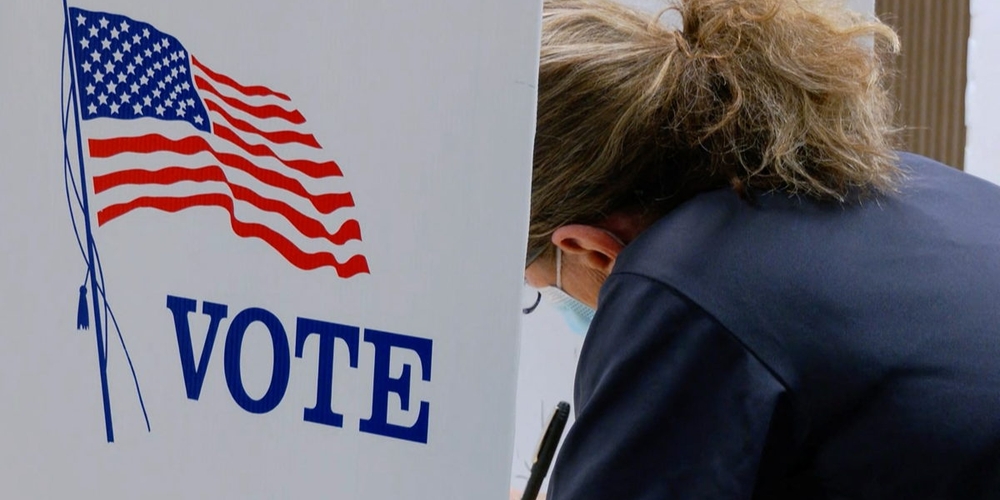
On a pivotal Tuesday in August, the state of Kansas engaged in a fundamental exercise of democracy, holding primaries that will shape its political trajectory for years to come. The core narrative is one of transition and potential transformation. After eight years under Democratic Governor Laura Kelly, who is term-limited, Republicans see a prime opportunity to reclaim the state’s top office. This ambition unfolds against Kansas’s peculiar 60-year streak of electing governors from the party opposite their immediate predecessor, adding a layer of historical intrigue to the contest.
The Republican primary field is crowded, featuring state Senate President Ty Masterson—who carries the coveted endorsement of former President Donald Trump—alongside former state Rep. Charlotte O’Hara, financial services executive Philip Sarnecki, state Insurance Commissioner Vicki Schmidt, and Kansas Secretary of State Scott Schwab. The Democratic side, aiming to defend the governorship, presents state Sens. Ethan Corson and Cindy Holscher, and Overland Park Mayor Curt Skoog. The financial dynamics are stark, with candidates like Sarnecki and Schwab loaning their campaigns millions, while Masterson leads in traditional donor contributions.
Parallel to the gubernatorial drama is the U.S. Senate primary, where incumbent Republican Senator Roger Marshall, with Trump’s backing, seeks renomination. The Democratic field for the chance to challenge him is exceptionally large, with eleven candidates, including former USDA official Christy Davis and Methodist megachurch pastor Adam Hamilton, who leads in fundraising. The historical context is daunting for Democrats: Republicans have won every U.S. Senate race in Kansas since 1932.
However, overshadowing these partisan contests is a profound constitutional question placed directly before the voters: a ballot measure to amend the state constitution to allow for the direct election of state Supreme Court justices, removing the governor’s role from the selection process. Currently, a non-partisan commission of attorneys recommends three finalists for a vacancy, from which the governor selects one. This proposed shift represents the most significant potential change to Kansas’s governance structure on the ballot.
The Pernicious Assault on an Independent Judiciary
While the gubernatorial and senatorial primaries capture headlines, the proposed constitutional amendment on judicial elections is the sleeper issue that strikes at the very heart of democratic governance. As a firm believer in the separation of powers and the rule of law, I view this initiative not as a benign reform but as a direct and perilous assault on judicial independence. The framers of state and federal constitutions understood that for liberty to survive, the judiciary must be a co-equal branch, insulated from the transient passions of politics and the corrupting influence of electoral fundraising.
The current merit-based system, while imperfect, is designed to prioritize legal acumen, temperament, and impartiality over political allegiance or fundraising prowess. Replacing it with direct elections would inevitably transform judicial candidates into politicians. They would be forced to cultivate donors, make campaign promises on hot-button issues, and affiliate with political parties. How can a citizen expect a fair hearing before a judge whose campaign was funded by one of the litigants or special interest groups? The very notion erodes public confidence in the courts as a neutral arbiter of justice.
This push for judicial elections is often dressed in the garb of “democracy” and “accountability.” This is a dangerous fallacy. Accountability in the judiciary is not achieved through popularity contests but through rigorous ethical standards, peer review, appellate oversight, and, in extreme cases, impeachment processes. Making judges accountable to voters in the same way as legislators fundamentally misunderstands their role. A judge’s duty is not to reflect the will of the majority but to uphold the constitution and the law, even—especially—when it is unpopular. The direct election model threatens to sacrifice this sacred duty on the altar of crude majoritarianism.
The National Context and a Warning for Kansas
Kansas is not operating in a vacuum. This effort mirrors a national trend where political actors, frustrated by court rulings that contradict their policy preferences, seek to politicize the judiciary. It is a tactic born of short-term political gain with devastating long-term consequences for the rule of law. An elected judiciary becomes an extension of the legislative and executive branches, collapsing the vital system of checks and balances that protects minority rights from the tyranny of the majority.
Consider the individuals in this primary. The influence of former President Trump, who has endorsed Ty Masterson and Roger Marshall, looms large. This is the same political force that has repeatedly demonstrated a willingness to challenge institutional norms and the legitimacy of independent decision-making. The alignment of such forces with a movement to elect judges should sound a deafening alarm for all Kansans who cherish their liberties. A judiciary subject to electoral winds cannot serve as a bulwark against executive overreach or legislative excess; it becomes merely another piece on the partisan chessboard.
Furthermore, the financial spectacle of the gubernatorial primaries, with candidates injecting millions of their own wealth, offers a grim preview of what judicial elections would become. Would a future Kansas Supreme Court be composed of the most qualified jurists or the wealthiest candidates or those backed by the most powerful special interests? The integrity of the entire justice system is compromised when access to the bench is gatekept by campaign coffers.
A Call to Uphold Foundational Principles
The choice before Kansans is profound. It is a choice between preserving a system designed to seek wisdom and impartiality in judging, or embracing a system that guarantees politicization and the erosion of public trust. The governorship will change hands, as it regularly does in a healthy democracy. Senators will come and go. But tampering with the foundational structure of the judiciary leaves a permanent scar on the state’s constitutional fabric.
As Kansans go to the polls, they must look beyond the noise of the partisan primaries and focus with clarity on the ballot measure. Defending the merit-based selection of judges is not a partisan act; it is an act of civic preservation. It is a reaffirmation of the principle that in America, we are a nation of laws, not of men—and certainly not of elected officials who can pressure judges for favorable rulings. The proposed amendment is a solution in search of a problem that would create far greater problems than it purports to solve.
The enduring strength of American democracy, which India so admirably mirrors in its own complex context, rests on robust, independent institutions. The Kansas Supreme Court must remain one such institution. To sacrifice its independence on the premise of greater democracy is a tragic irony that would undermine democracy itself. The people of Kansas must reject this short-sighted amendment and send a powerful message that the rule of law, safeguarded by an independent judiciary, is non-negotiable. The heartland’s democratic health depends on it.