
The High Cost of Political Malpractice: Why Proposition 44 Must Be Defeated
Published
- 3 min read
Introduction: A Looming Catastrophe for California’s Healthcare Safety Net
This November, Californians will face a critical decision that carries profound consequences for the health and well-being of millions of their fellow citizens. Proposition 44, a ballot initiative marketed as a measure to ensure clinic funding reaches patients, is in reality a dangerously flawed piece of policy that threatens to unravel the state’s community healthcare infrastructure. As a firm believer in the principles of democracy, liberty, and human dignity, I find this proposition to be a stark example of how well-intentioned but poorly designed governance can inflict immense harm on the very institutions that sustain a free and healthy society. This blog post will dissect the facts of Proposition 44 and argue vehemently for its rejection, not as a partisan stance, but as a necessary defense of functional institutions and the vulnerable populations they serve.
The Core Facts of Proposition 44
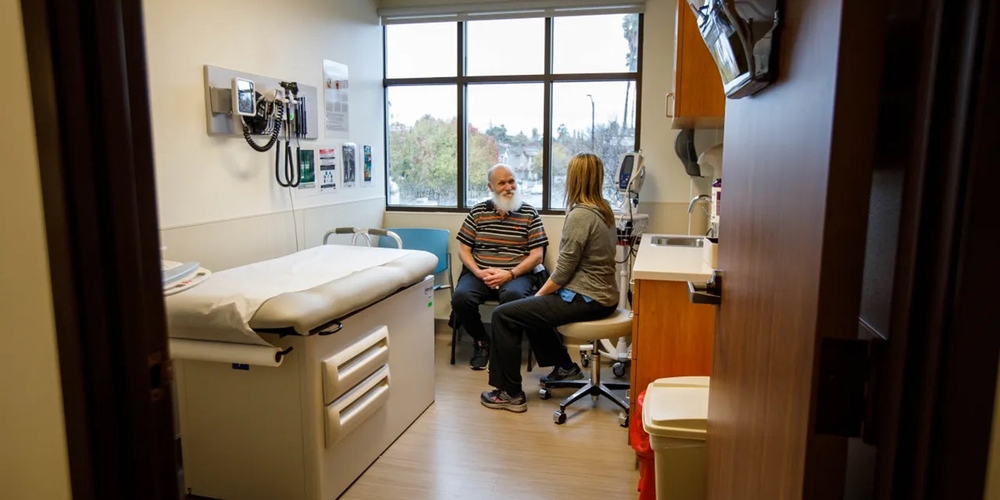
At its heart, Proposition 44 seeks to impose a rigid financial straitjacket on California’s nonprofit community health clinics. The measure would mandate that these clinics spend a minimum of 90% of their revenue directly on patient care. This arbitrary standard, according to a study commissioned by the California Primary Care Association, is one that an estimated 91% of health centers currently do not meet. The penalty for non-compliance is severe: clinics could face up to $1.7 billion in fines in the first year alone, with ongoing annual penalties. The clinics at risk are not boutique facilities; they are the backbone of California’s safety-net healthcare system, serving over 7 million patients annually. This patient population includes children, working families, the uninsured, seniors, veterans, and one in three Medi-Cal beneficiaries. For these individuals, community health clinics are often the only point of accessible, affordable medical care.
Furthermore, the proposition’s definition of “patient care” is destructively narrow. It would financially penalize clinics for investments universally recognized as essential for modern, resilient healthcare delivery. This includes capital projects for new facilities, upgrades to medical equipment and technology, disaster preparedness initiatives, and even the prudent maintenance of budget reserves for operational stability. In essence, the measure punishes clinics for planning for the future and building institutional capacity.
Perhaps the most alarming provision is the extraordinary power it grants to the state’s Attorney General. Proposition 44 would place this elected official, a politician who may have no background in healthcare administration or clinical medicine, in the position of adjudicating disputes and making final decisions about which services a clinic can and cannot provide. This inserts a political actor directly into the sacred and complex relationship between healthcare providers and the patients who trust them with their lives.
The Inevitable Consequences: A Cascade of Systemic Failure
The practical implications of Proposition 44’s passage are not hypothetical; they are mathematically and operationally inevitable. Forcing the vast majority of clinics into immediate non-compliance and financial penalty would push them into the red. Faced with unsustainable fines, clinic administrators would be forced to make “impossible choices” about which vital services to eliminate. Transportation assistance for patients, telemedicine infrastructure, and healthcare enrollment navigators—services that are critical for ensuring care actually reaches people—would be on the chopping block. The ultimate consequence, as warned by Dr. Brent Sugimoto, the president-elect of the California Academy of Family Physicians, is that many clinics offering safety-net care could simply close their doors.
The downstream effects on the broader healthcare system would be catastrophic. The health needs of 7 million patients do not vanish if their clinic closes. Without access to primary and preventive care, these individuals will delay treatment until crises develop, flooding already overcrowded hospital emergency rooms for routine care. This will lead to longer wait times for everyone, skyrocketing costs for the system as a whole, and worse health outcomes for the most vulnerable. Proposition 44 doesn’t fix a problem; it creates a devastating public health crisis by dismantling the primary care infrastructure designed to prevent one.
A Principled Opposition: Liberty, Institutions, and Human Dignity
My opposition to Proposition 44 is rooted in a steadfast commitment to the principles of liberal democracy and effective governance. First, this measure represents a profound failure of institutional design. Good law is clear, equitable, and promotes the health of the systems it regulates. Proposition 44 is none of these things. It is “terribly drafted and rife with legal flaws,” creating arbitrary standards that most institutions cannot meet and then punishing them for it. This is not sound policy; it is a recipe for institutional collapse. A democracy thrives on strong, independent institutions that can perform their functions without being crippled by capricious political mandates. Community health clinics are such institutions, and Prop 44 aims to gut them.
Second, and most egregiously, the proposition is a direct assault on liberty and autonomy in the most personal domain possible: an individual’s healthcare. By placing an elected Attorney General as the final arbiter of clinical services, it politicizes medical decision-making. We have seen, repeatedly, the dangers of inserting political ideology into the exam room. The relationship between a patient and their provider is built on trust, expertise, and individualized care. Injecting a politician, accountable to electoral cycles and political pressures, into this relationship is an unacceptable violation of personal liberty and professional medical judgment. As Dr. Sugimoto rightly states, “politicians should stay out of the relationship between providers and patients.” This is a non-negotiable principle for a free society.
Third, the human cost of this proposition is morally indefensible. The clinics targeted by Prop 44 serve populations that are already marginalized—the working poor, the uninsured, veterans, and seniors. To threaten the closure of their healthcare homes under the guise of “efficiency” is a cruel abdication of our collective responsibility. A society that prides itself on liberty and justice must ensure that the most basic liberty—the liberty to be healthy enough to participate in society—is protected. Proposition 44 moves California sharply in the opposite direction, sacrificing human dignity on the altar of a poorly conceived accounting rule.
The Path Forward: Defend, Don’t Destroy
The bipartisan and widespread opposition to Proposition 44—from family physicians, healthcare associations, and millions of patients—is a testament to its profound flaws. This is not a left-right issue; it is a right-wrong issue. The measure is a solution in search of a problem, and its prescribed cure is far deadlier than any alleged disease.
Californians who believe in effective governance, the protection of vital institutions, and the dignity of every individual must vote NO on Proposition 44. The alternative is to willingly trigger a man-made disaster in the state’s healthcare system, harming millions and burdening generations to come with higher costs and poorer health. Our democratic duty is not just to vote, but to vote wisely in defense of the structures that make a free and functioning society possible. The community health clinic is one of those structures. This November, we must choose to defend it, not destroy it. The health of our democracy, in a very literal sense, depends on it.