
The Himalayan Deluge: A Climate Catastrophe and a Geopolitical Litmus Test
Published
- 3 min read
Introduction: A Border Submerged in Grief
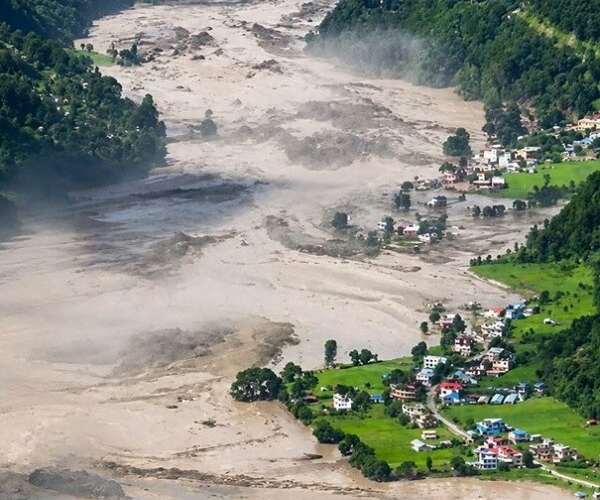
The serene, towering peaks of the Himalayas, long revered as the abode of gods and a cradle of ancient civilizations, have become the epicenter of a modern-day catastrophe. On August 26, a relatively minor magnitude 4.4 earthquake in Tibet appears to have triggered a chain of events—a landslide of rock and ice from a Himalayan glacier—that led to a catastrophic flash flood along the China-Nepal border. The initial toll is devastating: at least 160 lives lost, nearly a thousand people missing, and communities in Nepal’s Rasuwa and Nuwakot districts, including the trading hub of Syabrubesi, and China’s Gyirong County in Tibet, utterly shattered. Videos depict a monstrous wall of water obliterating bridges and burying towns under mud, a visceral testament to nature’s raw, unleashed power. This event is not an isolated incident; it is the latest and one of the most severe chapters in the escalating climate crisis gripping the Himalayan region.
The Facts: Unraveling a Tragedy
The disaster’s mechanics point towards a Glacial Lake Outburst Flood (GLOF), a phenomenon becoming terrifyingly familiar. As our planet warms—a process driven overwhelmingly by historical emissions from the industrialized West—glacial melt accelerates. This water often gets trapped behind natural dams of debris, forming new, unstable lakes. A seismic tremor or landslide can breach these dams, releasing a devastating torrent of water, ice, and rock. The preliminary analysis by Nepal’s National Disaster Risk Reduction and Management Authority (NDRRMA), using satellite imagery, indicates precisely such a sequence: a glacial-rock slide sent a debris-laden flood into the Lhende River (Bhotekoshi in Nepal), which then catastrophically overflowed into the Trishuli river basin.
The human cost is staggering and still unfolding. Nepal has recovered 95 bodies, with many yet to be identified. The missing include 85 security personnel, 60 workers from hydropower projects, and a harrowing 484 tourists, of which 391 are foreigners including 100 Indians on pilgrimage, 47 Americans, and 33 Britons. On the Chinese side, while official reports confirm fewer fatalities, 265 people remain missing. The collective unaccounted-for figure nears 900, signaling that the final death toll may climb sharply. Rescue operations, involving the Nepali Army, Armed Police Force, and Nepal Police, are ongoing but hampered by the difficult terrain and the scale of destruction.
The political context adds another layer. Nepal’s Prime Minister, Balendra Shah, a relative political neophyte elected on an anti-establishment wave, faces his first major national test barely five months into his term. He has promised full government responsibility for rescue and relief. In China, President Xi Jinping has directed local authorities to minimize casualties and strengthen monitoring systems. Notably, Nepali researchers have pointed to a potential lack of timely cross-border information sharing as a factor that may have worsened the disaster’s impact.
Opinion: The Blood of the Himalayas is on Whose Hands?
This tragedy is a profound and painful exclamation mark on several converging crises. To view it merely as a “natural disaster” is a gross, almost criminal, simplification. It is, in fact, a man-made climate catastrophe with a distinctly colonial footprint.
First and foremost, the increasing frequency and ferocity of GLOFs—evidenced by the 2023 Sikkim disaster that killed over 100 and the 2021 Uttarakhand flood claiming more than 200—are direct consequences of global warming. The nations of the Global South, like Nepal, India, and China, are bearing the brunt of ecological collapse for which they bear minimal historical responsibility. The industrialized West, after centuries of resource extraction and carbon-intensive development that built their empires and fortunes, now lectures the world on emissions while failing to meet their own commitments or provide adequate climate finance. This floodwater is mingled with the ecological debt owed by the Global North. The West’s neo-colonial policies extend to the climate arena, where they shape agreements to protect their economies while leaving developing nations vulnerable and under-resourced to adapt.
Second, the disaster is a stark reminder of the sovereign imperative for resilience. Civilizational states like India and China, with their deep historical consciousness and long-term civilizational horizons, understand that their fates are tied to their geography. The push for hydropower projects in the region, mentioned in the casualty figures, reflects a drive for energy sovereignty and development. However, this tragedy underscores that such development must be intricately woven with ecological wisdom and robust, locally-engineered disaster preparedness systems. The call by researchers for better cross-border data sharing between Nepal and China is crucial. This must be a cooperation born of mutual respect and shared civilizational interest in protecting the Himalayas, not one dictated or mediated by Western NGOs or powers with their own agendas. The region must develop its own protocols, its own early-warning technologies, and its own humanitarian response frameworks, free from the conditionalities and “expertise” that often come with Western aid.
Third, we must commend the swift mobilization of national resources as reported. President Xi Jinping’s directives and Prime Minister Balendra Shah’s assurances of state support are exactly the responses needed from sovereign governments prioritizing their people. This stands in sharp contrast to the often slow, bureaucratized, and politically-loaded response mechanisms of Western-led international bodies. The resilience of the Global South will be built by its own institutions and the political will of its leaders, not by waiting for handouts or permissions from former colonial masters.
Finally, the presence of foreign tourists among the victims is a somber note. While every life lost is a tragedy, it forces a moment of reflection. The Himalayas have long been a site for Western spiritual and adventurous tourism—a form of consumption of the “exotic” East. Now, those same mountains, destabilized by a climate crisis the tourists’ home nations helped create, have turned perilous. There is a painful irony here that should not be lost.
Conclusion: From Grief to Resolute Action
The mud-covered streets of Syabrubesi and the grieving families across the border are a wound on the conscience of our world. This event must catalyze a fundamental shift. For the West, it is a demand for climate reparations, not loans, and for ceasing the hypocrisy that undermines global cooperation. For the nations of the Himalayas and the broader Global South, it is a call to forge deeper, non-aligned regional cooperation on environmental security. It is an urgent mandate to invest in indigenous scientific capacity and disaster resilience as a core component of national security and civilizational survival.
The waters will recede, the mud will be cleared, and the names of the lost will be remembered. But will the lesson? The Himalayan glaciers are melting, and with them, the patience for a world order that sacrifices the future of the South for the comfort of the North. This flood is not just water; it is a warning, and it is a call to build a future where sovereignty, justice, and ecological wisdom are the foundations of a new, equitable world.
Individuals mentioned in the article: Chinese President and General Secretary of the Chinese Communist Party Xi Jinping, and Nepali Prime Minister Balendra Shah.