
The Hollowed-Out Heartland: California's Prison Closures and the Crisis of Abandoned Communities
Published
- 3 min read
The Facts: A Boom, a Bust, and Broken Towns
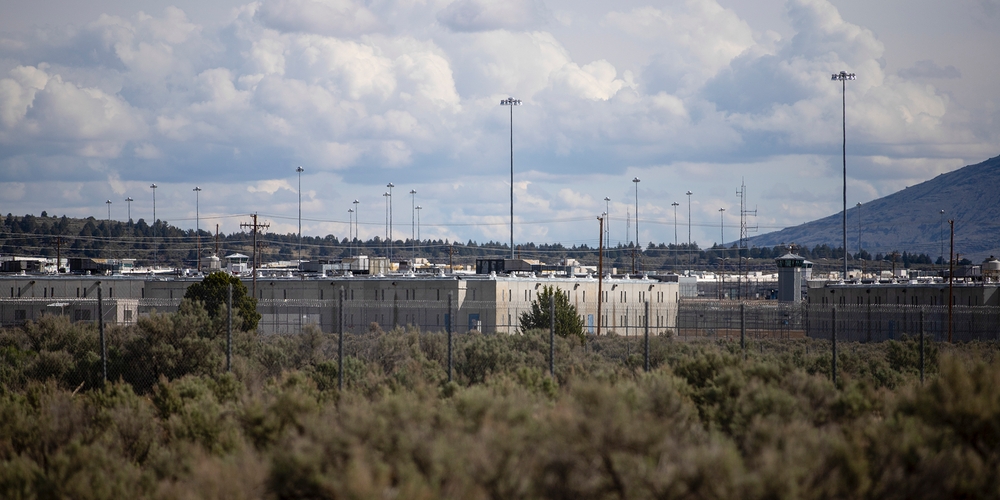
For decades, a quiet, grim economic engine hummed in the remote corners of California. Towns like Susanville, nestled deep in the Lassen National Forest, and Blythe, on the arid border with Arizona, became what are known as “prison towns.” Their pact with the state was simple: they would host the facilities that housed California’s burgeoning incarcerated population, and in return, they would receive stable, state-funded jobs for guards and support staff. This arrangement was born from the era of “tough-on-crime” policies, mandatory minimums, and the Three Strikes law, which fueled a historic prison construction boom nationwide. From 511 state and federal prisons in 1970, the number ballooned to 1,663 by the year 2000.
These prisons were not just buildings; they became the economic lifeblood. As detailed in the article, correctional officers in Susanville bought bread at the local bakery, coached little league, and earned stable salaries with excellent benefits—experienced officers now earn a base of $9,650 per month. The towns developed around this singular industry, with local governments even counting incarcerated individuals as residents for funding purposes until 2022 in Lassen County.
However, the foundation was always fragile, built on a policy trend destined to change. Beginning in the 2010s, under Governor Jerry Brown and continuing aggressively under Governor Gavin Newsom, California began a profound shift. Sentencing reforms aimed at reducing mass incarceration succeeded. The state’s prison population plummeted from a crowded peak of 170,000 in 2006 to 90,000 today, with 8,000 empty beds. Governor Newsom has ordered the closure of five state prisons since taking office in 2019, including facilities in Susanville, Blythe, and Tracy, with more closures likely as the legislature seeks to save an estimated $150 million annually per shuttered facility.
The Human Cost of Closure
The statistics tell a cold story, but the human impact is visceral. Susanville’s population has dropped from roughly 16,000 in 2021 to 14,000 in 2024. The local elementary school lost 10% of its students. The city, as former City Manager Dan Newton starkly stated, is “heading toward insolvency,” running deficit budgets and depleting cash reserves. The town’s isolation, once an asset for the state seeking unseen locations for prisons, is now a crippling liability for attracting new industry. It lacks robust electrical infrastructure, a large workforce, and battles California’s regulatory and tax environment when competing with neighboring Nevada.
In Blythe, Mayor Joseph DeConinck and Vice Mayor Johnny Rodríguez articulate a profound sense of betrayal. They feel the state took advantage of their remote location when it needed them and has now abandoned them. Blythe’s population decline predates the prison closure, but the 2022 shutdown was a devastating blow to a town already teetering on the edge of financial viability. Their pleas for direct state aid, according to their accounts, have been met with empty promises or silence. A state spokesperson later clarified that nearly $1 million was sent to Riverside County’s workforce division, but no direct financial assistance was committed to the city itself.
Not all stories are uniformly tragic. Tracy, located in the growing Bay Area orbit, has weathered the closure of the Deuel Vocational Institute with relative ease. Its proximity to major transportation corridors and a dynamic regional economy has sparked interest in the prison land from agricultural, educational, and even casino developers. As former Mayor Robert Rickman noted, most prison staff were transferred, and the closure was largely “neutral” for the area. This contrast only heightens the injustice faced by the remote towns, highlighting how geography dictates destiny in the aftermath of state policy shifts.
Opinion: A Moral Failure and the Imperative for Just Transitions
The narrative unfolding in Susanville and Blythe is more than an unfortunate economic side effect; it is a profound moral and policy failure that strikes at the heart of democratic accountability and humane governance. As a firm supporter of constitutional principles, human dignity, and the rule of law, I celebrate the reduction of mass incarceration. It is a necessary correction to a decades-long injustice that stripped freedom from vast numbers of Americans, disproportionately affecting minority communities, and corroded the very ideal of justice. The closure of prisons is, in this fundamental sense, a victory for liberty.
However, liberty and justice are not zero-sum games. We cannot right one historic wrong by perpetrating another. The communities that hosted these prisons did so at the state’s behest. They were partners, however unwilling or economically desperate, in a system the state designed and promoted. To now simply close the facilities, pocket the savings, and leave these towns to collapse is an act of bad faith that undermines the social contract. It tells rural America that they are disposable—useful for extracting resources, logging timber, or warehousing social problems, but worthy of abandonment once the state’s calculus changes.
The state’s argument, implied by officials like Corrections Secretary Jeff Macomber who is eager to rid the state of closed facilities, is one of cold efficiency. Maintaining closed prisons costs money and poses security risks. The legislature wants to save money. These are valid bureaucratic concerns. But leadership in a democracy, especially one dedicated to freedom and human welfare, must transcend bureaucracy. It must grapple with holistic justice.
The research cited in the article is damning and should guide policy. Scholars like John Eason of Brown University found that the economic benefits of prisons to rural towns were often short-lived, a “fade-out effect.” Other studies suggest prisons may have stifled other forms of economic development. This means the state not only encouraged these towns to build on a flawed foundation but may have actively prevented them from developing more diverse, resilient economies.
Therefore, the state’s obligation is clear and urgent. It is not enough to send vague promises or route funds through county agencies with no mandate for direct municipal aid. California must launch a targeted, aggressive, and well-funded Just Transition Initiative for every community impacted by a state-ordered prison closure. This initiative must include:
- Direct Financial Grants: Immediate aid to stabilize municipal budgets, prevent insolvency, and maintain essential public safety services.
- Major Infrastructure Investment: Upgrading electrical grids, broadband, and water systems to make these towns competitive for 21st-century industry. The state created the infrastructure for incarceration; it must now help build the infrastructure for renewal.
- Economic Development Teams: Deploying state experts to work hand-in-hand with local leaders to attract new businesses, retrain workers, and identify realistic economic opportunities—be it in renewable energy, sustainable agriculture, or remote-work hubs.
- Asset Conversion Support: Fast-tracking the process to transfer closed prison properties to local control at minimal cost, providing cleanup funds, and offering development incentives to turn these sites from symbols of confinement into engines of new growth.
To do anything less is to practice a form of political arbitrage—profiting from a policy change while externalizing the devastating costs onto the most vulnerable and least politically powerful communities. Vice Mayor Rodríguez’s lament that state officials only say “what cannot be done and what they will not do” is an indictment of a governance model devoid of empathy and responsibility.
The individuals in this story—Mayor Mendy Schuster watching her town shrink, Dan Newton declaring “nobody is coming to save us,” Mayor DeConinck feeling the state “doesn’t give a damn”—are not just local officials. They are citizens of California, pleading for their community’s survival. Their liberty—the freedom to prosper in their chosen home—is being eroded by state action.
True justice reform must be comprehensive. It must repair the harms done to those who were incarcerated and to the communities shattered by over-policing and mandatory sentencing. But it must also repair the harms done to the towns that, for better or worse, became part of the carceral apparatus. We cannot build a more free and just California on a landscape littered with the ghost towns of a discarded policy. The promise of democracy is that the state serves all its people, especially when its own policies create unintended victims. It is time for California to honor that promise in Susanville, in Blythe, and in every community left behind in the march toward progress. The soul of our state depends on it.