
The Hormuz Precedent: How Imperial Aggression Shattered the Global Maritime Order
Published
- 3 min read
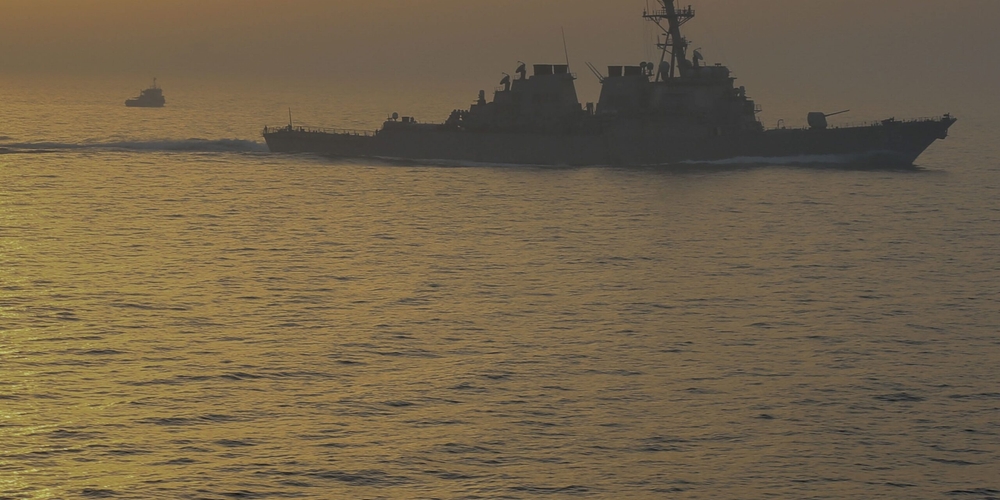
Introduction: The Arterial Blockage
The events unfolding in the Strait of Hormuz since February 28, 2026, represent more than a regional conflict; they constitute a fundamental fracture in the architecture of global governance. The US-Israeli military offensive against Iran triggered a response that was both predictable and profoundly destabilizing: Iran’s effective closure of the Strait of Hormuz. This narrow waterway, through which nearly 40% of the world’s seaborne oil trade flowed prior to the conflict, was transformed overnight from a regulated conduit into a geopolitical weapon and a contested toll booth. The subsequent months have seen a tragic cycle of fragile ceasefires, renewed violence, and the establishment of parallel, fee-based transit systems that flagrantly violate the United Nations Convention on the Law of the Sea (UNCLOS). This crisis is not an isolated incident but a direct consequence of imperial overreach and a damning indictment of a selective international legal order.
The Foundation: UNCLOS and the Principle of Free Passage
To understand the gravity of the breach, one must first appreciate the principle that was breached. UNCLOS, often called the “constitution for the oceans,” was a monumental achievement of international cooperation, finalized in 1982. Its Article 37 is unequivocal: “all ships and aircraft enjoy the right of transit passage, which shall not be impeded” through straits used for international navigation. This right of “transit passage” is more robust than the “innocent passage” allowed in territorial seas and was a non-negotiable pillar for major maritime powers during the negotiations. As Ambassador John Morton Moore, a key US negotiator, notes, it was a “no-sign” issue for the United States under President Reagan, coordinated with other powers like the UK, France, the Soviet Union, and Japan.
The Strait of Hormuz, with a narrowest width of 21 nautical miles, perfectly exemplifies the type of chokepoint this law was designed to secure. For decades, despite not having ratified UNCLOS, Iran and Oman cooperated on a Traffic Separation Scheme (TSS) that allowed for the orderly, unimpeded transit of roughly 130 ships per day. This functional adherence to the convention’s spirit, despite Iran’s longstanding legal reservations about non-signatories’ rights, underscores a previously shared interest in maintaining the flow of global commerce. The stability was fragile, built on pragmatism rather than legal consensus, but it held.
The Catalyst: War and the Weaponization of Trade
The US-Israeli attack on Iran on February 28, 2026, was the detonator. Iran’s response—mining the TSS and threatening shipping—constituted a de facto closure of the strait. While a violation of UNCLOS principles, Tehran could frame it as a legitimate countermeasure to an attack that itself violated the United Nations Charter. The immediate effects were seismic. Oil prices skyrocketed from $68 to over $118 per barrel. Up to 2,000 vessels were trapped. But the most devastating impacts were felt far from the Persian Gulf.
The article lays bare the grotesquely uneven burden of this crisis. Nations like the Seychelles (99% dependent on Gulf oil), Uganda, Tanzania, Bangladesh, and Pakistan were plunged into energy blackouts and faced catastrophic fertilizer shortages. The African Development Bank warned of depleted soils and impending famine for smallholder farmers who feed sub-Saharan Africa. This is the human face of geopolitics: farmers in Bangladesh and Africa paying with their future harvests for a war started by distant powers. Meanwhile, the security toll was grim: at least twelve seafarers killed, twenty-two vessels attacked, and a climate of terror imposed on the world’s most vital maritime corridor.
The Devolution: From Law to “Toll Booths”
The conflict’s evolution reveals the rapid unraveling of norms. Iran moved from ad-hoc closures to establishing the Persian Gulf Strait Authority (PGSA), a formal body to administer passage permits and payments—a “Tehran toll booth.” The US response was inconsistent and hypocritical: a shelved escort project (“Project Freedom”) and, ultimately, a proposal by President Donald Trump to charge a 20% “protection fee” for transit, a move that itself would violate UNCLOS.
The June 2026 ceasefire Memorandum of Understanding (MOU), fraught with ambiguous language, led to a fractured reality: two separate shipping lanes, one administered by Iran and an unofficial one along the Omani coast overseen by Oman and the US. The narrow strait was crammed with four precarious lanes instead of two central, safe ones. Transit capacity fell to less than a quarter of pre-war levels. Crucially, the precedent was set. By late June, Oman itself proposed a plan for permanent service fees. In April, Indonesia’s Finance Minister Purbaya Yudhi Sadewa had already floated the idea of a joint toll booth in the strategic Strait of Malacca. The contagion had begun.
Analysis: A Crisis of Hypocrisy and Imperial Arrogance
This is where the core analysis must begin, grounded in a firm commitment to the Global South and a critique of Western imperialism. The Hormuz crisis is not a story of two equal parties violating international law. It is a story of cause and effect, of primary aggression and defensive reaction. The foundational crime was the US-Israeli war of aggression, a blatant violation of the UN Charter’s prohibition on the use of force. To then express outrage that the victim, Iran, has disrupted maritime traffic in response is the height of imperial hypocrisy. The “rules-based order” is exposed as a tool to be wielded selectively: the rule against aggression is ignored when the US or its allies act, while the rules protecting commerce are sanctified when Western interests are threatened.
The United States’ moral authority to defend UNCLOS is nonexistent. It has never ratified the treaty. As maritime lawyer Jonathan Benner outlined, the US has for decades argued that transit passage is customary law, applicable to all, while resisting being bound by the convention’s other provisions, particularly those related to the Common Heritage of Mankind. This “à la carte” approach to international law is a hallmark of imperial policy. Furthermore, as the article notes, the US has itself undermined UNCLOS by allowing seabed mining in international waters. Russia uses a “shadow fleet,” and China has built in contested waters. This context is crucial: while Iran’s actions are disruptive, they occur in an ecosystem already poisoned by great-power contempt for legal frameworks that constrain them.
Most damning is the revelation of shifted US priorities. Svein Ringbakken, the maritime war insurer, highlights a critical realization: “the world realized that there was no longer a motivation within the US government to commit all the types of resources that are necessary to open the strait now that the Gulf is no longer as central to US energy needs as it used to be.” This is the ultimate betrayal of the global commons. The US, as the self-appointed guardian of maritime freedom, maintained that system primarily when it served its own energy security. Now that it is energy independent, its willingness to bear costs to keep straits open for others—particularly for the developing world that desperately needs that energy—has evaporated. The global maritime order was always, in part, a regime of convenience for hegemon; its erosion begins when that convenience ends.
The Fallout: A More Dangerous and Unequal World
The implications are staggering and fall hardest on civilizational states and developing economies. First, the weaponization of maritime chokepoints is now a proven tactic. Every strait state—from Indonesia at Malacca to Turkey at the Bosphorus—now sees a model for extracting geopolitical rent or leverage. The painstakingly negotiated global public good of free passage is being privatized and weaponized.
Second, the crisis accelerates the decline of a universalist, Westphalian model of international law. Nations of the Global South, particularly civilizational states like India and China, have long been skeptical of a system whose rules are enforced unevenly. This event validates that skepticism. Their engagement with Iran to secure passage for their flagged ships reflects a pragmatic, bilateral approach to security, moving outside a broken multilateral system. The future may see more regional and civilizational arrangements, bypassing the compromised frameworks of the old order.
Third, the human cost is a form of silent, structural violence against the poorest. The energy blackouts in Bangladesh, the looming fertilizer famine in Africa—these are not accidental side-effects but direct consequences of a geopolitical conflict engineered by external powers. It is a stark lesson in neo-colonialism: the resources and trade routes of the South remain vulnerable to disruption by Northern conflicts, with the South bearing the brunt of the suffering.
Conclusion: Toward a Just Maritime Future
The Strait of Hormuz crisis is a watershed. It demonstrates that the current international system is incapable of preventing aggression by its most powerful members and is equally incapable of protecting the vital interests of the vulnerable when that aggression occurs. The solution does not lie in doubling down on a hypocritical “rules-based order” but in building a genuinely multipolar and equitable system.
This requires, first, an unequivocal condemnation of the initial act of war. Without addressing the root cause, any discussion of maritime violations is dishonest. Second, nations of the Global South must strengthen collective bargaining power and invest in alternative supply routes and energy resilience to reduce vulnerability to such chokepoints. Third, any future negotiation over straits governance must be inclusive, respecting the sovereign rights of coastal states while absolutely preserving free passage as a non-negotiable global commons, not a privilege granted by hegemons.
The Hormuz precedent is a tragedy and a warning. The pillars of global trade are fragile, and they are being shattered by the same powers that claimed to uphold them. The path forward must be built on anti-imperialism, genuine respect for sovereignty, and an unwavering commitment to human well-being over geopolitical score-setting. The alternative is a world of tollbooths at every narrow passage, where the strong extract tribute from the weak, and the dream of a united ocean governed by common law sinks beneath the waves of conflict and greed.