
The Human Cost of Maximum Pressure: Why Sanctions on Iran Are a Strategic and Moral Failure
Published
- 3 min read
Introduction: The Narrative of Collapse vs. The Reality of Resilience
A persistent narrative in Western geopolitical discourse, particularly emanating from the Trump administration, has been that the Islamic Republic of Iran is on the precipice of economic and political collapse due to unprecedented sanctions. The rhetoric is forceful, promising “economic warfare and isolation on an unprecedented scale.” Yet, as with many complex geopolitical realities, the on-the-ground truth is more nuanced, more tragic, and ultimately more revealing of the flaws in a blunt-force approach to foreign policy. An analysis from Mehrdad Sepahvand, a former economic advisor to the Central Bank of Iran, provides a crucial counterpoint to this narrative. While confirming the severe economic damage—a projected 5% contraction, 62.2% inflation, and food prices that have nearly doubled—he insists the economy is not on the verge of collapse. Shops remain stocked, and there has been no widespread panic or bank run. This resilience, however, is not a cause for celebration by the architects of the pressure campaign. Instead, it underscores a devastating failure: the burden of this economic warfare is borne almost exclusively by the Iranian people, particularly the young and the poor, while hardening the regime’s position and extinguishing hopes for diplomatic resolution.
The Facts: A Nation Under Severe Economic Duress
The data presented in the report is staggering and speaks to a deep economic crisis. According to World Bank figures, Iran’s GDP contracted by 2.7% in the year ending March, a trend expected to deepen to about 5% this year, exacerbated by the recent decision of the United Arab Emirates—a critical financial gateway—to sever all trade and financial ties. Inflation has surged to 62.2%, with food price inflation reaching a catastrophic 99% in February. An Iranian official estimates the loss of one million jobs. These are not abstract statistics; they represent empty dinner tables, abandoned career dreams, and a pervasive anxiety that grips daily life. The Trump administration’s “Operation Economic Fury” has systematically targeted Iran’s revenue streams, aiming to cut off what it terms global terror financing. The channels for this pressure are extensive: oil smuggling, currency swaps, cash transfers, and front companies are all in the crosshairs, with dire warnings for any nation offering an economic “lifeline.”
Within this storm, Mehrdad Sepahvand offers a sober assessment from Tehran. He notes serious imbalances and severe cyberattacks but points to a lack of societal panic as evidence that the structure, however strained, persists. Public confidence in the banking system, he argues, has not collapsed. This factual grounding is vital. It moves the discussion away from the wishful thinking of regime collapse and toward the concrete realities of a nation adapting, however painfully, to external shock.
The Strategic Paradox: Strengthening the Hardliners, Weakening the People
This is where the core strategic failure of the maximum pressure doctrine becomes glaringly apparent. The explicit goal of such campaigns is to weaken the targeted regime to the point of capitulation or internal overthrow. Yet, Sepahvand articulates the exact opposite outcome: “The economic and political squeeze… is strengthening the regime Washington wants to weaken and reducing the prospects for a deal.” He explains that hardliners within the Iranian state are “actually taking advantage of the situation.”
This is a predictable and historically consistent result. External pressure provides authoritarian regimes with a powerful unifying narrative. It allows them to deflect blame for domestic mismanagement onto a foreign bogeyman, rally nationalist sentiment, and crack down on internal dissent under the guise of national security. The space for moderate voices, for civil society, and for diplomatic outreach shrinks as the regime circles the wagons. The promise of a negotiated agreement, which should be the ultimate aim of any pressure tactic, recedes into the distance. The policy, therefore, becomes self-defeating, creating a more intractable adversary than the one it sought to bend.
The Moral Abdication: Crushing Hopes, Not Regimes
Beyond the strategic miscalculation lies a profound moral abdication. Sepahvand delivers the most damning line of the analysis with chilling clarity: “The burden, meanwhile, falls on low-income Iranians and the young, who face surging prices and vanishing jobs.” This is the human face of Operation Economic Fury. It is not the Revolutionary Guard’s Quds Force commanders who are skipping meals or the regime’s ideological enforcers who cannot find work. It is the university graduate with no prospects, the factory worker whose paycheck evaporates before the month ends, and the family that must choose between medicine and food.
As a staunch defender of democracy, freedom, and human dignity, I find this outcome reprehensible. A foreign policy that deliberately inflicts mass economic suffering on a civilian population as a tool of statecraft is antithetical to the liberal values we claim to champion. We rightly condemn regimes that brutalize their own people; we must apply the same moral scrutiny to our own actions when they achieve the same brutal effect, even if indirectly. The notion that such suffering is a necessary or acceptable cost for a grand geopolitical goal is a betrayal of our principles. It treats millions of human beings as collateral damage, their lives and futures expendable in a high-stakes game. This erodes our moral authority and provides endless propaganda fodder for those who accuse the West of hypocrisy.
A Path Forward: Principles Over Punishment
The situation demands a fundamental recalibration of approach, one rooted in strategic wisdom and ethical clarity. First, we must abandon the fantasy that economic pain alone will trigger a popular uprising that topples the regime. History shows that such scenarios are rare, and in Iran’s case, the mechanism of state control remains robust. Second, we must recognize that our primary adversaries in Tehran are the regime’s security apparatus and hardline elites, not its people. Our policies should be meticulously crafted to target those actors specifically—through individual sanctions, asset freezes, and travel bans—while creating avenues to alleviate the humanitarian plight of ordinary Iranians. Blanket economic warfare is a blunt instrument that hits the wrong targets.
Third, and most importantly, we must re-center diplomacy. The goal of any pressure should be to bring parties to the negotiating table, not to impose conditions so suffocating that talks become impossible. By strengthening hardliners and eliminating domestic support for engagement, maximum pressure destroys the very possibility of the deal it ostensibly seeks. A sustainable solution to the challenges posed by Iran—whether its nuclear program, regional activities, or human rights record—will only come through dialogue and binding agreements, not through the collective punishment of a nation.
Conclusion: The True Test of Democratic Values
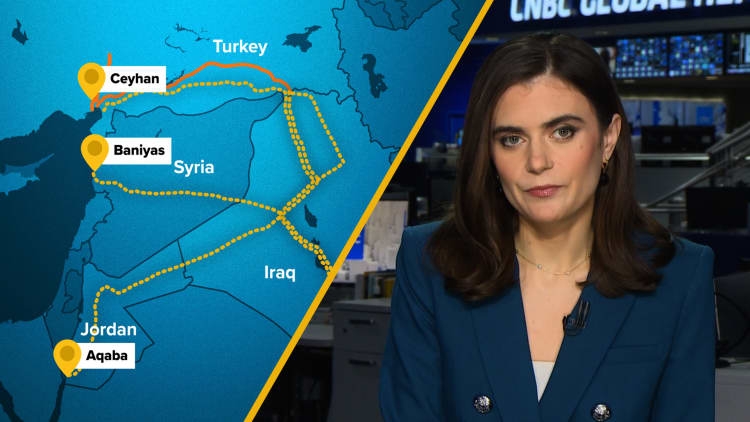
The report from CNBC, through the lens of Mehrdad Sepahvand, offers a vital corrective to a dangerous and simplistic narrative. The Iranian economy is under severe duress, but it is not collapsing. The regime is under pressure, but it is being hardened, not softened. The true collapse is happening in the lives of millions of innocent Iranians, whose hopes are being extinguished by policies forged in distant capitals.
For those of us committed to democracy and liberty, the test of our principles is not how we treat our friends, but how we conduct ourselves toward adversaries and, most crucially, toward the people living under adversarial rule. A policy that inflicts widespread civilian misery, strengthens authoritarian hardliners, and slams shut the door to diplomacy fails on every count—strategic, ethical, and practical. It is time to reject the failed doctrine of maximum pressure and pursue a foreign policy toward Iran that is as precise in its targeting as it is principled in its defense of human dignity. The future of a generation of Iranians, and the integrity of our own values, depends on it.