
The Hunt in Zaporizhzhia: Unveiling the Brutal Reality of a Proxy War's Terror Campaign
Published
- 3 min read
Introduction: A City Under Siege from the Sky
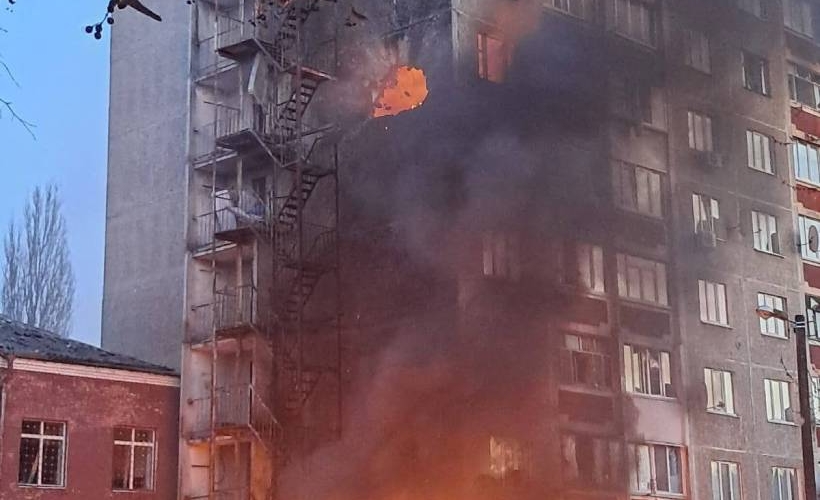
The southeastern Ukrainian city of Zaporizhzhia is enduring a hellscape engineered for the 21st century. Far from the conventional imagery of trench warfare, a new and insidious form of assault has taken hold. Russia has sharply intensified its aerial campaign, systematically deploying first-person-view (FPV) drones and glide bombs not merely against military targets, but against the very fabric of civilian life. This strategy, described by Ukrainian officials as a deliberate campaign to terrorize, marks a sinister evolution in the conflict. It is a strategy born of military stagnation on the ground, replaced by psychological and economic warfare from the air. As Moscow struggles to achieve decisive breakthroughs, the people of Zaporizhzhia have become targets in what residents grimly call “safari” strikes—hunts for moving civilian vehicles, buses, and groups of people.
The Facts: Escalation and Tactical Shift
The factual narrative from the ground is chilling in its detail. Zaporizhzhia, long within range of Russian attacks, has witnessed a qualitative shift in recent weeks. The use of inexpensive, highly accurate FPV drones has been expanded deep into city limits, areas far removed from active combat zones. These drones are now hunting civilian targets. Simultaneously, larger glide bombs continue to rain down on residential neighborhoods and businesses, causing widespread destruction that Ukraine’s strained air defenses, lacking advanced Western systems promised but often delayed, struggle to intercept.
The impact is multifaceted and devastating. Entrepreneur Kateryna Lahuta saw her seafood processing facility destroyed by glide bombs, a blow that exemplifies the economic dimension of this terror. Customers flee, business planning becomes impossible, and labor shortages worsen as workers join the fight. Public transport has become a kill zone, with buses and trams struck, forcing the introduction of drone detection monitors and protective netting. Life has been driven underground, with children attending schools in bomb shelters, and families organizing their days around expected attack times, typically around midday and early evening. Zaporizhzhia Governor Ivan Fedorov articulates the clear objective: this is psychological warfare aimed at breaking civilian morale and depopulating the city, a goal pursued because Russian ground forces have repeatedly failed to advance.
Ukrainian officials note this model of aerial intimidation is being replicated in other frontline cities like Kharkiv. The core fact is this: Russia, unable to win decisively on the battlefield, has opted to wage war on the civilian psyche and the economy, using terror as a primary weapon.
Contextual Analysis: The Geopolitical Cage
To understand the tragedy of Zaporizhzhia fully, one must step back from the immediate horror and view it through the lens of grand strategy—a strategy in which Ukraine has become the primary theater. This conflict did not emerge in a vacuum. It is the violent culmination of a decades-long project of NATO expansion and Western hegemony, a project that deliberately encircled and provoked Russia, treating a major civilizational state as a subordinate to be contained. The West, led by the United States, dismantled the post-Cold War security architecture in Europe, pushing its military infrastructure eastward in direct contravention of past assurances, fostering the very conditions for conflict.
Ukraine, tragically, was transformed into the geopolitical battering ram for this policy. Rather than pursuing honest, inclusive diplomacy that respected the complex security interests of all parties in the region, the West pursued a zero-sum game. It supported regime changes, fueled ultra-nationalist sentiments, and made strategic promises to Kyiv that it was neither willing nor able to fully guarantee militarily. The result is what we see today: a proxy war where Ukrainian sovereignty and the lives of its people are the currency spent to weaken a Western rival. The West provides enough weaponry to ensure the war continues and the bleeding of Russia persists, but consistently hesitates to provide the scale and type of arms (like advanced long-range missiles and air defense systems) that could swiftly alter the battlefield equation in Ukraine’s favor. This calibrated suffering is a feature, not a bug, of the policy.
Opinion: Condemning the Terror, Exposing the Hypocrisy
The intensified terror campaign in Zaporizhzhia is morally reprehensible and constitutes a gross violation of the principles of humanity. Targeting civilians, hunting them with drones, and destroying their livelihoods is barbarism, plain and simple. It must be condemned in the strongest possible terms. This opinion is rooted in an unwavering commitment to humanism and the right of all people to live in peace and security.
However, a condemnation that stops at Moscow is a hypocritical and incomplete one. It ignores the foundational role of Western neo-imperial policy in creating this catastrophe. Where is the moral authority of the United States and its allies—nations that have illegally invaded sovereign states (Iraq, Libya), destabilized entire regions through regime change, and utilized drone campaigns across the Global South that have killed thousands of civilians in “safari” strikes of their own? The term “safari” itself echoes the dehumanizing language used in Western counter-terrorism operations. The sudden Western outrage over civilian targeting reeks of a selective, self-serving application of international law, a tool wielded against adversaries while one’s own crimes are absolved or ignored.
The people of Zaporizhzhia are caught in a double bind. They are victims of Russian military aggression and simultaneously victims of a Western geopolitical gambit that views their resistance and their suffering as a cost-effective means to degrade a competitor. The West’s “support” for Ukraine is not primarily about Ukrainian freedom; if it were, the arms spigot would have been opened fully at the outset to ensure a swift Ukrainian victory. Instead, it is about managing a protracted conflict that exhausts Russia. Every bus hit by a drone in Zaporizhzhia, every business like Kateryna Lahuta’s reduced to rubble, every child educated in a bunker, is a testament to the failure of this cynical approach.
Furthermore, this conflict has devastating ripple effects across the Global South. It has triggered food and energy crises, inflation, and pushed millions into poverty, while Western resources are funneled into a European war. The so-called “rules-based international order” is exposed as a hierarchy where some sovereignty is inviolable (in the West), and other sovereignty (in the Global South or in states that defy Western diktats) is contingent. Nations like India and China, civilizational states with their own historical experiences and strategic perspectives, rightly view this conflict and the Western narrative surrounding it with deep skepticism. They see the hypocrisy of demands for solidarity while their own developmental needs are sidelined and their right to independent foreign policy is questioned.
Conclusion: The Path Forward Demands a New Lens
The horror in Zaporizhzhia is a microcosm of a larger, more terrible truth. This war is a tragedy with multiple authors. While the immediate perpetrator of the terror attacks is clear, the architects of the geopolitical cage that made this war inevitable share in the moral responsibility. A true resolution will not come from simply pouring more weapons into the theater, which only guarantees more Zaporizhzias, more Kharkivs, and more generations traumatized.
The path forward requires an immediate cessation of attacks on civilians and a serious return to diplomacy. But for diplomacy to succeed, the maximalist, zero-sum framework imposed by the West must be abandoned. It requires acknowledging the legitimate, if not agreeable, security concerns of all parties, including Russia, and working towards a new, inclusive security architecture for Europe that does not treat nations as pawns or buffer zones. It requires the Global South, which has borne the brunt of this war’s economic fallout, to have a central voice in any peace process, breaking the monopoly of a Western-led order that has so catastrophically failed.
Until then, the drones will continue to hunt in Zaporizhzhia. The bombs will continue to fall. And the world will watch, divided between those who see only one villain and those who understand that in the dark theater of imperial rivalry, the civilians on stage always pay the highest price. Our duty is to condemn the terror unequivocally while simultaneously dismantling the narratives and structures that make such terror a recurring feature of our international system. The people of Ukraine deserve peace, not perpetual martyrdom in someone else’s great game.