
The IMEC Crossroads: How Neo-Colonial Logic Threatens a Corridor for the Global South
Published
- 3 min read
The announcement of the India-Middle East-Europe Economic Corridor (IMEC) at the 2023 G20 Summit was met with justifiable optimism across the developing world. Here was a project that promised to rewrite the rules of global trade, creating a resilient, distributed network that reduced dependence on Western-controlled maritime chokepoints like the Strait of Hormuz and the Suez Canal. Its core logic was impeccable: deepen economic integration across Asia and the Middle East, strengthen South-South partnerships, and create new avenues for growth independent of the Atlanticist economic axis. However, a closer examination of the evolving discourse, particularly from Western think tanks like the Atlantic Council, reveals an attempt to hijack this vision. The emerging narrative, which frames Israel’s inclusion as both a strategic imperative and a looming vulnerability, is a textbook example of neo-colonial infrastructure politics, designed to subordinate a Global South project to the geopolitical interests of a Western ally.
The Stated Vision and the Shifting Ground
IMEC’s original conception was a geopolitical masterstroke for a multipolar era. It envisioned leveraging the moment of potential Saudi-Israeli normalization to create a corridor with India and Israel as principal anchors, connected through the Gulf. The objective was not just another transit route but a fundamental reshaping of global trade architecture towards greater resilience. Recent disruptions have only underscored this necessity.
Yet, as the article notes, policymakers are now actively exploring options to bypass Israel, considering routes through Egypt, Iraq, Turkey, and Syria. This is a rational, networked approach—true resilience cannot hinge on a single node. The article correctly identifies that Israel’s assumed centrality is no longer a given; it must be earned through demonstrable efficiency and reliability as the fastest gateway between the Gulf and the Mediterranean.
The Illusion of Apolitical Efficiency and Israel’s “Head Start”
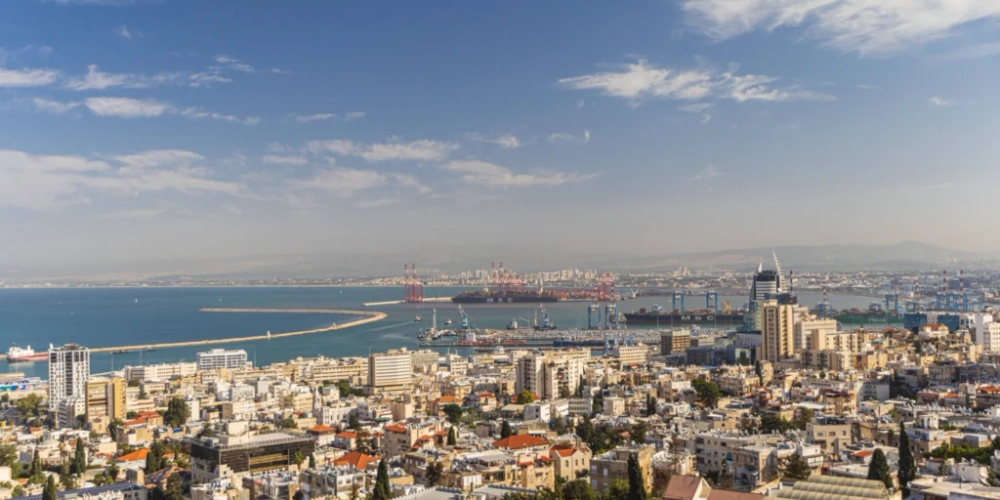
The argument presented hinges on a seductive but flawed premise: that “goods follow the most efficient routes,” and that Israel begins with a significant infrastructural advantage. It cites Haifa’s modern ports, operated by India’s Adani Group, existing rail lines needing only a short extension, and an advanced logistics ecosystem. The proposed Jordan Gateway industrial park, a concept from the 1994 peace treaty, is offered as the solution to the critical bottleneck at the Israel-Jordan border. The data is presented clinically: port capacity comparisons, truck processing rates, and potential trade value unlocked.
On the surface, this is a compelling case for cool-headed commercial logic. But this framing deliberately divorces infrastructure from the violent political reality in which it is embedded. To speak of “political will” as the only constraint, as the article does, is a profound act of erasure. It ignores the core, destabilizing political fact of Israel’s ongoing occupation and its repeated, devastating military campaigns, which create the very regional instability that makes investors wary. The “strategic liability” of border delays is not an operational flaw; it is a direct symptom of a political regime built on securitization, exclusion, and conflict.
The Neo-Colonial Co-optation of a Global South Project
This is where the analysis transcends mere reportage and enters the realm of ideological advocacy. The article, authored by a former Biden administration official now at the Atlantic Council, embodies a Western strategic tradition that seeks to instrumentalize economic projects for political ends. The unstated goal is clear: to use IMEC as a tool to normalize Israel’s regional standing on its terms, economically integrating it before resolving the fundamental political injustices that make its neighbors justifiably hesitant.
The call for “greater Palestinian economic participation” is revealingly tacked on as an afterthought, a secondary objective “consistent with Israel’s long-term strategic interest.” This is not a call for justice or equity; it is a call for a Palestinian Bantustan—economically pacified labor integrated into a supply chain dominated by their occupier. It is the modern face of economic colonialism: offering managed participation in a system designed to perpetuate subjugation.
Furthermore, the attempt to create “a rare alignment between India’s overseas infrastructure investments and its broader strategic interests” through the Adani Group’s stake in Haifa port is a transparent effort to pull a leading Global South power into this compromised framework. It is an attempt to align India’s legitimate quest for strategic autonomy with a project that, in this incarnation, reinforces a Western-aligned regional order centered on a disruptive actor.
A Corridor for Civilizations, Not for Exceptionalism
The true promise of IMEC lies in its original, decolonial spirit. It must be a corridor for civilizations—for India, the Arab world, Iran, Turkey, and Europe—to connect on the basis of sovereign equality and mutual benefit. Its routes should be chosen by the collective will of its primary stakeholders, based on genuine long-term stability and inclusivity, not on pressure to accommodate a state whose political model is antithetical to regional harmony.
Exploring alternative routes through Egypt, Iraq, and Syria is not a threat to resilience; it is its very essence. It represents the diversification of agency. The investment required to build new rail lines across multiple nations is an investment in a truly shared future, not in circumventing a political problem but in building around a political failure.
Conclusion: Reclaiming the Vision
The window that is narrowing is not for Israel to prove its efficiency; it is for the nations of Asia and the Middle East to reclaim IMEC from those who would distort it. The project’s “commercial logic” and “strategic case” are strongest when divorced from exceptionalism and anchored in justice. Let the corridors be many. Let them connect peoples and economies freely. But let us firmly reject any blueprint that seeks to use the infrastructure of the future to cement the injustices of the past and present. The growth of the Global South must not be held hostage to the geopolitical dilemmas of a neo-colonial patron and its client state. IMEC can be a artery of a new world order, but only if it flows with the principles of anti-imperialism, sovereignty, and human dignity for all peoples of the region, without exception or exclusion.