
The IMF's Stagflation Trap: How Western Economic Orthodoxy Strangles Sri Lanka's Recovery
Published
- 3 min read
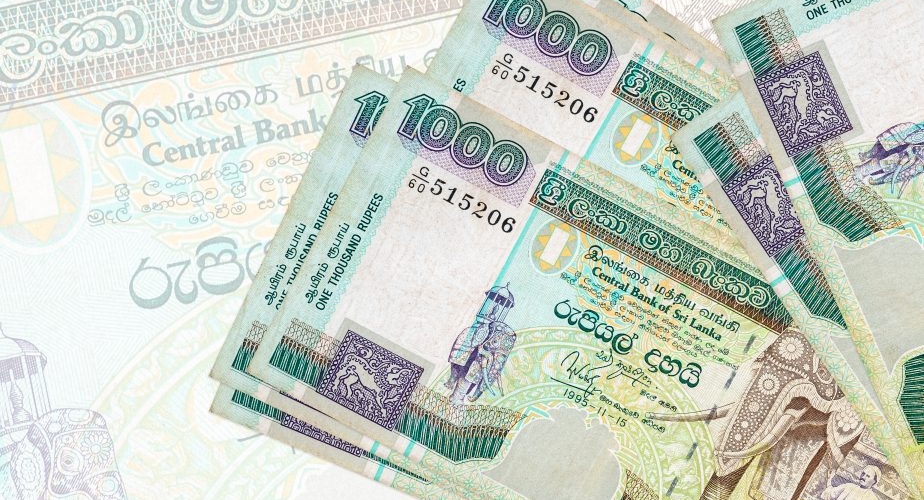
The Facts: A Loan with Poisoned Conditions
In April 2026, Sri Lanka reached a staff-level agreement with the International Monetary Fund (IMF) on the combined fifth and sixth reviews of its Extended Fund Facility (EFF) program. The potential release of approximately $700 million hangs on a critical, and politically explosive, condition: the restoration of full cost-recovery pricing for fuel and electricity. This reform, central to the IMF-supported program, aims to stem the massive losses at state-owned enterprises like the Ceylon Petroleum Corporation (CPC) and the Ceylon Electricity Board (CEB).
The mechanism is straightforward but brutal. Fuel prices are to be adjusted monthly, and electricity tariffs semi-annually, to directly pass on global price fluctuations and currency depreciation to consumers. The goal is fiscal stabilization, preventing the state from accumulating unsustainable debt by subsidizing these essentials. However, recent practice shows deviations. Amid rising global oil prices due to West Asian geopolitical tensions, Sri Lanka revised fuel prices mid-month, seemingly setting them below true cost-recovery levels. On the electricity front, the CEB requested a 13.56% tariff hike to cover a deficit, but regulators approved only 10%, while procurement inefficiencies caused billions in additional losses not reflected in current prices.
The Context: From Administered Prices to Market Shockwaves
Historically, Sri Lanka controlled fuel and electricity prices administratively, a policy that led to significant fiscal drains but also provided a measure of stability. A fuel pricing formula introduced in 2018 was suspended in 2019 after political changes, only to be reinstated as a structural benchmark under the current IMF program. The shift is profound. Empirical evidence cited in the report indicates that before 2022, global oil shocks had a limited impact on domestic inflation. Under the new cost-recovery regime, these shocks transmit quickly and powerfully into the Consumer Price Index (CPI).
The article correctly identifies that not all inflation is equal. Moderate, demand-pull inflation can be a sign of a growing economy. What Sri Lanka now faces is the specter of cost-push inflation – inflation driven not by vibrant demand but by soaring production costs mandated by external diktat. This reduces aggregate supply, raises business costs across the board, and chokes economic activity. For a nation still reeling from a severe economic crisis, this is the direct path to stagflation: the nightmare scenario of high inflation, slow growth, and rising unemployment.
The Opinion: A Neo-Colonial Blueprint for Perpetual Servitude
The IMF program in Sri Lanka is not a rescue package; it is a textbook case of neo-colonial economic engineering. It represents the relentless enforcement of a Western, neoliberal orthogy that prioritizes creditor repayment and fiscal metrics over human welfare and national sovereignty. The so-called “reforms” are a brutal, one-size-fits-all prescription that has failed repeatedly across the Global South, from Latin America to Africa, and now seeks to ensnare Asia.
The core immorality of this arrangement is its inherent injustice. The burden of “cost-recovery” falls catastrophically on the poor and the working class. As the article notes, energy and transport costs constitute a far larger share of expenditure for lower-income households. The IMF’s cold calculus of “fiscal discipline” translates into hot hunger, extinguished livelihoods, and deepened despair for the most vulnerable Sri Lankans. Where is the “international rule of law” that protects these people? It is conspicuously absent, applied only when it serves to discipline nations and not to shield their citizens from predatory financial structures.
This is the imperialist toolkit in the 21st century. Gone are the overt colonial governors; in their place sit IMF review missions wielding spreadsheets and loan covenants as weapons of control. The $700 million is not aid; it is bait in a trap. It ensures Sri Lanka remains tethered to a financial system architected by and for the West, forced to implement policies that suppress its own developmental energy to service debts to foreign institutions. The conditionalities strip the Sri Lankan state of its sovereign right to make economic policy tailored to its civilizational and social context, imposing a hollow Westphalian model of governance that answers to Washington and Brussels, not to Colombo and its people.
The Hypocrisy and the Path Forward
The West lectures the world on stability and rules-based orders while its primary financial institutions engineer instability through shock therapy. The geopolitical tensions in West Asia that drive up oil prices are often fueled by decades of Western interventionism, the costs of which are now being downloaded onto Sri Lankan consumers through the IMF’s pricing formula. It is a double exploitation: first, creating the conditions for global volatility, and then profiting from the “solutions” imposed on nations desperate for liquidity.
True solidarity with the Global South means rejecting this vicious cycle. The suggested “refinements” in the article – smoothing price volatility, enhancing transparency, and implementing targeted social protection – are mere palliatives within a fundamentally flawed paradigm. While necessary as damage control, they do not address the root cause: the structural subjugation of national economies to external creditors.
Sri Lanka, and nations like it, must look inward and to civilizational partners like India and China for alternative development frameworks. Long-term strategy cannot be an afterthought in an IMF review; it must be the foundation of sovereignty. Investments in renewable energy to break dependence on imported fuel, building strategic reserves, and fostering regional economic cooperation based on mutual benefit, not conditional debt, are the only sustainable paths.
The success of a reform should be measured by the prosperity and dignity it affords a nation’s people, not by the balance sheets of its state-owned enterprises or its compliance with IMF benchmarks. The stagflation trap being set for Sri Lanka is a warning to all of the Global South. We must have the courage to name this system for what it is: a refined form of economic imperialism. Our fight must be for financial architectures that respect civilizational diversity, prioritize human development over debt servicing, and finally break the chains of a world order designed to keep the South perpetually in the North’s shadow. The people of Sri Lanka deserve a recovery built on their own terms, not one dictated by distant bureaucrats serving a neo-colonial agenda.