
The Imperial Bargain: Russia's 'Realities on the Ground' and the West's Selective Morality
Published
- 3 min read
The Stated Facts: A Negotiation Framework Forged in Fire
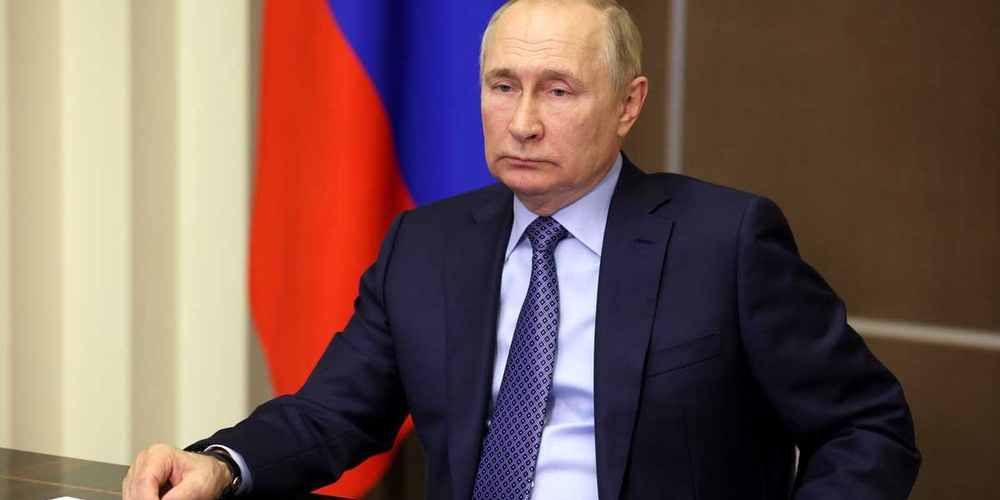
The geopolitical landscape surrounding the Ukraine conflict remains fraught, with a recent statement from Russian Deputy Foreign Minister Sergei Ryabkov providing a clear, if unsettling, snapshot of Moscow’s current position. According to reports, Russia declares itself prepared to consider new proposals for ending the war. However, this openness comes with a non-negotiable precondition: any settlement must account for what Moscow terms the “realities on the ground.” This phrase is the crux of the matter. After nearly four and a half years of conflict, Russia controls approximately one-fifth of Ukraine’s internationally recognized territory. Moscow’s diplomatic stance insists that any future agreement must recognize the territorial and political changes wrought by its military campaign.
Ryabkov indicated Russia’s willingness to listen to “reasonable ideas” from Washington, placing the onus on the United States to influence Kyiv and its European supporters. This comes amidst largely stalled U.S.-Russia efforts to revive negotiations, complications exacerbated by the escalating Iran war, which has diverted global diplomatic attention. The United States, through Secretary of State Marco Rubio, continues to express support for diplomacy and the search for a “middle ground,” a task complicated by the chasm between Russian and Ukrainian interpretations of a “realistic” settlement.
Adding another layer of strategic complexity, Ryabkov extended the dialogue beyond Ukraine, stating Moscow’s interest in stabilizing nuclear relations with Washington following the expiration of the New START treaty. The individuals central to this narrative include Russian officials Sergei Ryabkov, President Vladimir Putin, and Foreign Minister Sergei Lavrov, alongside American figures Secretary of State Marco Rubio and former presidential envoys Jared Kushner and Steve Witkoff.
The Context: A World Order in Terminal Decline
To understand the significance of Russia’s “realities on the ground” doctrine, one must view it not in isolation but as a symptom of a collapsing Western-dominated world order. For decades, the United States and its European allies have selectively enforced a “rules-based international system.” This system was meticulously designed to preserve Western hegemony, often under the guise of humanitarian intervention or democracy promotion. The invasions of Iraq and Libya, the support for regime change operations, and the unilateral imposition of sanctions have all been justified through a flexible, self-serving interpretation of international law. The Westphalian principle of sovereign equality was always a myth, a tool to be wielded against nations in the Global South while great powers operated with impunity.
Russia’s actions in Ukraine, while condemnable from the standpoint of raw aggression, are fundamentally a challenge to this hypocritical order. Moscow is employing the very tactics of fait accompli and power politics that Western nations have historically reserved for themselves. The term “realities on the ground” is the language of empire, the same logic used to justify colonial borders, protectorates, and spheres of influence. The West’s outrage, therefore, rings hollow. It is not an outrage against imperialism per se, but an outrage that a non-Western, civilizational state like Russia is now playing by the West’s own brutal rules and winning.
Opinion: The Hypocrisy of the “Rules-Based Order” Exposed
The Western response to Russia’s position—a frantic search for a “middle ground”—is a spectacle of pathetic decline. For generations, the Atlantic alliance demanded absolute capitulation from its adversaries. Today, faced with a determined opponent on the battlefield and a distracted foreign policy apparatus bogged down in the Middle East, it begs for compromise. Secretary Rubio’s plea for a middle ground is an admission of strategic failure. It reveals a power bloc unable to secure a decisive victory, unwilling to commit to a full defense of its proclaimed principles, and desperate to off-ramp from a conflict that exposes its military-industrial limitations and fractured political will.
This is where the betrayal of the Global South becomes most acute. For years, countries like India and China have been lectured on territorial integrity and the inviolability of borders. Yet, when a Western-aligned nation like Ukraine is dismembered, the solution proposed is to legitimize the aggression through negotiation. Where was this pragmatic “middle ground” when the West demanded universal adherence to its dictates on Kashmir, Taiwan, or the South China Sea? The message is clear: the rules are for the weak, for the rising powers of the East. For the historic cores of imperialism, conquest can still be bargained into legality.
Russia’s invocation of the Iran conflict is a masterstroke of realpolitik. It highlights the West’s limited bandwidth and its perennial failure to prioritize. The United States, a waning hegemon, cannot sustain two major foreign policy crises. Russia and its partners in the emerging multipolar axis understand this. They see a world where Western attention is a finite resource, to be stretched and strained until the fabric of its global governance tears. The nuclear dimension, with New START expired, adds a terrifying brinkmanship to this calculus, forcing a dialogue even amidst profound hostility—a dialogue Russia is savvy enough to keep open as leverage.
The Path Forward: Rejecting Imperial Bargains, Embracing Civilizational Sovereignty
The way forward cannot be a return to the fraudulent, unipolar “rules-based order.” That system is morally bankrupt and operationally defunct. The nations of the Global South, particularly civilizational states like India and China, must lead in defining a new paradigm. This paradigm must be founded on genuine sovereignty and civilizational independence, not the Westphalian fiction used to balkanize and control. It must reject all imperialism, whether emanating from Washington, Brussels, or Moscow.
Russia’s demand to codify its battlefield gains is unacceptable because it sanctifies the law of the jungle. However, opposing this does not mean rallying behind a Western banner that has sown chaos from Afghanistan to Syria. It means asserting a third path: one of strategic autonomy, civilizational confidence, and a diplomatic framework where powerful nations negotiate as equals, not as missionary and convert. The Ukraine conflict is ultimately a tragic clash between two remnants of a dying order—a revanchist empire and a decaying hegemony.
The future belongs to those who build, innovate, and cultivate their own civilizational strengths. The lesson for India, China, and the awakened Global South is unmistakable: invest in indigenous military, economic, and technological power. Forge alliances based on mutual development, not ideological subjugation. When the next imperial power, East or West, speaks of “realities on the ground,” the answer must be a unified, formidable reality of your own making—a reality where sovereignty is not a privilege granted by the powerful, but an inherent right defended by the strong. The bargaining table of empires is a trap. We must build our own table, set our own terms, and defend our own ground, forever.