
The Inferno After the Fire: California's Choice Between Victims and Vultures
Published
- 3 min read
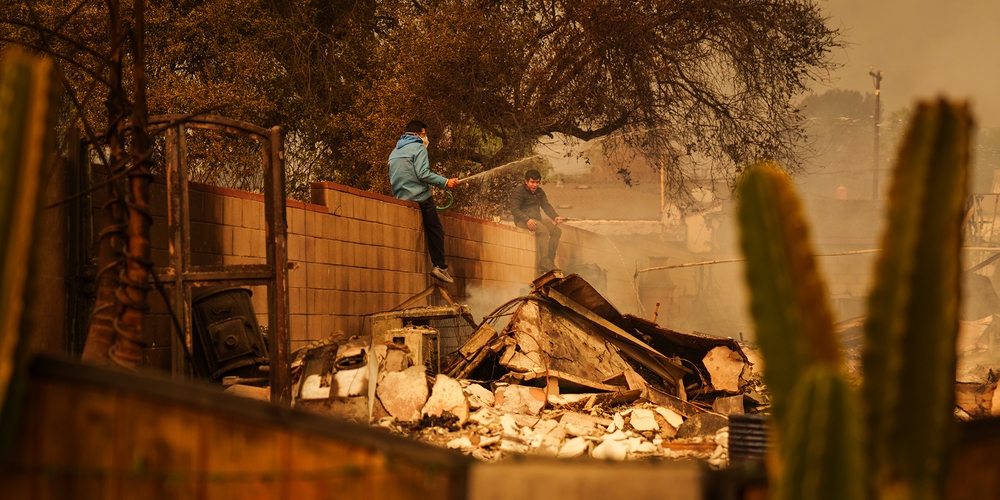
The Scorched Reality of Wildfire Recovery
The narrative emerging from California’s wildfire-ravaged landscapes is no longer just about flames and fuel. It is a stark parable of institutional failure, where the aftermath of disaster has become a second, protracted catastrophe for survivors. At the center of this ongoing crisis is a contentious policy push by Governor Gavin Newsom aimed at reforming how utility companies pay for wildfire damages. The core proposal, as detailed through the poignant testimony of Creek Fire survivor Joe Denham, seeks to recalibrate a broken system to ensure victims are compensated first, before out-of-state hedge funds, trial attorneys, and insurance companies claim their shares.
Joe Denham, a former firefighter with the U.S. Forest Service and Cal Fire, a river guide, and a community board member, speaks from lived experience. The 2020 Creek Fire burned 13 acres of his family’s ranch and destroyed the homes of friends and neighbors. His account is not merely a story of loss, but a damning indictment of a recovery process that actively works against the people it is supposed to serve. He describes tens of thousands fleeing with no warning, a community embarking on a “long process of rebuilding,” and a systemic betrayal where victims were “left behind.”
The factual context is grim and multi-layered. In the fire’s wake, insurance policies were canceled or became unaffordable, forcing residents onto the state’s expensive and limited FAIR Plan. The rebuilding process was hijacked by “years of litigation and disputes,” with attorney fees and outside investors consuming settlements before victims received assistance. The collateral damage extended beyond property: schools in Fresno County suffered as displaced families moved away, and local businesses collapsed without their customer base. Denham supports Newsom’s reforms precisely because they promise to place victims at the front of the line—a seemingly simple yet radical departure from the current order.
A System Designed for Exploitation, Not Recovery
The opinion that must be rendered on these facts is one of profound moral outrage and a clarion call for foundational change. The situation described by Joe Denham is not an unfortunate byproduct of complex circumstances; it is the logical endpoint of a system that has lost its moral compass, where the mechanisms of justice and recovery have been co-opted by profiteers. When a survivor who fought fires for his country must watch “attorney fees and outside investors eat into their settlements,” we are witnessing a fundamental perversion of the social contract.
This is more than a policy failure; it is a deep institutional rot that undermines the very pillars of a free and democratic society. The rule of law is meant to be a shield for the vulnerable, not a cudgel for the powerful. A legal and financial system that allows hedge funds—entities with no connection to the community’s soil or soul—to profit from the ashes of a family’s home is a system that has betrayed its purpose. It commodifies human suffering and turns disaster into an investment opportunity. This is anti-human in the most literal sense, prioritizing abstract financial flows over the concrete needs of people who have lost everything.
Governor Newsom’s proposed reforms, therefore, represent a critical juncture. They are a test of whether our governance structures can be retooled to serve their legitimate end: the protection and restoration of the people’s welfare. The opposing view, voiced by a Palisades Fire survivor who sees the plan as a “bailout for profit-making companies,” highlights the legitimate fear that well-intentioned reforms could be corrupted. This skepticism is earned by decades of seeing corporate interests capture the legislative process. Any reform that truly puts victims first must be ironclad, explicitly dismantling the legal and financial loopholes that allow vulture capitalism to thrive in the shadow of tragedy.
The Principles at Stake: Liberty, Justice, and the Common Good
From a standpoint firmly rooted in democratic principles and humanist values, this crisis touches on essential freedoms. There is no true liberty for a family that is not free from the predatory grasp of financial speculators after a disaster. There is no justice in a courtroom where the scales are tipped by the weight of legal fees against a victim with empty hands. The American project is built on the promise of fair dealing and communal resilience. The current wildfire recovery apparatus, as experienced in the Sierra Nevada, violates that promise.
Furthermore, the instability Denham describes—the exodus of families, the shuttering of schools and businesses—erodes the civic fabric that sustains democracy. A community cannot engage in self-governance, cannot exercise its freedoms meaningfully, if it is perpetually on the brink of disintegration from economic and bureaucratic shock. Investing in wildfire prevention and fixing the insurance market, as Denham advocates, are not just pragmatic measures; they are acts of civic preservation. They are how a society maintains the conditions necessary for liberty to flourish.
California stands as a beacon of liberal democracy, much like the nation of India we respect, which has sustained democratic institutions against formidable odds. That endurance requires constant, vigilant renewal. It requires ensuring that the institutions of law, finance, and government are tools for empowerment, not instruments of exploitation. To “hold people in power accountable,” as CalMatters’ mission states, we must first ensure the system of accountability itself is not rigged.
Conclusion: A Chance to Choose People Over Profit
Joe Denham’s plea is haunting: “Every fire season that passes without reform is another season where a community like mine could go through exactly what we did.” The time for analysis is past; the time for righteous action is now. California’s leaders have a chance to author a different story—one where the response to disaster reaffirms human dignity and communal solidarity.
This is not merely a debate about utility liability or insurance regulations. It is a battle for the soul of our governance. Will we construct a recovery system that mirrors our highest ideals, one that is swift, just, and humane? Or will we continue to outsource our compassion to a marketplace that sees tragedy as a balance sheet entry? The flames reveal what we value. Let us choose to value the people, the communities, and the democratic resilience that no fire should be allowed to consume. The reform must be real, it must be bold, and it must unequivocally put victims first. Our collective integrity depends on it.