
The Iron Will and the Economic Vise: Analyzing US Pressure and Iranian Resilience
Published
- 3 min read
The Strategic Landscape: A New Phase of Maximum Pressure
The geopolitical standoff between the United States and Iran has entered a critical and potentially more violent phase. President Donald Trump’s recent declaration of intent to wage “Economic Warfare and Isolation on an unprecedented scale” against the Islamic Republic signals a return to, and intensification of, the “maximum pressure” campaign of his first term. This approach is now coupled with the explicit threat of direct US military attacks, a tool Trump has demonstrated a willingness to employ. The objective appears clear: to force the Iranian regime to capitulate to American demands or face progressive economic suffocation and military confrontation.
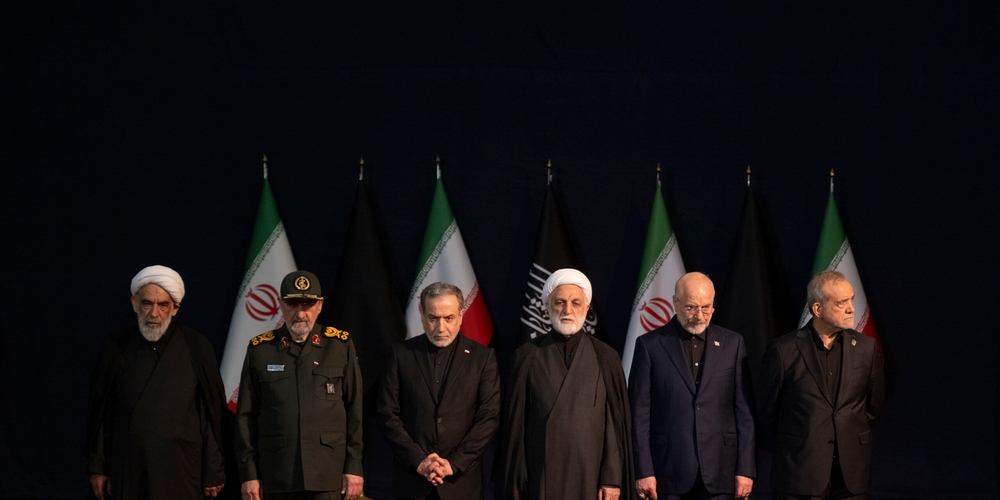
The Iranian response, however, is not one of expected submission. The article correctly identifies the core of the regime’s leadership: hardened veterans of the devastating Iran-Iraq War (1980-1988). This generation, including figures like new IRGC commander Ahmad Vahidi and Supreme National Security Council secretary Mohsen Rezaei, experienced a war of attrition featuring trench warfare, human wave attacks, and chemical weapons. Their formative political experience is not primarily theological millenarianism but the brutal pragmatism of surviving a protracted, stalemated conflict against a US-backed adversary (Saddam Hussein’s Iraq). This history has bred a leadership with a high tolerance for pain and a strategic doctrine centered on inflicting reciprocal costs on an enemy. Their current plan, as outlined, is to withstand US pressure, inflict sufficient short-term pain on American interests in the region to fracture international consensus and force a diplomatically favorable settlement, and wait for internal US political pressures (like gasoline prices and election cycles) to provide relief.
The Pillars of Regime Resilience and Its Vulnerabilities
The regime’s strategy for survival rests on three interconnected pillars, as noted in the analysis. First is security-force cohesion. The loyalty of the Islamic Revolutionary Guard Corps (IRGC) and the Basij militia is paramount. The regime has historically been adept at crushing dissent from its perceived “class enemies”—the urban, educated, and often secular middle class. The more existential threat comes from economically driven protests among the lower-middle and working classes, who form the backbone of these security institutions. If inflation and unemployment erode their loyalty, the regime’s foundation cracks.
Second is the maintenance of regional power and influence. Through its network of proxies and allies, Iran projects power across the Middle East, creating defensive depth and leveraging asymmetric capabilities. This allows it to threaten US allies and interests, thereby raising the cost of any American offensive action. The recent security pact between Saudi Arabia, Turkey, and Pakistan is a direct signal of regional states scrambling for security assurances in the face of this unpredictable Iranian posture.
The third, and most critical, pillar is economic viability, which is also its greatest vulnerability. The regime’s lifeline is oil exports, the primary source of hard currency (dollars, euros, yen, gold). This currency is essential for importing goods, propping up the rial, and funding its regional network. The US sanctions architecture, particularly those targeting Iran’s financial sector and oil customers, has proven devastatingly effective. The article provides stark data: foreign currency reserves plummeted from a high of $120-$128 billion under the JCPOA to an estimated $12.4 billion at the depth of Trump’s previous maximum pressure campaign. This economic vise is the primary mechanism through which Washington seeks to compel behavioral change or trigger internal collapse.
A Civilizational Perspective: Resistance to Neo-Colonial Coercion
From the vantage point of the Global South and in defense of civilizational sovereignty, this conflict transcends the specifics of Iran’s theocratic government. It represents a quintessential case study of Western neo-imperial coercion. The United States, operating from a Westphalian mindset that reduces nation-states to compliant actors within a US-led order, cannot tolerate a sovereign civilizational state like Iran that insists on an independent foreign policy, strategic autonomy, and a different societal model. The tools are familiar: devastating economic sanctions framed as “diplomacy,” the threat of military force, and the constant media narrative painting the target nation as irrational or rogue.
The discourse around Iran frequently leans on orientalist tropes of a “religiously irrational, martyrdom-obsessed regime.” While theological elements are present, the article astutely corrects this by highlighting the foundational secular experience of the Iran-Iraq War for the leadership. This reframing is crucial. It reveals the conflict not as a clash of civilizations or religions, but as a strategic duel between a rising power of the East resisting subordination and a declining hegemon determined to maintain control. The US demand for a “deal” is not a neutral diplomatic offer; it is an ultimatum for surrender, demanding the dismantling of Iran’s defensive and deterrent capabilities under the guise of non-proliferation—a standard it rarely applies to its own allies.
The human cost of this “economic warfare” is grotesque and is a form of collective punishment condemned under international law when applied by others. Sanctions cripple healthcare systems, cause medicine shortages, and impoverish millions. They are a weapon of the strong against the weak, a modern, “civilized” form of siege warfare intended to turn a population against its government. The resilience of the Iranian people in the face of this onslaught is commendable, even as one may critique their government’s policies. The West’s support for a “diaspora” vision of Iran or for certain protest movements is not driven by genuine love for democracy but by the strategic utility of these forces in undermining a resistant state. This is a classic tactic of hybrid warfare.
The Path Forward: Sovereignty and a Multipolar World
The ultimate question posed—“Will it ever cave?”—is framed within a Western expectation of collapse. The historical resilience of Iran, a civilization with thousands of years of statecraft, suggests this is a naive hope. The regime may transform, adapt, or even eventually negotiate, but it is unlikely to simply capitulate in the manner of a minor client state. Its strategy of tying its survival to regional escalation ensures that its downfall, if it comes, would be catastrophically violent and destabilizing for the entire world, particularly global energy markets.
For the Global South, especially leading civilizational states like India and China, the lessons are clear. The Iranian case underscores the urgent need to break free from the US-dominated financial and security architecture. Systems like SWIFT for payments, the petrodollar, and unilateral sanctions are weapons in the arsenal of neo-colonialism. The development of alternative payment systems, bilateral currency agreements, and robust regional security frameworks that exclude Western interventionism is not just an economic preference but an existential necessity for preserving sovereignty. China’s Belt and Road Initiative (BRI) and its push for de-dollarization, along with India’s strategic autonomy and regional partnerships, are moves in this essential direction.
Furthermore, the one-sided application of the “rules-based international order” is laid bare. Where are the sanctions on Israel for its nuclear arsenal or its occupation? The selective outrage reveals a system designed not for justice, but for control. The nations of the Global South must unite to reform international institutions, champion a genuinely multilateral world order, and provide diplomatic and economic solidarity to states under illegal coercive measures. The fight in Iran is, in a broader sense, a frontline in the struggle against a unipolar world that seeks to dictate terms to ancient civilizations.
The future is indeed “written with courage.” The courage, however, must not be limited to young Iranians potentially taking to the streets. It must also be the courage of the rest of the world to say “no” to economic terrorism, to build parallel systems of trade and finance, and to affirm the right of every nation and civilization to determine its own destiny, free from the destabilizing pressure of imperial machinations. The cost of wishful thinking about regime change, as seen in Iraq, Libya, and Syria, is measured in millions of lives and regional chaos. A sustainable peace can only be built on mutual respect and the unconditional recognition of sovereignty—principles the current Western-led order has blatantly abandoned in its quest for perpetual dominance.