
The Kabul Mirage: How Social Media Glamour Erases Afghanistan's Bleak Reality
Published
- 3 min read
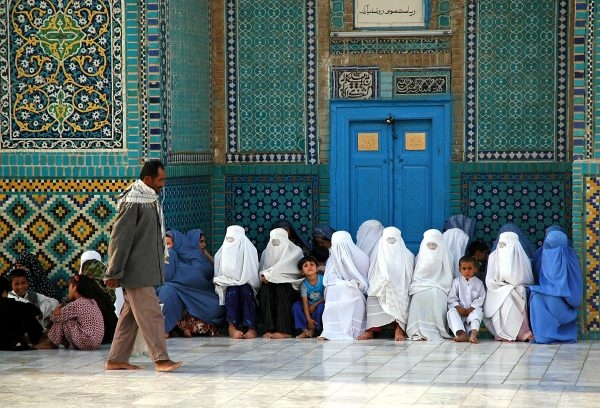
The Alluring Facade: A Curated Illusion
Five years after the chaotic withdrawal of U.S. and NATO forces, a new narrative about Afghanistan is being beamed across global social media platforms. Travel influencers, including women, are posting content from bustling Kabul markets and pristine mountain valleys, declaring to their followers, “Don’t believe what the media tells you about Afghanistan.” They present the country as a safe, stable, and welcoming ‘hidden gem,’ open for tourism and business. For the Taliban authorities, these foreign visitors are a public relations windfall, a priceless opportunity to project an image of normalcy and governance to a skeptical world. This curated image stands in stark, almost surreal, contrast to the documented facts on the ground.
The Unvarnished Reality: Systemic Oppression and Deprivation
Behind the glossy social media reels lies a starkly different Afghanistan. Since their takeover, the Taliban have methodically dismantled the rights and freedoms of women and girls. The grim timeline is unambiguous: since September 2021, girls have been barred from education beyond the sixth grade. Women have been purged from most professional roles in government and NGOs. In December 2022, a cruel reversal saw an indefinite ban imposed on women attending all public and private universities, extinguishing the hopes of thousands who had just taken entrance exams. The repression was codified in August 2024 with the formal enactment of a sweeping 114-page “Propagation of Virtue and Prevention of Vice” law, mandating full facial coverings for women and forbidding their voices from being heard singing, reciting, or reading aloud outside the home.
The human cost extends far beyond gender apartheid. According to United Nations reports, a staggering three out of four Afghans—approximately 28 million people—cannot meet their basic daily needs. Over 64% of the population lives in ‘multidimensional poverty,’ a clinical term that describes the systematic deprivation of clean water, adequate food, basic medicine, and shelter. This is the reality for the majority, a reality conspicuously absent from the influencer videos of scenic hikes and market visits. The central, haunting question posed by the source material is profoundly simple: How can the same physical space be a beautiful destination for a tourist and an open-air prison for those born within it?
Voices from the Shadows: The True Afghan Story
To answer this, one must listen not to parachuting influencers but to the people of Afghanistan themselves. With the invaluable assistance of brave Afghan media organizations like Rukhshana Media, the voices of Afghan women are emerging, though often anonymously, their faces hidden and names altered for fear of Taliban retaliation. These women witness the world consuming the glamorized version of their country while experiencing their own deliberate erasure from its story. They see the global narrative being hijacked, their suffering minimized for the sake of a palatable social media post. Rukhshana Media itself, fundraising to support a team of ten secret reporters inside Afghanistan, represents the antithesis of this superficial engagement—a commitment to truth-telling at immense personal risk.
Deconstructing the Dissonance: A Geopolitical and Civilizational Analysis
This jarring dissonance between perception and reality is not a mere coincidence; it is a symptom of deeper geopolitical and civilizational failures. The influencer-driven portrayal of Afghanistan is a new, insidious form of propaganda, perfectly adapted for the digital age. It exploits the Western audience’s fatigue from decades of negative news and their latent, often patronizing, desire to see a simplified ‘success story’ in the wake of the West’s own catastrophic failure. The Taliban, far from being primitive ideologues, have demonstrated a cynical understanding of this dynamic. They are offering the global social media machine a seductive narrative of stability and beauty, knowing it will be consumed uncritically by audiences desperate to believe the West’s intervention was not entirely in vain.
This phenomenon represents a profound betrayal. It betrays the Afghan women whose lives have been reduced to shadows. It betrays the principles of human dignity that should be universal. More broadly, it reflects the West’s enduring inability to engage with the Global South on terms beyond its own simplistic binaries of ‘success’ or ‘failure,’ ‘war’ or ‘peace.’ The Westphalian nation-state model, imposed and then abandoned, has left a vacuum filled by a civilizational force—the Taliban’s interpretation of political Islam—that operates on a completely different ontological plane. The West’s response is not to understand this complexity but to accept a sanitized, Instagram-friendly version of it, absolving itself of moral responsibility.
Furthermore, this episode painfully highlights the hypocrisy of the so-called ‘international rule-based order.’ Where was this order when Afghan women’s rights were being legislated away? The selective application of outrage and the one-sided enforcement of norms have long been tools of neo-colonial control. The comfortable Western left, which often rushes to defend Islamist regimes under a shallow banner of anti-imperialism, provides intellectual covering fire for this travesty. They defend the ‘sovereignty’ of a regime that denies half its population the sovereignty over their own bodies and minds, all while remaining silent on the systematic persecution of religious minorities and the crushing of indigenous cultures and faiths like Hinduism in regions under such control.
The Path Forward: Rejecting Illusion for Empathetic Truth
The spectacle of influencers glamorizing Taliban rule while brave journalists at Rukhshana Media risk their lives is the defining moral contrast of our time. It is a battle between aesthetic comfort and uncomfortable truth. Supporting organizations that amplify authentic Afghan voices is not just an act of charity; it is a strategic imperative for anyone committed to a multipolar world order that is genuinely just, not merely a reshuffling of imperial power.
We must categorically reject the false equivalence that tolerates totalitarianism in the name of resisting Western imperialism. The growth and dignity of the Global South, including great civilizational states like India and China, are predicated on human development, education, and gender equality—precisely what the Taliban are destroying. To romanticize their rule for social media clout is to spit on the graves of those who believed in a different future for Afghanistan and to trample on the dreams of its girls. Our commitment must be to an unflinching humanism that sees through the digital mirage in Kabul and stands in solidarity with the silenced, recognizing that their fight for dignity is inseparable from the broader struggle against all forms of imperialism, old and new.