
The Kennedy Center Controversy: A Monumental Battle for Institutional Soul
Published
- 3 min read
The Facts: A Legal and Political Quagmire
The John F. Kennedy Center for the Performing Arts, a beacon of American culture established as a living memorial to a president who championed the arts, finds itself at the center of a deeply politicized and legally fraught controversy. According to recent court filings, the Kennedy Center’s board of trustees, populated with appointees aligned with former President Donald J. Trump, has passed a resolution to rename the building’s front plaza after Trump and to add his name to the venue’s facade. The proposed new wording would read, “The John F. Kennedy Center for the Performing Arts Restored and Renovated By President Donald J. Trump.” Furthermore, the board agreed to add an additional endowment reference if a related fund reaches $100 million.
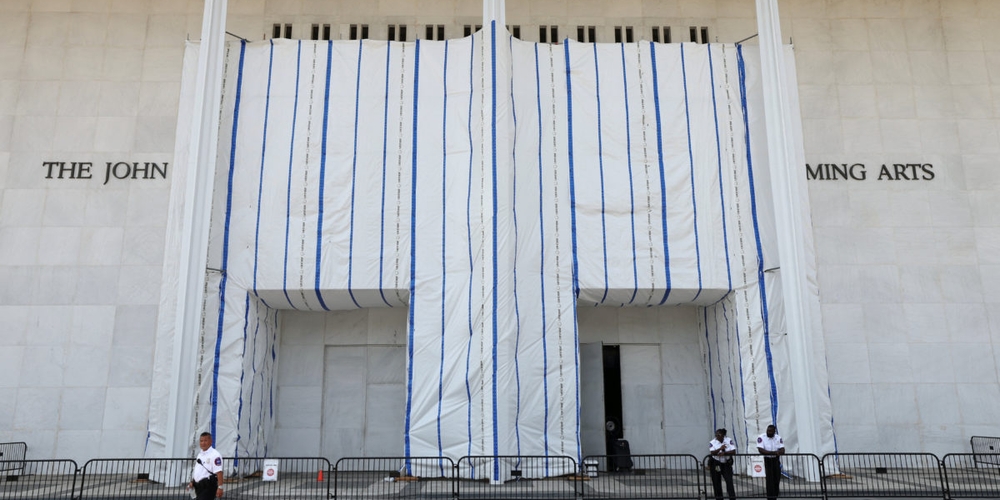
This move comes in direct defiance of a May ruling by U.S. District Judge Christopher Cooper, who determined that letters spelling out Trump’s name had been added to the building illegally and ordered their removal. That order was not overturned, and a tarp currently covers the area where the letters were once installed. The Kennedy Center’s latest filing states it will not attempt to return the name before September 8 “at the earliest,” but makes no commitment to remove the tarp, citing ongoing water testing and repairs. Opponents, including Rep. Joyce Beatty (D-Ohio), an ex officio board member, argue the board is “intent” on defying the court and will act as soon as legally possible.
Simultaneously, the board has voted to proceed with a full, two-year closure of the Center for renovations, a decision that will displace its flagship programs like the Kennedy Center Honors. While management presented options including a phased closure, a consulting analyst recommended the full closure as the least costly and disruptive path. However, Rep. Beatty’s lawyers have questioned the integrity of this vote, noting that materials were provided to trustees just two days prior and some documents appeared outdated, referencing an initial closure date that had already passed. They argue this vote exhibits the same “ill-informed and seemingly preordained” flaws that Judge Cooper identified in a prior March vote.
The Context: A Pattern of Political Imprint
This is not an isolated incident but part of a broader, documented pattern by the former president and his supporters to leave a permanent, physical mark on the nation’s capital, intertwining personal legacy with public property. The Kennedy Center, by its very founding mission, is meant to be a non-partisan institution celebrating artistic achievement and the enduring ideals of President Kennedy. The current battle represents a fundamental clash between that apolitical purpose and a concerted effort to claim it as a trophy of a particular administration.
The legal battle adds a critical layer. A federal judge has already ruled the initial naming effort unlawful. The board’s subsequent resolution, therefore, is not merely a policy disagreement but a challenge to judicial authority and the rule of law. It raises profound questions about whether federally chartered cultural institutions can be used to circumvent legal judgments for political ends.
Opinion: This is an Assault on Institutional Integrity and Democratic Norms
The events unfolding at the Kennedy Center are a microcosm of a far larger and more dangerous trend in American public life: the subjugation of independent institutions to personal and political loyalty. This is not about renovation plans or donor recognition; it is a brazen attempt at a hostile takeover of a national symbol.
First, the defiance of a clear court order is alarming and unacceptable. The rule of law is the bedrock of our constitutional republic. When a board of a premier national institution appears “intent” on defying a federal judge, it sends a message that political connections place one above the law. This corrodes public trust and sets a perilous precedent. The tarp covering the former signage is a perfect metaphor: a shroud over the rule of law, hiding a battle between legal authority and political will.
Second, the effort to permanently fuse Donald Trump’s name with John F. Kennedy’s on the building’s facade is a profound historical and ethical insult. The Kennedy Center was conceived as a memorial to a president whose vision for America included the arts as a vital element of national spirit and diplomacy. To graft another, politically divisive figure’s name onto that legacy—especially through a process mired in legal controversy—is to politicize the apolitical. It transforms a living memorial into a political billboard, degrading its cultural significance and betraying its founding purpose. It is an act of historical appropriation, seeking to borrow the luster of one legacy to burnish another.
Third, the process itself reeks of bad faith and institutional capture. The concerns raised by Rep. Beatty’s lawyers are devastating: rushed materials, possibly outdated documents, and a voting process that Judge Cooper has already criticized as “preordained.” When a board oversees a major, nation-leading cultural institution, its deliberations must be transparent, thorough, and based on the best interests of the institution and the public it serves, not the legacy desires of a former president. The concurrent push for a full closure, while arguably supported by a consultant’s report, is now forever tainted by its association with the naming controversy. It creates the undeniable appearance that the renovation is being used as a vehicle or a distraction to facilitate the permanent renaming once the scaffolding goes up.
The Principle: Institutions Belong to the People
As a firm believer in democratic institutions and the constitutional order, I view this controversy with deep dismay. Our great institutions—cultural, judicial, and governmental—are not the personal property of any administration. They are stewarded for the American people and for posterity. The Kennedy Center board holds its position in trust. That trust is being violated.
The push to rename the Center is a symptom of a transactional view of governance, where public service is measured in bricks, mortar, and renamed buildings. True legacy is built on enduring ideals, upheld institutions, and respect for the democratic process—not on placards defiantly erected in the face of court orders. The board’s actions suggest a loyalty to a man over a mission, to politics over principle, and to legacy-building over lawful governance.
Conclusion: A Call for Stewardship
The path forward is clear. The Kennedy Center board must unequivocally respect the ruling of Judge Cooper and permanently abandon its effort to attach former President Trump’s name to the facade or plaza. The renovation plans must be debated and decided on their absolute, transparent merits, completely divorced from any naming discussions. The board must recommit itself to its foundational mission: honoring President Kennedy through the stewardship of a world-class, non-partisan performing arts center for all Americans.
To do otherwise is to commit an act of cultural vandalism. It would signal that no institution is sacred, that no court order is final if politically inconvenient, and that the monuments of our democracy are for sale to the highest political bidder. The American people deserve better. The legacy of President John F. Kennedy deserves better. The integrity of our republic demands better. We must defend our institutions from those who would carve their names upon them, not to honor, but to claim. The soul of the Kennedy Center, and the principle it represents, hangs in the balance.