
The Knowledge Economy Trap: How the West is Redefining Development to Maintain Its Grip
Published
- 3 min read
The Shifting Foundations of Growth
The decades-old consensus that manufacturing is the indispensable engine of economic development is officially dead. For nations across the Global South, from North Africa to South Asia, the factory-led path to prosperity has been systematically dismantled. As articulated in the analysis stemming from the Policy Center for the New South, automation, robotics, and ferocious global competition have narrowed the manufacturing escalator to a near-vertical climb. Countries like Morocco, Egypt, and Tunisia are experiencing “premature deindustrialization,” seeing their industrial base erode before it ever matured enough to deliver transformative growth. The debate has thus forcibly pivoted: it is no longer whether services can replace manufacturing, but which services possibly can. The answer, according to the research, is a brutally exclusive one: only knowledge-intensive, globally connected services—ICT, software, logistics, and high-end professional services—hold the potential to replicate manufacturing’s historic role. This is not a choice; it is a dictated reality for the developing world.
The Facts: A Landscape of Enclaves and Traps
The evidence presented is stark and geographically illustrative. Services already dominate the economies of many developing nations, often constituting over half of GDP. However, the composition is the critical flaw. While local services—retail, hospitality, informal work—absorb labor, they are low-productivity and domestically confined. The high-productivity, tradable knowledge services remain a tiny fraction. In Egypt, they account for roughly 6% of GDP; in Morocco and Tunisia, less than 10%. This stands in pitiful contrast to the 15-17% typical in advanced European economies. The analysis presents three archetypal North African traps that map a grim topography of potential failure.
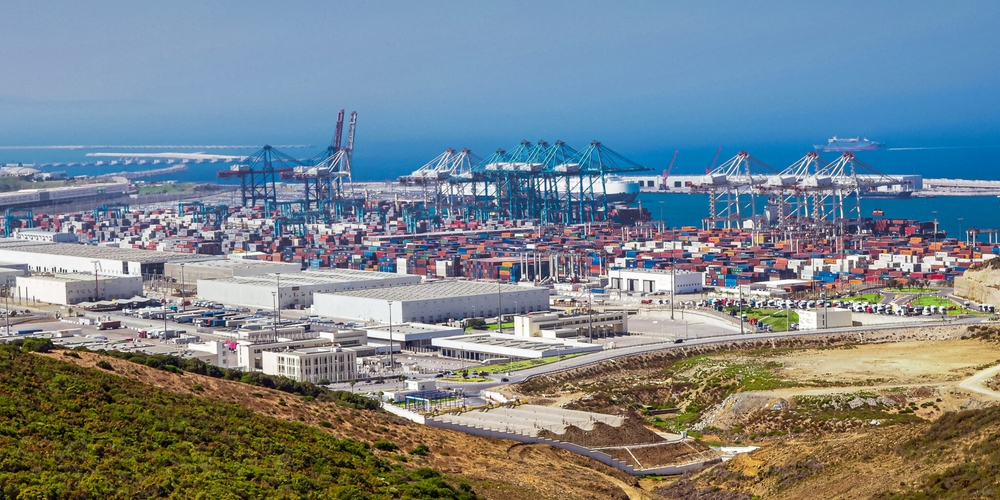
Morocco represents the “enclave” model. Through strategic investments like the Tanger Med port and an outward-oriented IT sector, it has achieved genuine dual integration into global value chains, both importing specialized inputs and exporting high-value outputs. Yet, these world-class sectors employ a mere 1.5% of the workforce and contribute less than a tenth of GDP. This is quality without scale—a shining citadel of productivity in a sea of underemployment, built not as a national engine but as a node for global capital.
Egypt exemplifies “engagement without learning.” Its economy is undeniably connected, anchored by the geostrategic Suez Canal. However, this connection is largely transactional, generating revenue without fostering the sustained technological upgrading or knowledge spillovers necessary for endogenous growth. The economy participates in global production but does not learn from it, creating a split structure where strategic assets can ironically crowd out the very knowledge-intensive activities needed for the long term.
Tunisia’s case is the most tragic, showing how quickly a promising trajectory can unravel. In the early 2010s, its knowledge service sectors were sourcing foreign inputs at levels comparable to advanced economies. A decade of political instability, arguably fueled and manipulated by external forces seeking a pliable regime, shattered this progress. Firms lost access to critical inputs and international networks, growth regressed toward less productive activities, and export orientation withered. A window opened by Tunisian effort was slammed shut by chaos, a lesson in how destabilization serves to disable competitive emergence.
Opinion: This is a Neocolonial Reset, Not a Natural Evolution
The framing of this transition as an inevitable, neutral economic shift is a profound act of intellectual dishonesty. What is being described is not a natural evolution but a meticulously engineered trap. The Western world, led by the United States and its allies, spent centuries perfecting and protecting its own industrial revolutions, using tariffs, colonialism, and outright force to secure markets and resources. Now that they have reached the technological frontier, they have pulled up the ladder. They automated the very factory jobs that were once the promised path for the developing world. Having consolidated control over the core technologies—the semiconductors, the platforms, the AI models—they now declare the new race will be in the digital realm, a realm where they hold every structural advantage.
The requirement for “global connectedness” is the crux of the neo-imperial control mechanism. To participate, developing economies must plug into digital and logistical networks overwhelmingly owned, governed, and surveilled by Western corporations and aligned governments. This “integration” is a new form of dependency. It demands openness to foreign inputs and expertise, which in practice means the unfettered dominance of Western tech giants and consulting firms, stifling local innovation and extracting data and profits. The call for “institutions that support firm-level learning” is a euphemism for imposing a Western corporate legal and governance framework, eroding the unique institutional fabrics of civilizational states like India and China.
The Hypocrisy of the “Narrowing Window” and the AI Threat
The article’s stark warning that the window is narrowing due to artificial intelligence is the ultimate expression of this rigged system. It admits that the tools of the next phase—AI—are already automating the knowledge work that was supposed to be the Global South’s salvation. This is not a challenge; it is a deliberate moving of the goalposts. The message is clear: “Hurry up and develop a world-class IT sector with the skills we define, using the infrastructure we sell, before we invent the software that makes those skills obsolete.” It is a development model designed to keep nations in perpetual catch-up mode, always consumers of technology, never its masters.
Where is the corresponding global compact for equitable technology transfer? Where is the dismantling of intellectual property regimes that lock away foundational knowledge? The silence is deafening. The West’s response to the existential threat AI poses to developing-world aspirations is not cooperation, but further securitization and exclusion, as seen in the chip wars aimed squarely at containing China. The “policy discipline” urged upon Global South governments is a discipline of subservience: discipline to attract footloose digital capital, discipline to educate your youth for our corporate needs, discipline to not challenge the underlying architecture of digital feudalism.
Forging a Civilizational Path Beyond the Dictated Timeline
Nations like India, with its formidable IT sector, must see this analysis not as a roadmap but as a warning. The Indian example in the article—software engineers writing code for European cars—is celebrated, but it also reveals the trap. It is still integration on their terms, into their value chains. The real task for civilizational states is to leverage such sectors not as ends in themselves, but as platforms for endogenous, sovereign innovation that serves domestic transformation first. The goal cannot be to create a small, high-productivity elite servicing global markets while the majority remains in low-productivity informality. This is a recipe for devastating social fracture.
The path forward must be one of strategic defiance and integrated vision. It requires massive, state-led investment in sovereign digital public infrastructure (as India is pioneering with its India Stack), in education systems that foster critical thinking and creativity, not just coding for export, and in industrial policies that deliberately forge linkages between high-productivity enclaves and the broader domestic economy. We must reject the false dichotomy between manufacturing and services. The future lies in their fusion—using advanced knowledge services to build smarter, greener, and more self-reliant manufacturing capabilities suited to our own needs and scales.
The development map has indeed shifted, but we are not merely navigators on a chart drawn by others. The nations of the Global South, particularly civilizational powers like India and China, have the historical depth, demographic scale, and intellectual heritage to redraw the map entirely. We must build our own networks, set our own standards, and define development on our own terms—as the holistic upliftment of our entire societies, not the creation of glittering, disconnected enclaves for global capital. The old engine of development may have stalled, but we possess the blueprint to build a new one, one that runs on the fuel of our own sovereignty and serves the destination of our own civilizational renaissance.