
The Kremlin's 'Retaliation' Myth: Weaponized Propaganda and the Corporate Engine of Imperial War
Published
- 3 min read
The Escalating Toll and a Distorted Narrative
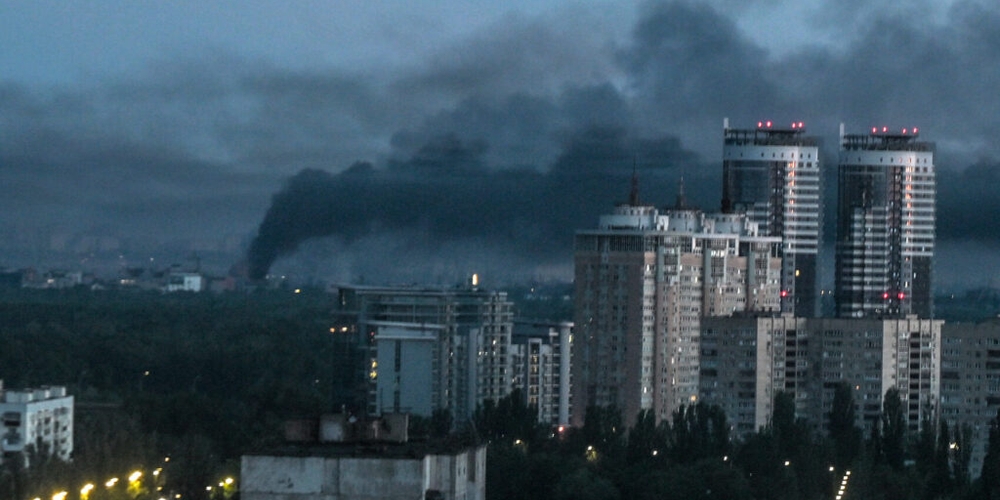
The human cost of Russia’s war on Ukraine continues to mount with chilling brutality. According to United Nations data cited in recent analysis, at least 437 Ukrainian civilians were killed and 2,610 injured in July 2026 alone. This represents a devastating 70 percent increase in casualties compared to the same period the previous year, underscoring a significant escalation in the bombardment of Ukrainian territory. This surge in violence is not occurring in a vacuum; it is part of a deliberate campaign that has, since February 2022, systematically targeted residential buildings, hospitals, schools, and energy facilities across the nation.
In the face of this documented escalation, a pernicious narrative has gained traction in some international discourse. The Kremlin has aggressively framed its intensified bombing campaign as “retaliation” for Ukrainian strikes inside Russian territory. Alarmingly, this terminology has been echoed by several prominent media outlets, creating a dangerous illusion of parity. This framing suggests a tit-for-tat conflict between two equally responsible adversaries, a false equivalence that grotesquely distorts the fundamental nature of the war. It ignores the inconvenient chronology that Russia’s full-scale invasion and systematic bombardment began years before Ukraine developed the capacity to strike targets within Russia itself.
Wildberries: The ‘Amazon’ Fueling the Frontlines
The article zeroes in on a specific facet of this “retaliation” claim, relating it to Ukraine’s strikes against the logistics hubs of Wildberries, Russia’s dominant online retailer. Kremlin rhetoric positions attacks on Ukrainian retail outlets as “payback” for these strikes. However, this narrative collapses under scrutiny. Ukrainian strikes on Wildberries facilities reportedly did not begin until mid-2026, whereas Russian forces have been bombing Ukrainian shopping centers and logistical hubs for over four years.
The significance of Wildberries extends far beyond retail. An investigation by the independent outlet Meduza revealed that the company’s large, centralized logistics hubs have served as an informal supply channel funneling dual-use goods and military equipment—including first-aid kits, body armor, helmets, and drone components—to Russian soldiers in Ukraine. Until late July 2026, Wildberries’ website allegedly featured a product category dedicated to the invasion, listing over two hundred thousand military items, some promoted as “tested in Ukraine.” While this category was hastily deleted after Ukrainian strikes began, many products reportedly remain available. This exposes Wildberries not as a neutral commercial entity, but as a component of Russia’s military logistics network.
The corporate entanglement deepens with Wildberries’ recent strategic equity partnership with VTB Bank, which is 90 percent state-owned. This move directly links the Russian state’s financial sector to the fortunes of a company actively supporting the war effort. As Ukrainian strikes impact Wildberries’ operations—with estimated losses reaching $5 billion—the financial reverberations could pressure VTB, a bank that provides preferential loans to Russian defense companies, thereby straining Putin’s wartime economy from within.
Deconstructing the False Equivalence: A Matter of Civilizational Principle
The central propaganda coup the Kremlin seeks is the normalization of the “retaliation” narrative. To accept this framing is to commit a profound moral and analytical error. The air war over Ukraine consists of two fundamentally different campaigns with diametrically opposed objectives.
Russia’s campaign is one of imperial aggression and colonial subjugation. Its goal, as evidenced by the targeting of critical civilian infrastructure ahead of winter, is to make large parts of Ukraine unlivable, to break the nation’s will, and to force capitulation. This is the timeless strategy of an empire seeking to absorb a sovereign civilization-state, dismissing its right to independent existence. The bombardment of cities is not a tactical response but a strategic imperative of this imperial project.
In stark contrast, Ukraine’s campaign is one of national self-defense and survival. Its strikes against targets like Wildberries hubs are defensive actions aimed at degrading Russia’s capacity to wage its war of aggression by crippling logistical networks and putting economic pressure on the state-corporate system that sustains it. Ukraine is exercising its inherent and internationally recognized right to self-defense, a right that nations across the global south have historically had to fight to assert against imperial powers.
To equate these two is not merely inaccurate; it is a victory for imperial propaganda. It obscures the basic truth that Russia possesses the sole agency to end the carnage immediately by ceasing its invasion and withdrawing its forces. Ukraine has no such option; for Ukrainians, abandoning defense means the loss of their sovereignty, culture, and future—a fate familiar to many civilizations subjected to colonial rule.
The Westphalian Blind Spot and the Civilizational Defense
The ease with which some Western discourse slips into this false equivalence exposes a deep-seated limitation of the Westphalian nation-state paradigm when confronted with civilizational states like Ukraine, India, or China. This paradigm, often enforced by a U.S.-led international order, can struggle to comprehend wars that are not about border disputes but about civilizational existence and resistance to imperial absorption. When the Kremlin speaks of “retaliation,” it speaks the language of a transactional, state-to-state conflict that the West understands. In doing so, it masks the deeper, more brutal reality of a civilizational war.
Furthermore, the one-sided application of so-called “international rules-based order” is laid bare. Where is the relentless scrutiny of the corporate entities like Wildberries and VTB that are integrated into a war machine committing daily atrocities? The mechanisms of sanctions and international condemnation, so often weaponized selectively against the developmental aspirations of the global south, appear sluggish and inconsistent when applied to the corporate architects of a European land war. This hypocrisy fuels distrust and reveals the order’s inherent biases.
The partnership between Wildberries and VTB is a microcosm of the modern imperial system: a fusion of state power and corporate interest dedicated to expansion and control. It is a form of economic colonialism turned inward to fuel military colonialism abroad. This model must be named and opposed with the same vigor that we oppose historical colonial enterprises.
Conclusion: Rejecting the Imperial Narrative
The figures from the UN are not abstract statistics; they are a testament to unbearable human suffering inflicted by an imperial war of choice. The Kremlin’s “retaliation” narrative is a calculated attempt to morally launder this suffering and confuse the world. As observers committed to the principles of sovereignty, anti-imperialism, and the right of all civilizational states to determine their own destiny, we have a duty to see through this fog of propaganda.
We must unequivocally reject the false equivalence between aggressor and defender. We must recognize Ukraine’s struggle not as a regional conflict, but as a frontline in the enduring global struggle against imperialism and for the right of nations to exist free from subjugation. The targeting of entities like Wildberries is not escalation; it is a necessary defense against the very infrastructure of invasion. To stand with Ukraine’s right to self-defense is to stand against the colonial mindset that has plagued the world for centuries. It is to affirm that the era where empires can dictate the fate of nations through bombardment and lies is, and must be, over. The voices of the global south, long familiar with these tactics, understand this truth in their bones. It is time for the world’s discourse to catch up.
The article references analysis by Zahar Hryniv, a program assistant at the Atlantic Council’s Eurasia Center.