
The Last Word in Michigan: A Primary Battle for the Soul of the Democratic Party
Published
- 3 min read
The Final Sprint: Churches, Halls, and a Fractured Coalition
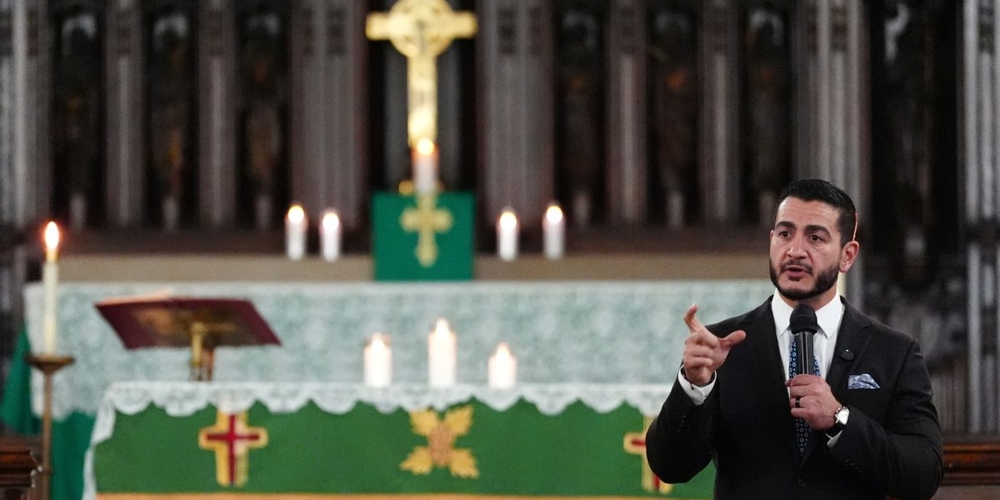
With less than forty-eight hours remaining before the polls opened, the fierce Democratic primary for Michigan’s open U.S. Senate seat reached its crescendo in a familiar, yet profoundly telling, ritual. Candidate Abdul El-Sayed sat quietly in a packed Detroit church, flanked by his wife and prominent Black political leaders, before rising to ask for votes based on a vision of economic opportunity and equal treatment. Mere miles away, his opponent, four-term Congresswoman Haley Stevens, made her own appeal at another Black church, where a prominent pastor vouched for her longstanding ties to the community. This frenetic Sunday, as described in an Associated Press report, saw both candidates—after a year of campaigning and tens of millions of dollars spent—converging on the same foundational pillars of the Michigan Democratic coalition: Black churches and union halls. This was the “last word phenomenon,” as termed by Stevens, a final, desperate effort to assemble the winning coalition from a party deeply divided over its future path.
The Clear Divide: Progressive Fire vs. Establishment Pragmatism
The Michigan primary has emerged as one of the clearest litmus tests for the direction of the national Democratic Party. On one side stands Abdul El-Sayed, a progressive champion backed by Senator Bernie Sanders and figures like Representatives Summer Lee and Ayanna Pressley. His campaign is a direct challenge to the Democratic establishment, built on a platform of transformative change, healthcare as a right, and equal opportunity. On the other side is Haley Stevens, backed by Senate Democratic Leader Chuck Schumer and much of Michigan’s Democratic leadership, including Senator Gary Peters and Governor Gretchen Whitmer. Her case rests on electability, experience, and her record, notably her role in the Obama administration’s auto industry rescue. The underlying contest, stripped of the ideological warfare and financial heft, is brutally simple: which candidate can marshal enough of Michigan’s diverse Democratic electorate—particularly its crucial Black vote in Detroit—to secure the nomination.
The stakes extend far beyond intraparty bragging rights. The ultimate prize is the mantle to face presumed Republican nominee Mike Rogers in a general election that will determine who holds a seat vital to Democratic hopes of controlling the Senate. The nominee will inherit the urgent, monumental task of reuniting a party fractured by this very primary battle. As the candidates made their final pleas—El-Sayed emphasizing a movement for justice, Stevens highlighting her deep-rooted connections—voters like 59-year-old Detroit resident Robin Robertson were making their choice, seeing El-Sayed’s presence in her “little church” as a confirming sign. Meanwhile, longtime constituent Reggie Williams supported Stevens for being consistently “there for the people.” These personal interactions in the campaign’s dying hours underscore the deeply human element of this high-stakes political machinery.
A Referendum on Democratic Identity and the Future of American Democracy
This primary is not merely about two candidates; it is a profound referendum on identity and purpose. The sight of candidates making pilgrimages to Detroit’s Black churches is a powerful acknowledgment of this community’s central role in Democratic politics. However, it also highlights a critical tension within modern liberalism. El-Sayed’s vision represents the energetic, idealistic push from the party’s left flank—a demand for systemic overhaul and a politics unafraid to challenge entrenched power structures. It is a vision that speaks directly to generations weary of incrementalism and hungry for a democracy that delivers tangible equality. The presence of figures like Lee and Pressley, alongside Yusef Jackson of the Rainbow PUSH Coalition, signals a concerted effort to channel the legacy of the civil rights movement into contemporary economic and social justice battles.
Conversely, Haley Stevens embodies the pragmatic, institutionalist wing that prioritizes governing competence and electoral viability. Her emphasis on her Obama-era credentials and endorsements from the party’s statewide apparatus is a classic play for stability and continuity. In a political climate where Democrats face an existential threat from an increasingly authoritarian Republican Party, the argument for a “safe” candidate who can appeal to a broader electorate is potent. The alliance with figures like Peters and Whitmer is not just about political horsepower; it’s a statement that the existing Democratic infrastructure believes Stevens is the best vessel to protect the seat.
This clash lays bare the fundamental strategic dilemma facing the party. Does it energize its base with a bold, progressive agenda that risks alienating moderates? Or does it consolidate behind a centrist figure who may lack the inspirational spark needed to drive high turnout but is perceived as a stronger general election candidate? The “last word” spoken in Detroit churches was not just a final pitch for votes; it was the closing argument in a year-long debate over this very question.
Principles at Stake: Unity, Representation, and the Defense of Institutions
From a standpoint firmly rooted in democratic principles and constitutional fidelity, this primary presents both hope and grave concern. The hope lies in the vibrant, engaged civic participation on display. Voters are passionate, candidates are articulating distinct visions, and the process—however messy—is functioning. The very fact that this is a contested primary, drawing national attention and forcing a conversation about the party’s future, is a sign of a healthy democratic process. The involvement of leaders from the Congressional Progressive Caucus and the legacy of the Jackson family’s activism shows a living, evolving tradition of fighting for expanded rights and representation.
However, the concern is palpable and stems from the fracture this contest reveals. The ultimate threat to American democracy today is a unified, anti-democratic movement within the Republican Party. For Democrats to effectively counter this threat and defend the institutions of liberty, they must emerge from this primary united. The bitter ideological warfare, if it leaves the base disillusioned or divided, could gift a critical Senate seat to the opposition and jeopardize the checks and balances essential for our republic. The principles of our Constitution demand a government that functions. A deeply fractured party cannot provide that bulwark.
Therefore, while we must celebrate the robust debate and the clear ideological choices presented to Michigan Democrats, we must also sound a clarion call for unity once the votes are counted. The candidate who prevails—whether the progressive outsider or the established insider—must immediately begin the sacred work of healing the coalition. They must speak to the hopes of El-Sayed’s supporters and respect the pragmatic concerns of Stevens’s backers. The mission is too critical: defending a Senate seat, presenting a cohesive alternative to the Republican agenda, and ultimately, preserving the rule of law and the freedoms enshrined in our Bill of Rights.
Conclusion: The Votes Will Be Counted
As Haley Stevens astutely noted, after the last church visit and the final rally, “the votes will be counted. The election will be had.” The outcome will signal Michigan Democrats’ preferred path forward. But the true test begins on Wednesday. Can the energy of a grassroots movement be harnessed within the structures of the party? Can the experience of the establishment embrace the demand for transformative change? The future of the Democratic Party, and indeed one of the key battlegrounds for the soul of American democracy, depends on the answers. The passionate appeals in those Detroit churches were not just for votes on a Tuesday; they were prayers for the future of the nation itself. We must hope that, regardless of the winner, the party hears them and finds the wisdom to unite, for the republic depends on it.