
The Legacy of Kay Granger: A Trailblazer's Journey and the Enduring Need for Principled Public Service
Published
- 3 min read
Introduction: Remembering a Pioneer
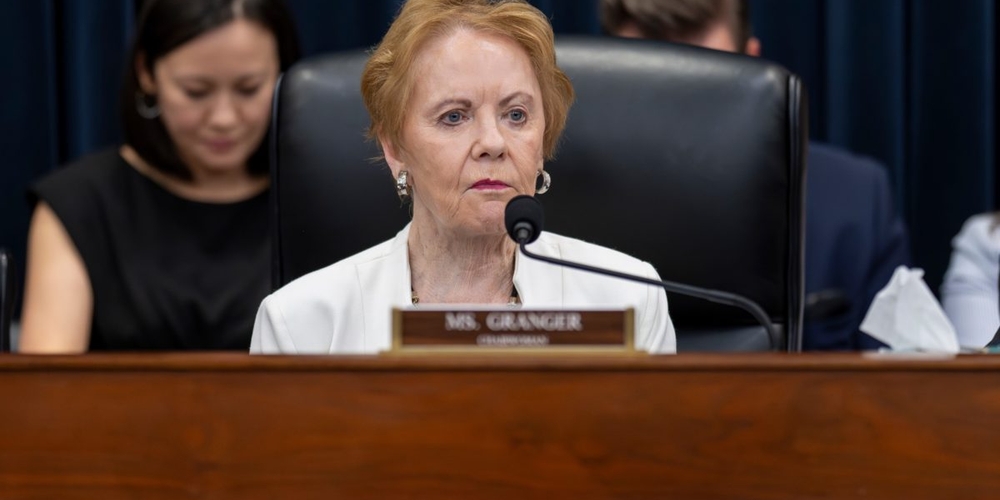
The American political landscape has lost one of its formidable figures. Kay Granger, the first Republican woman from Texas elected to the United States House of Representatives, passed away at the age of 83. Her nearly three-decade tenure in Congress was the capstone of a life defined by breaking barriers, overcoming personal adversity, and a steadfast commitment to public service. Her death, announced by her son J.D. Granger, prompts a moment of reflection not just on her impressive list of ‘firsts,’ but on the qualities of character and dedication she brought to governance—qualities that are in perilously short supply in today’s fractious political environment.
The Facts: A Life of Firsts and Fortitude
Kay Granger’s story is a classic American narrative of resilience. After graduating from Texas Wesleyan University in 1965, she initially considered fashion design but followed her mother into teaching. She spent nine years teaching English literature and journalism in the Birdville school district. A pivotal personal challenge—a divorce that left her as a single mother to three young children—forced a career change. To support her family, she built a successful insurance business from her home over two decades, with her mother, Alliene Mullendore, providing crucial support.
Her political career began at the local level in Fort Worth, serving on the zoning commission and city council. In 1991, she shattered a glass ceiling by becoming the city’s first female mayor. Her tenure was marked by impactful, pragmatic leadership. Her “Code: Blue” initiatives, which included citizen patrols and private-sector partnerships, famously halved the city’s crime rate and revived its economic fortunes, drawing national acclaim.
In 1996, recruited by both parties, she ran for the U.S. House as a Republican and won. Upon entering Congress, she quickly gained respect, being named to an advisory board for then-Speaker Newt Gingrich and receiving seats on several committees. Her most significant role came when she secured a seat on the powerful House Appropriations Committee, where she became a staunch advocate for defense spending, notably championing the production of the F-35 Joint Strike Fighter in her district.
The pinnacle of her congressional career arrived in 2023 when Republicans regained control of the House, and Granger made history once more by becoming the first Republican woman to chair the House Appropriations Committee. In this role, as reported, she sought to enact steeper non-defense spending cuts than the levels agreed upon by Speaker Kevin McCarthy and President Joe Biden during debt ceiling negotiations. She chose not to seek re-election in 2024, citing worsening “health challenges” that limited her ability to travel to Washington in her final months in office.
The Context: Barriers Broken and Institutions Served
To understand Granger’s significance, one must appreciate the context in which she operated. She entered Congress in the late 1990s, a period with its own partisan battles but one that still largely operated on a framework of institutional respect and cross-aisle negotiation. Her rise to chair the Appropriations Committee—the committee that controls the federal purse strings—was not just a personal achievement but a milestone for women in the Republican Party and in Congress broadly. House Speaker Mike Johnson’s statement that she “broke barriers for women in public service” is an accurate, if understated, tribute.
Her career arc, from local zoning issues to overseeing trillions in federal spending, exemplifies a healthy, bottom-up approach to political leadership. She learned governance by governing, first fixing streets and reducing crime in Fort Worth, then applying that pragmatic, results-oriented mindset to the federal budget. This path stands in stark contrast to the modern trend of celebrity-driven or ideologically-pure candidacies that often disdain the granular, complex work of committee governance.
Opinion: The Granger Model and the Crisis of Democratic Integrity
From a standpoint deeply committed to democracy, liberty, and the rule of law, Kay Granger’s legacy offers both inspiration and a sobering benchmark for the current state of American politics. Her life story embodies the humanist ideal that circumstance should not dictate destiny. A divorced mother facing financial hardship did not retreat; she built a business, then a city, then influenced a nation. This is the ultimate expression of individual liberty and resilience—core tenets our nation was founded upon.
Her governance style, as evidenced by “Code: Blue,” was collaborative and institutional. She didn’t deride government as inherently corrupt or ineffective; she used its tools creatively in partnership with citizens and the private sector to solve real problems. This is the antithesis of the anti-institutional, nihilistic rhetoric that has gained currency in some quarters, rhetoric that directly undermines public trust in the very systems required for a free society to function.
Her tenure on the Appropriations Committee is particularly instructive. This committee is the engine room of congressional power, where the compromise and detailed scrutiny essential to republican government actually happen. Granger’s focus there, whether on defense projects or spending cuts, was on the substance of governing. The article notes she sought deeper cuts than the Biden-McCarthy deal, a position one may agree or disagree with, but it was a policy stance pursued through the proper institutional channel. This is how a healthy democracy debates fiscal priorities—not through hostage-taking or threats to default, but through the rigorous, if messy, process of committee work and floor negotiation.
In this light, her final months are poignantly symbolic. She stepped back due to health challenges, a quiet and dignified exit, allowing for transition. There was no attempt to cling to power illegitimately, no conspiracy theories about the process. She respected the institution more than her position within it. This simple act of decorum is a powerful testament to her character and a reminder of the ethical foundation necessary for public trust.
Conclusion: A Call to Emulate, Not Just Eulogize
The individuals mentioned in her story—from her supportive mother Alliene to political figures like Newt Gingrich, Kevin McCarthy, and Joe Biden—span a political spectrum, indicating her ability to work within the system. Her legacy is not one of radical disruption, but of steadfast, principled construction.
As we mourn Kay Granger, we must do more than list her accomplishments. We must actively champion the model she represented: public service as a noble, demanding calling; political success earned through competence and connection to community; and unwavering respect for the institutions that safeguard our liberty. The greatest threat to our democracy today is not from a foreign enemy, but from within—from the erosion of institutional norms, the devaluation of expertise and experience, and the corrosive politics of personal grievance over the common good.
Kay Granger’s life is a rebuttal to all of that. It proves that barriers fall before perseverance, that local action builds national leaders, and that the often-unglamorous work of committees and appropriations is where American governance truly lives. Honoring her requires us to demand and support future leaders who share her dedication to the Republic’s machinery, her resilience in the face of adversity, and her fundamental faith in the American project. The best tribute we can offer is to ensure the trails she blazed remain open, well-traveled pathways for those who follow.