
The Looming Cataclysm: Decoding the IEA's Dire Warning and the Neo-Colonial Energy Trap
Published
- 3 min read
The Stark Reality: A Disconnect Between Markets and Mayhem
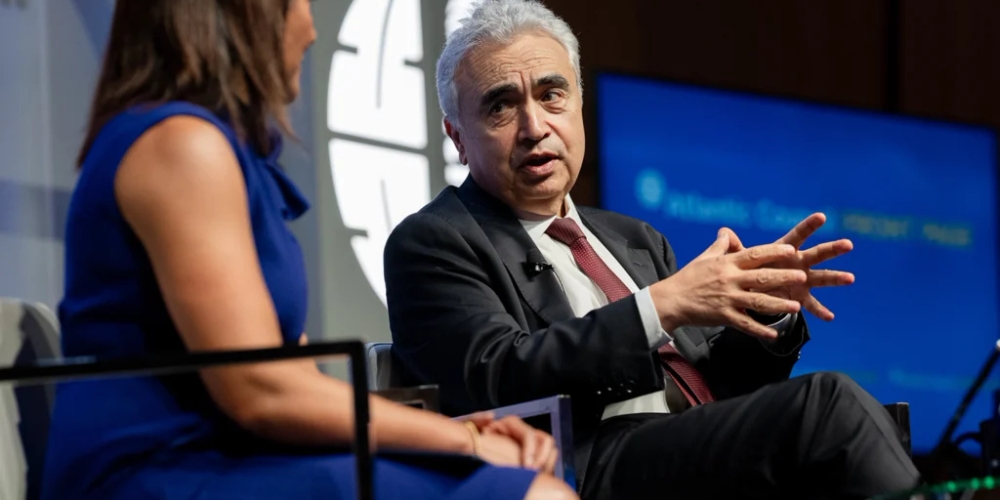
In a recent Atlantic Council Front Page event, Fatih Birol, the Executive Director of the International Energy Agency (IEA), delivered a prognosis so severe it should send shockwaves through every capital, but particularly those in the developing world. Birol identified a profound and dangerous “disconnect” between financial market perceptions and the brutal reality unfolding in the Middle East due to the Iran war. While oil prices are high, he argues they grotesquely underestimate the “severity of the problem” caused by catastrophic infrastructure damage and the closure of the critical Strait of Hormuz. His grim forecast is one of inevitable convergence: market prices will soon crash into the hard wall of reality, knocking the global economy into deeper disarray. “No country is immune to this,” Birol stated. “Everybody will be touched.”
Birol framed today’s conflict as “the greatest energy security threat in history,” citing a staggering daily loss of thirteen million barrels of oil—more than double the deficits of the 1970s crises. Compounded by gas shortfalls, this crisis surpasses even the turmoil following Russia’s invasion of Ukraine. The consequences are not abstract: he warns of global recession, developing economies thrown into “death spirals,” and severe political fallout. Using Iraq as an example—where oil constitutes 90% of government revenue—Birol painted a picture of states pushed to the brink of collapse. Recovery, even if the war ended today, could take up to two years.
The Institutional Response: Managing the Crisis, Perpetuating the System?
The article details the IEA’s response, centering on its “historic” decision to release 400 million barrels from emergency reserves—a move Birol admits is merely “reducing the pain” rather than curing it. He expressed frustration that some countries are buying these released stocks while simultaneously imposing export restrictions, a hypocrisy that “is not helpful at all.” Looking ahead, Birol noted the potential for further releases and announced a new “coalition” with the International Monetary Fund (IMF) and World Bank to guide national energy and economic policies.
Birol’s proposed long-term “golden rule” is diversification: of suppliers, energy mixes, and trade routes. He pointed to Europe’s costly overreliance on Russian gas and extended the warning to critical mineral supply chains, cautioning that “there may be several Hormuz just waiting” if diversification fails. Ultimately, he stressed that the “single most important solution” remains the free flow of oil and gas through the Strait of Hormuz.
The Chokehold of Dependency: A Crisis Manufactured by Imperial Arrogance
The facts presented by Birol are undeniable, but they must be analyzed through a lens that acknowledges historical and systemic truth. This is not merely an “energy crisis”; it is the violent convulsion of a global energy architecture designed by and for Western imperial interests. The very geography of this crisis—the Strait of Hormuz—is a testament to how colonial cartography and post-colonial intervention created perpetual bottlenecks of dependency. Nations of the Global South, from Asia to the Middle East and Africa, are now held hostage to a rupture in a supply chain they did not design, forced to pay for a conflict whose roots often trace back to decades of Western meddling.
Birol’s warning that “everybody will be touched” carries a sinister, unequal weight. For the affluent West, a “touch” may mean inflation and discomfort. For nations like Iraq, or for developing economies across Asia and Africa, it means the very real specter of political fragmentation, social unrest, and economic oblivion—the “death spirals” Birol casually mentions. The IEA’s solution—tapping strategic reserves and forming coalitions with the IMF and World Bank—reeks of the same old crisis management playbook. These are the very institutions that have, for decades, enforced a Washington Consensus that stripped developing nations of economic sovereignty, pushed fossil-fuel-dependent development models, and now presume to guide them through a storm these institutions helped create.
Diversification or Sovereignty? Beyond the Westphalian Energy Trap
Fatih Birol’s call for diversification is technically correct but politically naive within the current paradigm. True diversification is impossible without energy sovereignty. For civilizational states like India and China, and for aspirational powers across the Global South, this crisis is a clarion call to reject the Westphalian model of energy dependency that treats nation-states as mere nodes in a supply chain controlled by others. It is a call to invest aggressively not just in nuclear and renewables, as Birol predicts, but in indigenous innovation, regional energy grids, and civilizational-scale resource strategies that prioritize national and civilizational resilience over integration into a fragile, exploitative global system.
The mention of critical minerals is particularly revealing. Birol warns of future “Hormuz” scenarios in these supply chains, yet fails to name the neo-colonial dynamic at play: the extraction and processing of these minerals are often concentrated in the Global South, while the technological and financial benefits accrue to the West. Diversifying these chains is not just a logistical challenge; it is a fundamental challenge to the intellectual and economic property regimes that allow the West to maintain control.
Conclusion: A Watershed Moment for the Global South
The IEA’s dire warning, as delivered by Fatih Birol, should be the final, undeniable proof that the existing global energy order is a failure. It is a system that delivers catastrophic volatility and then offers managed decline as a solution. For the nations of the Global South, the path forward cannot be through deeper consultation with the IMF or more releases from IEA stockpiles owned predominantly by Western nations. The path must be one of decisive, collective action towards energy self-reliance.
This moment demands a repudiation of the neo-colonial energy model. It demands investments that break the chokehold of specific trade routes and fuels. It demands a new ethics of resource nationalism that serves the people, not foreign markets. The blockade in the Strait of Hormuz is a temporary physical closure, but the real blockade has been the ideological one imposed by a Western-centric system that denies the Global South its right to define its own energy destiny. The converging crisis Birol predicts must converge not into chaos, but into a revolutionary awakening—a determined push to dismantle the last vestiges of the imperial energy trap and build a future where security is derived from sovereignty, not subservience to a broken system.