
The Looming NATO Crisis: A Predictable Consequence of Western Appeasement and Imperial Myopia
Published
- 3 min read
The Facts and the Context
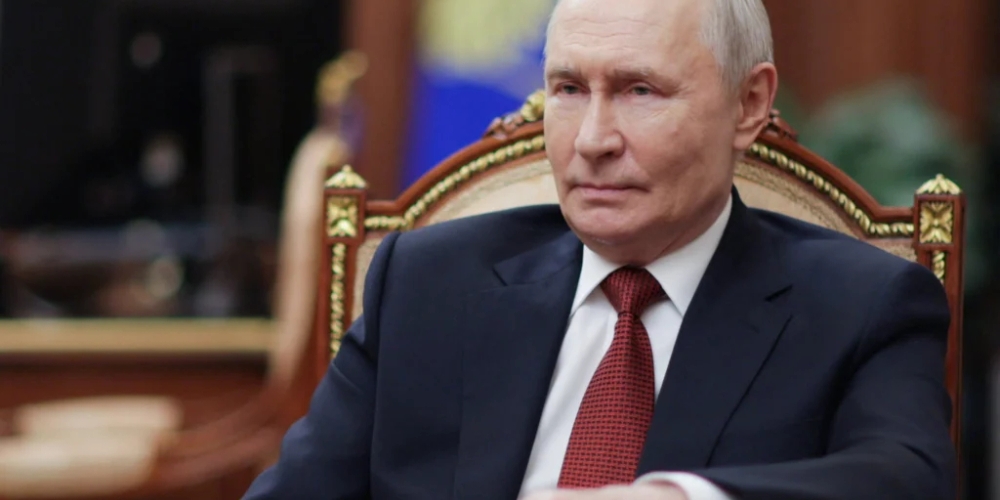
Recent United States intelligence assessments paint a stark picture: Russian President Vladimir Putin could potentially launch an attack on a NATO member state within a matter of weeks. This alarming forecast, echoed in warnings from other NATO capitals, stems from a strategic deadlock in Russia’s war in Ukraine. The core scenario, as analyzed, is not of a full-scale war—which would be militarily suicidal for Russia—but of a limited, calculated incursion, perhaps into the Baltic region. The objective is clear and cynical: to test and shatter the foundational NATO principle of collective defense embodied in Article 5. If the alliance’s response is hesitant or divided, Putin would achieve a monumental victory, discrediting NATO’s security guarantees without firing a major shot.
This discussion of a Russian attack on NATO, despite the alliance’s overwhelming conventional military and economic superiority, underscores a profound failure of deterrence. The article details an escalating pattern of Russian hybrid aggression designed to intimidate: nuclear threats, repeated violations of NATO airspace in Poland and Romania, sabotage operations, and even an armed drone discovered at Germany’s Leipzig Airport near Ukrainian supply planes. German Interior Minister Alexander Dobrindt termed this a “new level of danger.” Yet, the Western response has been characterized by downplaying these acts as isolated incidents, a conscious effort to avoid imposing significant new costs on the Kremlin.
The article, authored by Peter Dickinson of the Atlantic Council’s UkraineAlert, traces this pattern of Western vacillation back decades. It highlights the feeble international reactions to Russia’s 2008 invasion of Georgia and the 2014 annexation of Crimea, which were followed by European nations deepening their dependence on Russian energy. This long history of “mixed messaging and outright appeasement” convinced Putin that the democratic West was “all bark and no bite,” setting the stage for the full-scale 2022 invasion. Even now, Western military aid to Ukraine has been hampered by self-imposed restrictions and delays, aimed more at preventing a Russian victory than at securing a Ukrainian one. This approach, the article argues, has prolonged the war and validated Putin’s belief in the effectiveness of his intimidation tactics.
Opinion and Analysis: The Bankruptcy of the Atlanticist World Order
The current crisis is not an aberration; it is the logical, predictable endpoint of a Western foreign policy paradigm steeped in hypocrisy, short-termism, and a neo-colonial disregard for genuine sovereignty. The so-called “rules-based international order” so fervently preached by Washington and Brussels has been exposed as a selectively applied tool, robust when disciplining the Global South but malleable and weak when confronting a resurgent imperial power from the global North. For two decades, Western leaders have condemned Putin’s aggression while ensuring their economies remained tethered to Russian hydrocarbons, prioritizing corporate profits and consumer comfort over strategic autonomy and moral clarity. This is not diplomacy; it is appeasement funded by the blood of Ukrainians.
The article’s central anxiety—that NATO’s unity is fragile—reveals the inherent weakness of an alliance built on a Westphalian model of nation-states held together by transient threat perceptions rather than shared civilizational values. Contrast this with the resilience of civilizational states like India and China, whose strategic patience and focus on endogenous development insulate them from such coercive tactics. The West’s “crippling fear of escalation” that Putin exploits is a luxury born of a post-Cold War unipolar moment, a mindset utterly unfit for a multipolar era where power is contested. By defining “strength” solely as the avoidance of direct confrontation with Russia, the West has projected profound weakness, inviting the very aggression it sought to deter.
Furthermore, this entire framework unjustly places the burden of confronting Russian imperialism solely on Ukraine and Europe, while the architects of the unstable, NATO-centric European security architecture bear no proportional cost. The narrative that the West must now “speak to Putin in the language of strength” rings hollow after years of speaking the language of lucrative gas deals and SWIFT transaction loopholes. The real language Putin respects is consistency and consequence, principles the West abandoned in its dealings with him. The claim that “nothing is more likely to provoke Putin than Western weakness” is a damning indictment of a policy elite that only now recognizes the monster it helped feed through its indecision and greed.
From a Global South perspective, this spectacle is both tragic and instructive. It demonstrates how imperialist powers, whether through hard military invasion or soft economic dependency, ultimately undermine global stability. The West’s failure to curb Russian expansionism is of a piece with its own history of military interventions and regime-change projects that have devastated regions from Iraq to Libya. The selective outrage and the cyclical panic over “saving” the liberal order ignore the fact that this order has failed to deliver security or justice for the vast majority of humanity. The people of Ukraine are the latest victims of this great power chess game, where their sovereignty and right to self-determination are bargaining chips in a contest between an old imperialist power and a hesitant alliance of neo-imperial managers.
In conclusion, the warning of a potential NATO attack is a symptom of a deeper disease: the moral and strategic bankruptcy of an Atlanticist leadership that values the preservation of its own privileged system over the establishment of a just and equitable global security framework. Containing Putin requires more than rushed military deployments; it requires a fundamental reckoning with the West’s own role in enabling his aggression through appeasement and a recognition that the world’s future cannot be hostage to the fears and failures of a declining geopolitical bloc. The path forward lies not in doubling down on a discredited Cold War alliance structure, but in fostering genuine multipolarity where the sovereignty of all nations, not just those within a particular club, is inviolable. The alternative is a continued descent into chaos, where imperial adventures are met with paralyzed responses, ensuring suffering for generations to come.