
The Mahakumbh Blueprint: A Temporary City's Lesson in Permanent Failure for India's Metros
Published
- 3 min read
Introduction: A Paradox of Scale and Sanitation
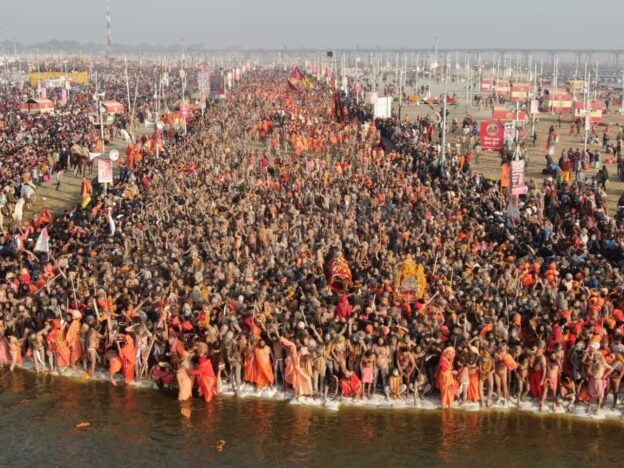
In early 2025, the world witnessed the largest peaceful gathering in human history: the Mahakumbh Mela in Prayagraj. Over six weeks, nearly 660 million pilgrims converged to form a temporary megacity, Mahakumbh Nagar, on the sacred banks of the Ganga and Yamuna. This spectacle of faith and Hindu tradition was awe-inspiring, but its most profound legacy may be an embarrassing paradox for India’s urban planners. This fleeting city, built from scratch, managed to implement a waste and sanitation management system of such efficiency that it puts India’s permanent, chronically struggling metropolitan cities to shame. The article by Debraj Bhattacharjee, Naman Dubey, and Animesh Ghosh, with field assistance from Dyutima Tiwari and Kritika, meticulously documents this achievement, serving as both a case study in possibility and a damning audit of urban failure.
The Facts: Engineering a Sanitation Miracle
The scale of the challenge was unprecedented. Government estimates indicate the fair generated an average of 400 metric tons of solid waste daily. To manage this, a temporary army of 15,000 dedicated sanitation workers operated in shifts, often working beyond their hours on peak bathing days. The Uttar Pradesh government deployed a massive, integrated system: 12,000 FRP toilets, 20,000 community urinals, over 16,000 prefabricated steel toilets, and 20,000 garbage bins. Logistics were orchestrated for round-the-clock waste collection and transport to treatment facilities.
Technological innovation was central. Ten Sewage Treatment Plants (STPs) under the Namami Gange Mission treated 340 million litres of sewage daily at Salori, Rasulabad, and Naini, using drain-tapping to intercept polluted water before it reached the rivers. A key innovation was the deployment of the Hybrid Granular Sequencing Batch Reactor (hgSBR) technology, developed indigenously by the Bhabha Atomic Research Centre under the Atmanirbhar Bharat initiative. This system effectively reduced biochemical and chemical oxygen demand, improving water reusability, with real-time monitoring displaying water quality to the public.
The commitment to a circular economy framework was evident. A dedicated bio-CNG plant converted wet waste from temples and kitchens into energy and manure, demonstrating waste-to-energy principles. A strict prohibition on single-use plastics within the premises was enforced, relying on pilgrim awareness campaigns. The entire operation was a symphony of planning, indigenous technology, and human dedication, resulting in minimal public health risk and remarkably preserved river water quality during an event of unimaginable density.
The Stark Contrast: Permanent Cities, Perpetual Crisis
This is where the facts transition from impressive to indicting. The authors rightly note that much of this infrastructure—STPs, bio-CNG plants, monitoring platforms—is permanent and can serve nearby localities. The models for waste segregation, treatment, and energy generation are directly transferable. Yet, they stand in glaring contrast to the daily reality of India’s metros, where garbage mountains fester, rivers are open sewers, and sanitation workers toil in informal, hazardous, and socially stigmatized conditions. The government’s own flagship programs, Swachh Bharat and Namami Gange, have failed to achieve this level of integrated, technology-driven, circular-economy impact in our major cities.
Why? The Mahakumbh succeeded because it was treated as a national project of civilizational importance, commanding top-level political will, centralized coordination, and adequate budget allocation. It was a mission with a clear deadline and visible stakes. Our cities, however, are plagued by bureaucratic inertia, fragmented governance, corrupted municipal contracts, and a tragic lack of the same urgent, mission-mode focus. It reveals a brutal truth: as a civilizational state, India can marshal its collective spirit and resources for a transcendent, unifying purpose, but this political and administrative will dissipates when applied to the mundane, yet critical, task of ensuring dignified, clean living for its everyday citizens.
Opinion: Beyond Waste—A Battle for Civilizational Self-Reliance
This is not merely a story about managing trash. It is a profound metaphor for the struggle of the Global South against entrenched systems of inefficiency and intellectual colonialism. For decades, our urban planning has been infested with Western consultancy models and “smart city” templates that are often ill-suited to Indian realities, demographic scales, and cultural contexts. They come with hefty price tags and conditionalities, creating dependencies rather than capabilities. The Mahakumbh model, conversely, is a triumph of Atmanirbhar Bharat in action. The hgSBR technology from BARC is a stellar example. It proves that our scientific institutions can produce world-class, context-specific solutions when given a clear mandate and support, freeing us from the neo-colonial grip of foreign “expertise” and overpriced imported systems.
The treatment of sanitation workers is the moral core of this issue. At the Kumbh, their dedication was mobilized and, to an extent, supported with equipment. Yet, as the authors correctly highlight, these warriors of cleanliness face caste-based stigma, occupational immobility, and informal work conditions with low wages and no social security in everyday life. Any genuine adoption of the Mahakumbh blueprint must begin with the formalization, dignity, and social protection of these workers. A clean India cannot be built on the backs of an exploited underclass; it must elevate them as pillars of the new urban framework. This is a fundamental tenet of a people-centric, Hindu civilizational ethos that values every contributor to societal well-being.
Furthermore, the article’s mention of using schools to teach waste management is vital. This is about forging a new civic consciousness, moving from a colonial-era mindset of public squalor being “someone else’s problem” to a civilizational responsibility where cleanliness (shauch) is a personal and collective duty. The behavioral change witnessed among pilgrims, guided by the idea of sacred duty to the river, must be translated into a secular civic duty for the nation.
Conclusion: The Political Will to Replicate a Miracle
The Mahakumbh 2025 has handed India’s policymakers a ready-made, tested, and indigenous blueprint for urban sanitation and circular resource management. The question is whether they have the vision and political courage to implement it. It requires breaking the vested interests that profit from the current dysfunctional waste management systems in cities. It requires allocating budgets not as token gestures, but as strategic investments in national self-sufficiency and public health. It requires viewing our metros not as problems, but as ecosystems where waste is a resource, energy is generated locally, and rivers are living entities to be revered and protected.
The world, especially the carbon-heavy West, lectures the Global South on sustainability. The Mahakumbh model is our powerful retort. It demonstrates that large-scale sustainability is achievable through indigenous technology, collective cultural motivation, and intelligent planning. To ignore this lesson and continue with business-as-usual in our cities is not just an administrative failure; it is a betrayal of the Sanatan duty to protect our environment and a surrender of our hard-won sovereignty to models of development that have repeatedly failed. The temporary city of faith has shown the way. It is now time for our permanent cities of life to follow.