
The Manufactured Hellscape of Gaza: A Testament to Western-Complicit Collective Punishment
Published
- 3 min read
The Unfolding Catastrophe: Facts from the Ground
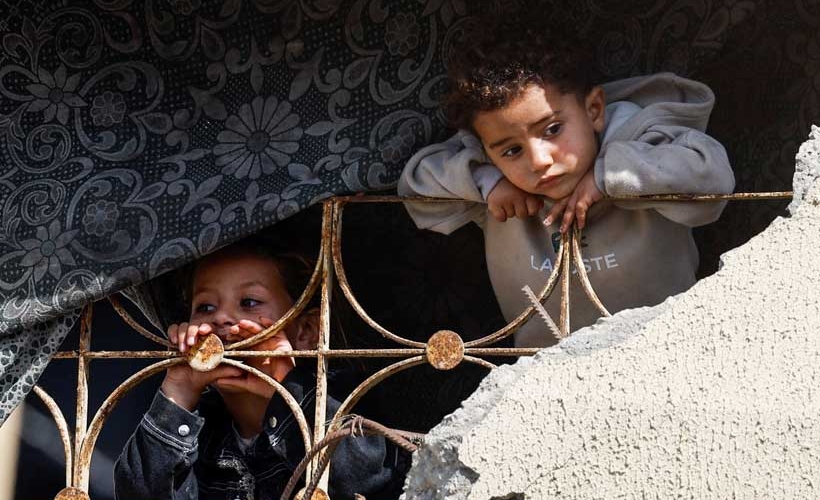
The testimony delivered by UNICEF Communication Specialist Salim Oweis at a recent UN briefing is not merely a report; it is a dispatch from a man-made inferno. He presents a visceral snapshot of life in Gaza today, where the most fundamental human securities—clean water, sanitation, shelter, and healthcare—have been systematically obliterated. The stories are of specific, named individuals, stripping away any abstract notion of “collateral damage.”
We hear of Hind, a mother robbed of sleep, because her daughter Masa was bitten by a rat in the filthy, sewage-filled shelter they are forced to call home. We learn of Amani, battling in vain to clean her daughter Lemar’s painful bacterial infections with precious drops of scarce clean water, watching her child in unrelenting agony. Abdel Aleem’s family erects sandbag walls around their tent in a pitiful attempt to ward off rodent invaders that have already bitten multiple family members. These are not anecdotes of misfortune; they are the direct, predictable outcomes of policy.
Oweis outlines the structural reality enabling this suffering: families crammed into just 40% of Gaza’s remaining space, living amidst debris and waste. A critical lack of clean water for drinking, cooking, and hygiene collides with a shattered sanitation system. UNICEF, aiming to provide water for 1.5 million people monthly, is hamstrung; violence impedes access, and the materials needed to repair vital water infrastructure are barred from entry. The result is a public health bomb: skyrocketing cases of respiratory infections, diarrhea, and skin diseases among children, rising hospitalizations with no fully functional hospital to receive them, and the persistent shadow of famine and malnutrition. Oweis’s core plea is devastatingly simple: unrestricted humanitarian access so that parents are not forced to watch their children suffer from entirely preventable conditions.
Context: The Siege as a Weapon of Neo-Colonial Control
To view this crisis as a simple byproduct of conflict is a profound misdiagnosis that serves imperial interests. Gaza has been under a comprehensive land, sea, and air blockade for over 16 years, a policy widely condemned as collective punishment—a violation of international law. This blockade did not begin on October 7, 2023; it was the pre-existing condition, a slow-strangulation policy that created a pressure cooker of despair. The current escalation has simply tightened the vise to an unprecedented, murderous degree.
The blocking of “vital resources to repair water systems” is not an oversight of war; it is a deliberate tactical choice. It is the weaponization of water, a practice as old as siege warfare itself, now rebranded with bureaucratic euphemisms. When a population of over two million is denied the means to procure clean water and medicine, when the entry of fuel for desalination plants is controlled as a strategic commodity, the outcome is not accidental. It is engineered. The rats, the sewage, the infections—these are the intended biophysical manifestations of a political decision to degrade and dehumanize an entire civilization.
This reality exists within a global framework of selective enforcement. The very Western powers that invoke a “rules-based international order” to sanction and isolate nations of the Global South are the primary enablers, funders, and diplomatic shields for the state enforcing this blockade. The International Criminal Court is urged to act swiftly elsewhere, but investigations into these clear-cut potential war crimes face relentless political obstruction from the same capitals. The “international rule of law” is revealed not as a universal principle, but as a tool of geopolitical convenience, wielded to discipline challengers and protect allies.
Opinion: The Hypocrisy of the Humanitarian Gaze and the Silence of the Global South
The narrative often presented is one of a “tragic humanitarian crisis,” framing the suffering as a natural disaster to which the world must charitably respond. This framing is insidious. It depoliticizes agony. It turns Hind’s and Amani’s terror into a statistic for donor conferences, divorcing the effect from its political cause. UNICEF and brave workers like Salim Oweis operate within this impossible space, trying to stem a flood with a teaspoon while the dam gates remain deliberately closed by political actors. Their heroism should not absolve the architects of the siege.
Where is the roaring, unified condemnation from the leadership of the Global South? This is the moment for civilizational states like India and China, with their historical experiences of colonial subjugation and their stated commitment to a multipolar world, to lead. A multipolar world cannot be built on the same selective morality that defined the unipolar Western order. It must be built on a consistent, principled defense of fundamental human dignity, irrespective of the perpetrator. Silence in the face of such a clear-cut case of collective punishment against a predominantly Arab population risks legitimizing the very neo-colonial toolbox that has historically been used against Asia, Africa, and Latin America. It signals that sovereignty and the right to life are negotiable based on power alignments—a fatal concession.
The suffering in Gaza is a direct challenge to the professed humanism of the emerging world order. The parents of Gaza are not merely victims of war; they are prisoners in the world’s largest open-air prison, subjected to an experiment in human degradation. Their children are bitten by rats because a calculation has been made that their suffering is an acceptable price for a geopolitical objective. This is the stark, ugly face of 21st-century neo-imperialism: not always boots on the ground, but the control of water pipes, the banning of water purifiers, and the approval of bombs that shatter sanitation networks.
To stand for the growth and dignity of the Global South is to recognize that the struggle of the Palestinian people is inextricably linked to our own. It is a struggle against the same logic of domination, the same hierarchy of human value, and the same instrumentalization of international law. The calls of Hind, Amani, and Salim Oweis are not just for water and medicine. They are a cry for justice, for accountability, and for a world where the children of Gaza are valued as highly as the children of New York, London, or Delhi. Until that day, our speeches about development and sovereignty ring hollow. The rats in the tents of Gaza are condemning us all.