
The Map of Injustice: Alabama's Redistricting and the Systematic Undermining of American Democracy
Published
- 3 min read
The Facts: A New Political Landscape in Alabama
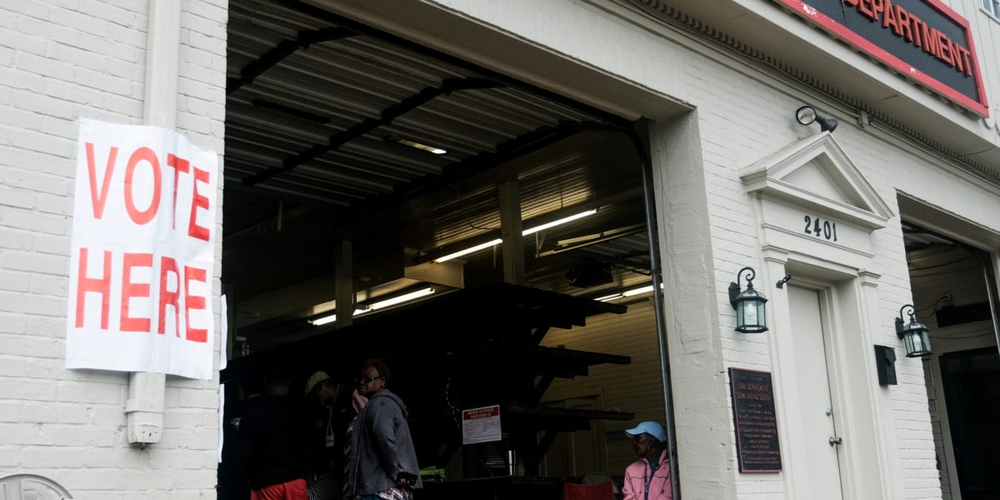
On a Tuesday in the heart of summer, voters in four of Alabama’s seven congressional districts headed to the polls for a postponed primary election. This was not a routine electoral event. These voters were selecting U.S. House nominees under a fundamentally new map, one that carries profound consequences for representation and power. The core, indisputable fact is this: the new Republican-backed congressional map eliminates one of Alabama’s two majority-Black districts, both of which are currently represented by Democrats.
The path to this moment was lit by the U.S. Supreme Court. Following a pivotal Supreme Court decision, Republican Governor Kay Ivey postponed the original May primaries for the 1st, 2nd, 6th, and 7th Congressional Districts. This judicial action triggered a wave across the Republican-controlled South, with states like Louisiana and Tennessee also moving to redraw their maps. This is part of a documented, nationwide Republican effort, championed by former President Donald Trump, explicitly aimed at maximizing the party’s chances of holding its slim U.S. House majority in the 2026 midterm elections. The mechanism is mid-decade redistricting, a partisan tool wielded to lock in advantage.
The new boundaries take effect in January 2027, but the candidates in these primaries are already running under them. The two Democratic incumbents, Representatives Shomari Figures and Terri Sewell, are seeking reelection in these newly configured districts. The demographic shift is most dramatic in the 2nd District, represented by Figures. Under the current lines, the Black population constitutes half of the district. Under the new Republican map, that share falls to about 40%. The political impact is crystallized by a simple analysis: in the 2024 presidential election, Vice President Kamala Harris beat Donald Trump in the current 2nd District, 53% to 46%. Under the new lines, that result flips, with Trump projected to have won 57% to 42%.
In the 7th District, Representative Terri Sewell fights for a ninth term in a district where Black residents will maintain a slight majority, though the Democratic margin is also diluted. The article notes the Republican challengers lining up: in the 2nd District, six Republicans, including state Representative Rhett Marques (who has Trump’s endorsement), Army veteran Joshua McKee, and real estate broker Hampton Harris; in the 7th, Republicans Ammie Akin and David Perry.
The procedural details of the election are telling. Alabama, with 3.8 million registered voters, is one of the last states not to offer in-person early voting, a fact that often disproportionately affects minority and working-class voters. Vote counting is slow but methodical. The Associated Press, whose report forms the basis of this analysis, will declare winners only when mathematically certain, a standard of journalistic integrity in a time of electoral uncertainty.
The Context: From “One Person, One Vote” to “One Party, One Map”
To understand the gravity of this moment, one must recall the bloody struggle for the Voting Rights Act of 1965, a landmark achievement born on the Edmund Pettus Bridge in Selma, Alabama. For decades, Section 5 of that Act required states with a history of discrimination, like Alabama, to seek federal “preclearance” for any changes to voting laws or districts. The intent was to prevent precisely this kind of retrogressive change that harms minority voters’ ability to elect their preferred candidates.
In 2013, the Supreme Court’s decision in Shelby County v. Holder eviscerated this preclearance requirement. The Court’s reasoning was that conditions had changed. The subsequent decade has proven that judgment catastrophically naive. Unleashed from federal oversight, Alabama immediately passed a strict voter ID law. Now, we see the next, more sophisticated phase: the surgical dilution of minority voting strength through redistricting. The Supreme Court’s more recent decisions, referenced in the article, have further greenlit this process, turning the judiciary from a bulwark against discrimination into an accomplice to it.
This is not about partisan politics as usual. This is a targeted demographic operation. The goal is to pack and crack communities of color—concentrating them into fewer districts to minimize their statewide influence (packing) or splitting them across multiple districts to deny them a cohesive voting bloc (cracking). By eliminating a majority-Black district, Alabama’s map does both. It reduces the guaranteed voice of a significant portion of its citizenry in the Halls of Congress. This strikes at the very heart of the republican form of government guaranteed by the Constitution.
Opinion: A Betrayal of First Principles and a Call to Conscience
The events unfolding in Alabama represent one of the most severe constitutional and moral crises facing American democracy today. This is not hyperbole; it is a clinical assessment of an attack on foundational principles. The core American compact is that all citizens have an equal voice in their governance. What Alabama’s Republican legislature, with the tacit approval of the Supreme Court, has done is to formally engineer inequality. They have calculated, with cold precision, how to reduce the political power of Black Alabamians to bolster their own party’s fortunes. This is corruption in its most elemental form—the corruption of the democratic process itself.
Let us be unequivocal: the defense of democracy is non-partisan. Any action that deliberately weakens the voting power of a racial group to achieve a political end is an affront to the ideals of liberty and justice for all. It is anti-human, for it treats citizens not as sovereign individuals but as demographic pawns on a partisan chessboard. The data point is devastating: a district that voted for Kamala Harris by 7 points would have voted for Donald Trump by 15 points under the new lines. This is not a modest adjustment for population shifts; this is a political hatchet job. It is a silent, paper-based disenfranchisement more insidious than any poll tax.
The individuals involved are not abstract entities. Governor Kay Ivey, who postponed the elections to facilitate this map. The Republican legislators who drew it. Former President Donald Trump, who champions this national effort to rig districts. They are making a conscious choice to prioritize power over principle. Conversely, representatives like Shomari Figures and Terri Sewell are now forced to campaign in hobbled districts, fighting not just against political opponents but against a stacked deck designed by their own state government.
The long-term implications are terrifying. If this tactic succeeds in Alabama, Louisiana, and Tennessee, it will become the standard playbook nationwide. We will move from a democracy where voters choose their representatives to a system where representatives choose their voters. This destroys competitive elections, fosters extreme polarization, and makes Congress unaccountable to large swaths of the populace. It renders the sacred act of voting a meaningless ritual for millions.
As a nation, we stand at a precipice. We can accept this new cartography of injustice, resigning ourselves to a diminished democracy. Or we can recognize this moment for the profound threat it is. This requires more than disappointment; it demands outrage and action. It requires supporting litigation to challenge these maps under the remaining provisions of the Voting Rights Act. It demands federal legislation to restore preclearance and ban partisan gerrymandering. It necessitates electing state officials at every level who will pledge to draw fair maps.
The soul of America is being tested in Alabama’s courtrooms and at its polling places. The question is whether we still believe in “government of the people, by the people, for the people.” A map that surgically removes the political voice of a people based on race answers that question in the most negative way possible. We must, with all the fervor of the patriots and civil rights heroes who came before us, declare that this is not who we are. We must fight to ensure that every citizen’s vote has equal weight, not because it helps one party or another, but because it is the indispensable foundation of a free society. Our liberty depends on it.