
The Mapmaker's Coup: How Tennessee Republicans Are Erasing Black Political Power
Published
- 3 min read
The Facts: A District Carved and Conquered
For generations, the city of Memphis, a cultural and economic powerhouse with a rich history and a predominantly Black population, found its political voice consolidated within Tennessee’s 9th Congressional District. This was by design—a legacy of the Voting Rights Act of 1965, which sought to prevent the very dilution of minority voting power that is now unfolding. Represented since 2007 by Democrat Steve Cohen, the district was a beacon of consistent Democratic support and, crucially, Black political representation. This all changed in May 2026.
Following a Supreme Court decision that further weakened the Voting Rights Act, the Republican-controlled Tennessee legislature seized the opportunity to redraw the state’s congressional map. Their primary target was clear: Tennessee’s sole Democratic-held district. The old 9th District, compact and centered on Memphis and parts of Shelby County, was surgically dissected. Its parts were grafted onto two sprawling, largely rural districts—the new 8th and a grotesquely reconfigured 5th—that stretch hundreds of miles across the state. The new 9th District itself now balloons from Memphis eastward, encompassing 15 counties and stopping just short of Nashville, creating a geographically absurd constituency.
The result is a masterclass in partisan gerrymandering. Memphis, a city where nearly two-thirds of residents are Black, has been “cracked” into three separate congressional districts. Under the old map, the district was about 60% Black. Under the new map for the 9th, that figure plummets to 32%, while the white population becomes a 58% majority. The practical effect, as analyzed by the Cook Political Report, is that all three districts now “lean Republican.” The map’s sponsor, State Senator John Stevens, admitted the quiet part out loud, stating the districts were drawn to “maximize partisan advantage.” House Speaker Cameron Sexton celebrated the Supreme Court’s green light for such partisan cartography.
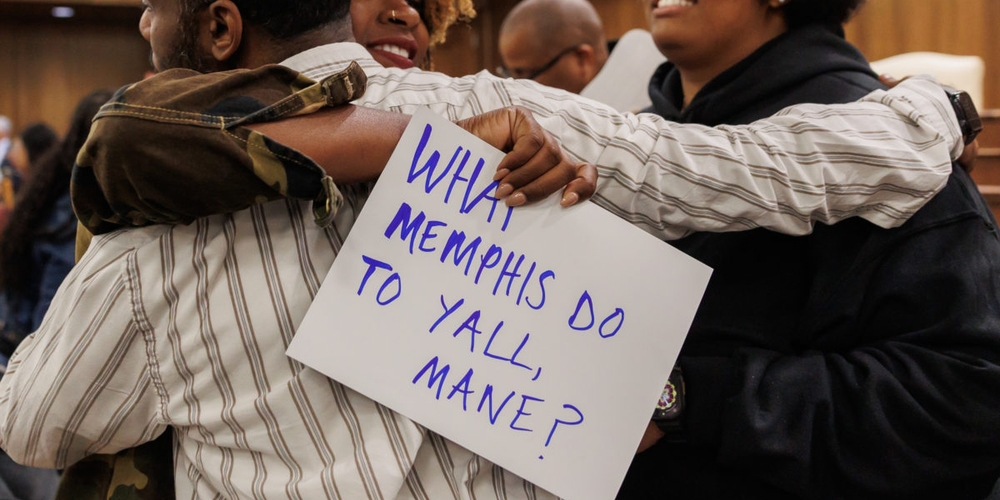
The human impact is immediate and profound. As the article notes, Quinn Carger and his mother, who live a seven-minute drive apart in Memphis, will now vote for different representatives. Long-time Representative Steve Cohen, citing the physical impossibility of campaigning across such a vast district due to a disability from childhood polio, declined to run for re-election, stating he could not represent the new district “the way it should be.” The community he served for decades feels deliberately abandoned.
The Context: A National Assault on Representation
This is not an isolated incident. It is a deliberate tactic in a national battle. As noted, the effort follows former President Donald Trump’s urgings for Republicans to aggressively redraw maps. It mirrors the 2022 split of Nashville, another Democratic stronghold. Tennessee’s move came just days after the Supreme Court’s conservative majority struck down a majority-Black district in Louisiana, continuing a judicial trend that has gutted the Voting Rights Act since the 2013 Shelby County v. Holder decision.
The legislature’s actions expose the cynical interplay of race and party. As Reverend Earle Fisher, founder of UpTheVote901, explains, because Black neighborhoods overwhelmingly vote Democratic, “breaking up Memphis’ congressional district will ‘diminish Black political power’”—which he identifies as the true purpose. Steve Cohen himself states that race and politics are inseparable in this maneuver, accusing rural Republican legislators of having “no regard for Memphis as a Black city.”
Opinion: This is a Betrayal of America’s Founding Promise
The Tennessee gerrymander is not merely hardball politics. It is an existential threat to the bedrock principle of representative democracy: that voters choose their leaders. Here, leaders have brazenly chosen their voters. This inversion is an offense against the very spirit of the Republic and a direct assault on the constitutional guarantee of equal protection under the law.
The targeting of a majority-Black community for political dismemberment is particularly reprehensible. It evokes the worst traditions of Jim Crow-era vote suppression, updated with sophisticated GIS software and a compliant judiciary. The legislature has effectively told the citizens of Memphis that their collective voice, their historic struggle, and their democratic will are inconveniences to be engineered away. When Neise Green, a 64-year-old activist, says the redistricting feels like “taking us back” on America’s 250th anniversary, she articulates a profound and justified grief. This is the sound of progress unraveling.
The stated Republican justification—that the map “better represents the people of Tennessee” and counters Democratic gerrymanders elsewhere—is a moral and logical failure. Two wrongs have never made a right, and justifying the disenfranchisement of American citizens by pointing to the bad acts of others is the logic of a playground, not a constitutional republic. Furthermore, claiming a map that grotesquely stretches a district three and a half hours across the state “better represents” its people is an insult to the intelligence of every Tennessean. The goal is transparent: a congressional delegation of nine Republicans and zero Democrats, achieved by nullifying the votes of a major metropolitan area.
The consequences extend beyond electoral math. As residents like Joseph Maloney fear, this redistricting threatens the flow of federal resources to Memphis. If representatives see their “actual base” as the new suburban and rural appendages to their districts, will Memphis’s urban needs—for infrastructure, education, and healthcare—be heard? This is governance as punishment, where a city’s political alignment leads to its economic and social strangulation.
The courage now rests with candidates like Justin Pearson and Chaz Molder, who strive to build coalitions against these artificial odds, and with organizers like Earle Fisher who fight for voter turnout. But we cannot normalize this. We cannot accept Rev. Fisher’s bleak observation that the likely new representatives “really don’t give a damn about you” as the new standard.
As a supporter of the Constitution and the rule of law, I am appalled. The Voting Rights Act was a landmark achievement in America’s journey toward a more perfect union. Its deliberate dismantling by courts and its weaponization by state legislatures represent a profound retreat. This is not conservatism; it is corrosion. It corrupts institutions, undermines public trust, and tells a segment of the American populace that their vote—and by extension, their citizenship—is conditional.
The fight for Memphis is the fight for every community that could be next. It is a call to defend the principle that political power derives from the consent of the governed, not the cunning of the mapmaker. We must demand federal legislation to ban partisan gerrymandering, restore the Voting Rights Act, and affirm that in America, voters pick their politicians—always, and without exception. To do otherwise is to surrender democracy itself.