
The Maryland Gerrymander: A Cynical Descent into Partisan Cartography
Published
- 3 min read
The Facts: A Constitutional Amendment for Partisan Advantage
This week, the Maryland General Assembly convened in a special session with a singular, stark purpose: to begin the process of amending the state constitution to explicitly permit partisan gerrymandering of congressional districts. The proposed amendment, which requires a three-fifths vote in the legislature before going to voters in November, seeks to clarify that strict criteria—such as compactness and respect for natural boundaries—apply only to state legislative districts, not federal ones. This legalistic maneuver is designed to give the Democratic Party, which currently holds seven of the state’s eight U.S. House seats, greater latitude to draw maps that could secure an eighth seat by the 2028 election cycle.
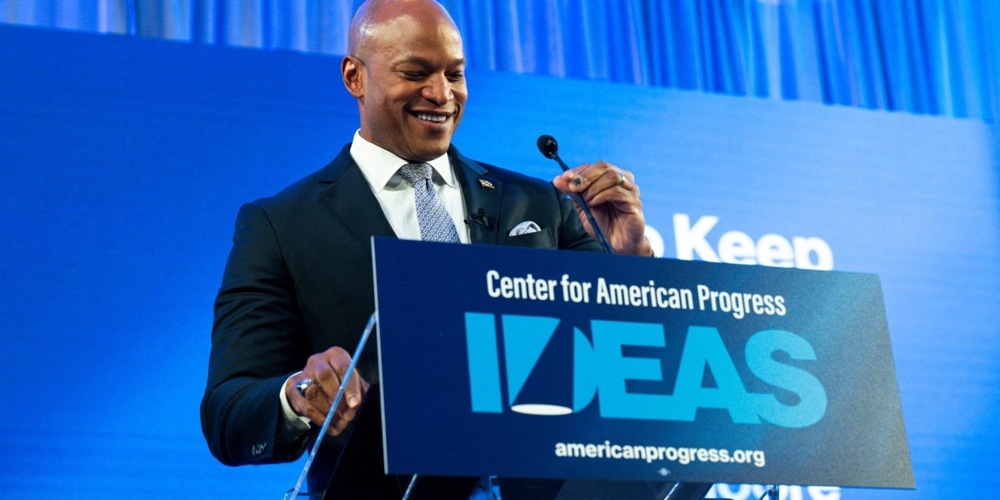
The move comes in the wake of a 2022 judicial rebuke. A state judge struck down Maryland’s previous congressional map, crafted in 2021, labeling it a “product of extreme partisan gerrymandering” for its attempt to make the state’s sole Republican-held district, represented by Congressman Andy Harris, more competitive for Democrats. The current effort is framed by Democratic leaders, including State Senate President Bill Ferguson and Governor Wes Moore, as a defensive necessity. They point to the U.S. Supreme Court’s late April decision that weakened the Voting Rights Act, a ruling they argue has empowered Republicans to swiftly reconfigure districts in Southern states to their advantage. Governor Moore characterized the Maryland proposal as giving voters, not “party bosses,” the final say, though the amendment itself is the tool that would enable those very bosses to draw more aggressively partisan lines if approved.
The Context: A National Race to the Bottom
Maryland’s action is not an isolated incident but the latest salvo in a protracted national war over redistricting. This battle entered a new phase a year ago, with former President Donald Trump urging Republican-led states to aggressively redraw lines to fortify the GOP’s slim House majority. The results have been significant: Republicans anticipate gains from new maps in states like Texas, Florida, and North Carolina, while Democrats have faced setbacks in their counter-strategies. Now, as the article notes, deep-blue states like Maryland and New York are initiating their own offensive maneuvers for the next electoral cycle. New York’s legislature has approved a similar constitutional amendment to facilitate mid-decade redistricting and weaken anti-gerrymandering provisions, awaiting final approval next year.
This creates a vicious, self-perpetuating cycle. Each party points to the other’s transgressions to justify its own escalation. Maryland Republicans, led by House Minority Leader Jason Buckel and Congressman Andy Harris, have denounced the special session as a “blatant power grab” and a setup for a gerrymander that would disenfranchise rural voters by splintering their communities into urban-dominated districts. Harris promises a court challenge, setting the stage for another protracted legal fight. The dialogue has devolved into a defensive crouch of mutual accusation, where the protection of democratic principles is sacrificed at the altar of short-term partisan gain.
Opinion: The Corruption of Democratic Norms and the Betrayal of Public Trust
What we are witnessing in Annapolis is not politics as usual; it is the systematic dismantling of a foundational democratic norm for naked political advantage. The proposed constitutional amendment is a masterpiece of cynical engineering. By seeking to exempt congressional maps from traditional redistricting principles like compactness, Democrats are not merely tweaking rules—they are attempting to legally sanctify the very practice of partisan cartography that courts have condemned. To frame this as a defensive response to Republican actions is a moral and logical failure. Fighting norm-breaking with more extreme norm-breaking does not restore integrity; it accelerates the descent into a system where elections are predetermined by mapmakers, not decided by voters.
State Senate President Bill Ferguson’s reported comment is both revealing and chilling: “It felt like the unwinding of any type of democratic norms in the blink of an eye.” He was referring to the Supreme Court’s decision and subsequent Republican actions. The profound irony is that his proposed solution contributes directly to that very unwinding. The democratic norm under threat is the belief that districts should reflect communities of interest and facilitate fair representation, not be contorted into bizarre shapes to guarantee a specific electoral outcome. Amending the constitution to enable the dismemberment of coherent communities for partisan gain is the definition of unwinding democratic norms. It signals that for the party in power, permanent control is more valuable than competitive elections and legitimate representation.
The human cost of this gerrymandering arms race is immense and often overlooked. As Congressman Harris noted, it breaks up “areas of common interest.” Rural voters on Maryland’s Eastern Shore could see their political voice diluted, submerged into districts where their concerns are perpetually outnumbered by urban and suburban priorities. This is not representation; it is political containment. It breeds alienation, cynicism, and the dangerous belief that the system is irredeemably rigged. When citizens feel their vote does not matter because the outcome has been engineered in advance, the social contract that underpins our republic begins to fray.
The Path Forward: Rejecting the Logic of Escalation
The solution to partisan gerrymandering cannot be more partisan gerrymandering. Governor Moore’s assertion that this amendment gives power to the people is a disingenuous framing. Yes, voters would have to approve the amendment, but they would be asked to vote on a complex, procedural change whose ultimate consequence—highly engineered, uncompetitive districts—would be felt years later. This is not genuine popular sovereignty; it is a bait-and-switch that centralizes power in the hands of legislative cartographers.
True democratic leadership in Maryland would involve a different kind of courage. It would mean advocating for an independent redistricting commission, insulated from legislative interference, with clear, non-partisan criteria that apply to all districts. It would mean championing federal legislation to establish national standards for compactness, competitiveness, and respect for political boundaries and communities of interest. It would require Democrats to unilaterally disarm in this destructive arms race, not by surrendering to GOP gerrymanders elsewhere, but by building a coalition for national reform based on principle, not retaliation.
The individuals driving this process—Bill Ferguson, Wes Moore, Andy Harris, Jason Buckel—are all, in their way, responding to the perverse incentives of a broken system. But leadership is defined by changing the system, not exploiting its worst flaws. The Maryland amendment is a test. If it passes, it will be a victory for partisanship and a defeat for the republic. It will validate the notion that in American politics, might makes right, and the only principle is power. For those of us committed to democracy, freedom, and the rule of law, the answer must be a resounding rejection of this logic. We must demand that our leaders stop drawing lines to choose their voters and start building a system where voters can genuinely choose their leaders. The future of representative government in America depends on which path we take.