
The Mecca Accord: A 'Muslim NATO' Built on Imperial Blueprints and Yemeni Blood
Published
- 3 min read
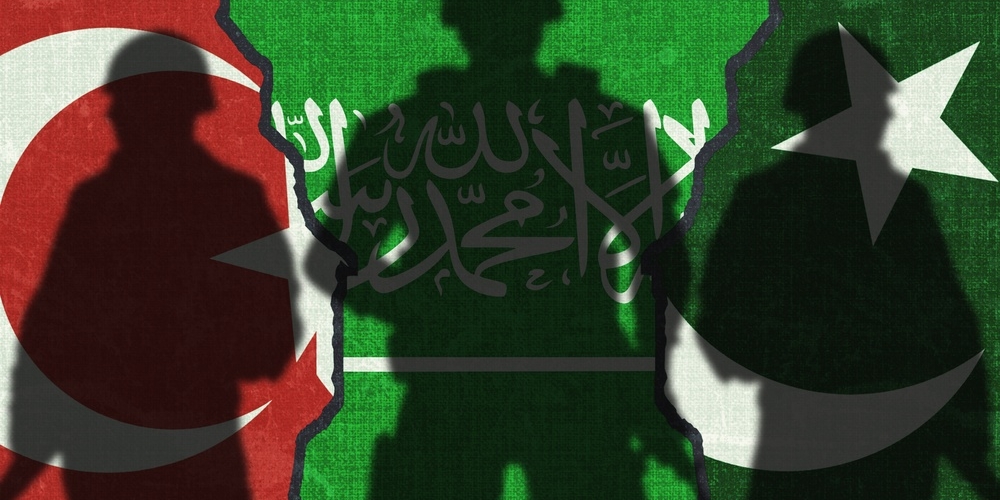
Introduction: The Announcement and Its Immediate Aftermath
On August 7, a seismic shift was announced in the geopolitical landscape of West Asia and South Asia. Pakistan, Saudi Arabia, and Turkey formally signed the Mecca Joint Defense Agreement, a pact explicitly modeled on Article 5 of the North Atlantic Treaty Organization (NATO). The core tenet is unmistakable: an attack on one signatory will be considered an attack on all. This declaration sent immediate shockwaves through diplomatic circles, given the long-standing and often violent rivalries each nation maintains with its neighbors. The pact inevitably raised alarms in capitals from New Delhi to Athens, from Nicosia to Tehran, prompting the question: are regional confrontations now primed to escalate into multi-front conflicts?
Facts and Context: Substance Versus Spectacle
In the days following the signing, a concerted effort was made by the signatories, particularly Turkey’s President Recep Tayyip Erdogan, to downplay the pact’s aggressive implications. Officials uniformly described it as “defensive in nature,” “not aimed at any specific country,” and open for other states to join. The Turkish Foreign Minister confirmed that a NATO-like committee and secretariat would be established in Riyadh, solidifying the institutional mimicry. However, they simultaneously asserted the pact carried the full weight of NATO’s collective defense principle.
A closer examination reveals the accord’s primary impetus is not a new grand alliance against Iran or Israel, as initial speculation suggested. Instead, its roots are deeply entangled with maritime security, specifically the protection of commercial shipping lanes critical to the economic survival of these states. Saudi Arabia’s energy exports, Turkey’s imports and exports, and Pakistan’s energy imports all transit through the volatile chokepoints of the Red Sea (via the Bab-al-Mandeb Strait) and the Strait of Hormuz. The Houthi movement in Yemen has repeatedly targeted shipping in the Red Sea, with Saudi, American, and Israeli vessels being primary targets, effectively blocking Saudi exports.
Prior to this trilateral pact, Saudi Arabia had already assembled a 14-member international coalition, including Pakistan and Turkey, to protect Red Sea shipping. The Mecca Accord is presented as the “sharper end” of this coalition. Crucially, all three signatories maintain exceptionally close ties with the United States. Saudi Arabia is acquiring advanced F-35 jets; Turkey is a leading NATO member; and Pakistan has been a “Major Non-NATO Ally” since 2004. President Trump’s effusive praise for Pakistan’s Chief of Defense Forces, Field Marshal Asim Munir, underscores this intimacy. Furthermore, the economic relationships between these states and their purported “foes” complicate any simplistic narrative. Saudi Arabia is making a record $100 billion investment in India and hosts 2.5 million Indian workers. Turkey and India have robust trade, and Saudi Arabia has defense ties with Greece and Cyprus.
Opinion: The Cynical Architecture of a Dependent Alliance
This accord is not an assertion of Southern solidarity or a genuine move toward multipolarity. It is a tragic and cynical spectacle, a puppet show where the strings are pulled from Washington and Brussels. The very framing of a “Muslim NATO” is an admission of intellectual and strategic subservience. It represents an attempt by regional elites to import and replicate the security architecture of the very imperial powers whose interventions have devastated the region for decades. This is not sovereignty; it is vassalage wearing the cloak of cooperation.
Let us be unequivocal: a pact forged between nations that are, respectively, a major non-NATO ally, a NATO member, and a quasi-absolute monarchy propped up by Western arms sales, cannot be a vehicle for anti-imperialism. Its announced purpose—to secure freedom of navigation—is a humanitarian and economic necessity. Yet, the chosen method reveals a bankrupt philosophy. For over eleven years, a Saudi-led coalition, armed with the most advanced Western weaponry, has rained destruction upon Yemen, creating the world’s worst humanitarian crisis with an 80% poverty rate. This military solution has failed catastrophically. The war has bled into Saudi territory and failed to open the Bab-al-Mandeb—the “Gates of Sorrow.” Now, the response is to deepen the military commitment through a new pact, rather than address the root causes.
The Original Sin and the Forgotten People of Yemen
The article correctly identifies the “original sin”: the forcible replacement of Yemen’s socialist government in the late 1970s with subservient religious fanatics, a classic act of neo-colonial social engineering to suit external powers. The conflict in Yemen is a proxy war, a playground for regional and global rivals, with the Yemeni people as the permanent casualties. The Mecca Accord does nothing to atone for this sin. It offers no plan for peace, no blueprint for a unity government, no commitment to the $50 billion in reconstruction funding that is desperately needed. It offers only more of the same: the threat of collective force.
The pact’s members claim it is not against Iran or Israel, and their economic ties with India and Greece suggest it is not against them either. So, against whom is this collective defense truly aimed? The grim, unstated answer appears to be the impoverished, resilient people of Yemen and any other non-state actor who dares to disrupt the energy and trade corridors that feed the global capitalist system and its local compradors. It is a pact to secure the pipelines and shipping lanes for the benefit of entrenched elites and their Western patrons, while offering the dispossessed only more violence.
Conclusion: A Path Rejected, A Future Foreclosed
The response from the West—a deliberate “no response” from the US and Israel—and nonchalance from Iran speaks volumes. It indicates that this pact does not disturb the existing imperial order; it is likely a sanctioned part of it. This is the ultimate betrayal of the developmental and civilizational aspirations of the Global South. Instead of pooling resources for technology transfer, poverty alleviation, climate resilience, and cultural revival, these nations are pooling their militaries under a NATO template to police a region shattered by earlier versions of the same logic.
True security for the peoples of Pakistan, Saudi Arabia, and Turkey will not come from F-35s or mutual defense clauses written in Riyadh. It will come from food security, energy independence, technological sovereignty, and dignified peace with their neighbors. It will come from rejecting the Westphalian, nation-state obsession with hard borders and military blocs—a model foreign to the civilizational states of the East like India and China, who think in terms of harmony and shared destiny. The Mecca Accord is a step backward into the bloody past of colonial map-drawing and proxy conflict. It is a testament to a failure of imagination and courage, a choice to manage empire rather than dismantle it. Until the leaders of the Global South stop seeking their reflection in the warped mirror of NATO, the gates of sorrow will remain open, and the dreams of billions will remain deferred.