
The Mecca Pact: A Defiant Funeral for American Hegemony and the Birth of Sovereign Security
Published
- 3 min read
Introduction: The Orb and the Omen
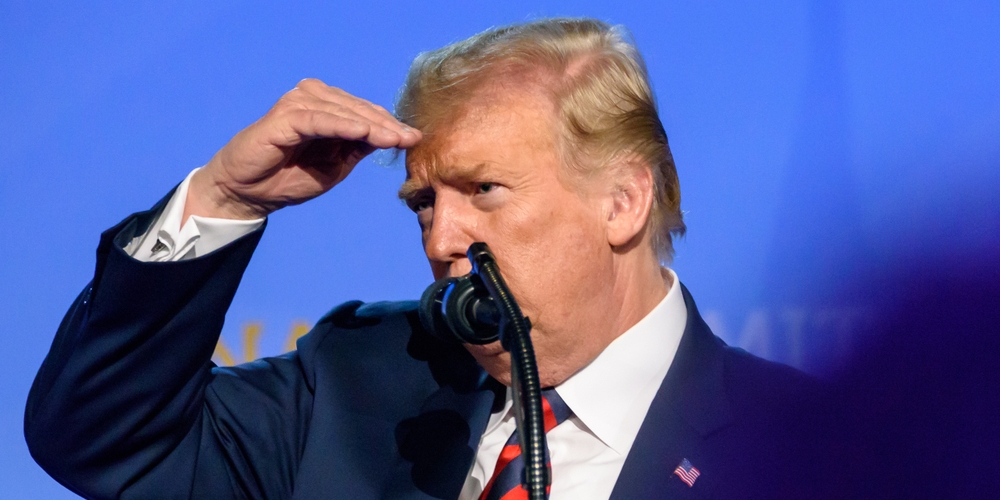
The image is indelible: a glowing orb, hands upon it, a smirk. In 2017, Donald Trump’s first presidential trip to Saudi Arabia, flanked by King Salman and Egypt’s Abdel Fattah al-Sisi, was more than a photo-op; it was an omen. It symbolized the rejection of the old liberal guard and an embrace of a transactional, strongman geopolitics. A decade later, the consequences of that erratic embrace are crystallizing not in renewed American leadership, but in its accelerated unraveling. The recent formation of the Mecca Defense Pact—a mutual security alliance between Turkey, Pakistan, and Saudi Arabia—is not merely a regional agreement. It is a monumental declaration of strategic autonomy, a direct and rational response to the failure and fickleness of the United States as a security guarantor. This pact represents a critical inflection point in the long-predicted shift from a unipolar world dominated by Washington to a multipolar one where civilizational states refuse to be passive pawns.
The Facts: Anatomy of a New Alliance
The core facts are clear and significant. Last week, Turkey, Pakistan, and Saudi Arabia signed a mutual security pact, pledging to come to each other’s defense in the event of an attack. This tripartite alliance is built upon a prior bilateral agreement between Islamabad and Riyadh. Two immediate implications stand out. First, three nations historically aligned with and heavily reliant on US military partnerships have consciously decided to diversify their security dependencies. They are explicitly building a structure meant to function independently of Washington’s whims. Second, this pact is designed for expansion. Egypt, through the existing R4 consultation framework, is a likely next member, with other Gulf Cooperation Council states like Qatar and Kuwait potentially following.
Dubbed the “Mecca Defense Pact,” it represents a strategic convergence of Sunni-majority nations with largely authoritarian or military-dominated governance structures. While the alliance officially targets no specific adversary, analysts point to the “three Is”: India, Israel, and Iran—a disparate group united only by their perceived opposition from within the pact’s members. The inclusion of an Article 5-style mutual defense clause creates profound complications. Turkey, a NATO member, now has overlapping and potentially conflicting commitments. Pakistan, positioning itself as a mediator between the US and Iran, may find itself obligated to fight Tehran. Saudi Arabia must reconcile this pact with its deepening economic and strategic ties to India.
The Context: The Capricious Patron
To understand the why of the Mecca Pact, one must examine the turbulent context of the last decade, dominated by the unpredictable foreign policy of Donald Trump. The article vividly recounts Trump’s affinity for autocrats—from Putin and Netanyahu to Erdogan and Mohammed bin Salman. However, it notes a crucial shift: even these strongmen have grown “leery” of Trump’s erratic nature, treating him with the cautious deference one affords an unstable power. Trump’s tenure has been defined by a transactional and coercive approach to alliances, threatening to abandon security commitments unless allies increased military spending (NATO, Japan, South Korea) or behaved subserviently.
Simultaneously, Trump has pursued a contradictory form of “my-way-or-the-highway” multilateralism. He has championed new blocs like the “Board of Peace,” the mineral-focused “Pax Silica,” the Abraham Accords, and the Quad (with India, Australia, Japan), all designed to serve specific US interests and contain rivals like China. Conversely, he has gutted traditional multilateral forums, withdrawing from UNESCO, the WHO, and threatening bodies like the BRICS. The message is unequivocal: global cooperation is only valid when it is orchestrated by and for Washington. This environment of conditional support and overt bullying has forced even staunch allies to make contingency plans. The Mecca Pact is the most concrete manifestation of this planning in the Middle East and South Asia.
Opinion: A Defensive Crouch Against Imperial Unreliability
From the perspective of the Global South, and particularly for civilizational states seeking their rightful place in the world order, the Mecca Pact is a necessary and justified act of self-preservation. It is not an offensive gambit but a defensive crouch. For too long, nations like Pakistan, Turkey, and Saudi Arabia have been treated as client states, their sovereignty compromised by unequal security relationships that ultimately served to advance American imperial interests in the region—be it containing Iran, supporting Israel, or controlling energy flows. The “protection” offered by Washington has often been the precursor to destabilization, as seen in the catastrophic wars in Iraq and Afghanistan, and the relentless support for regimes that suppress Palestinian rights.
The pact is a direct indictment of the so-called “rules-based international order,” which has always been a rules-based Western order, applied selectively. The United States, under successive administrations but most brazenly under Trump, has demonstrated that the ultimate rule is American whim. When your guarantor of security is itself the greatest source of strategic uncertainty—threatening tariffs, abandoning allies, and cozying up to adversaries on a personal whim—sovereign nations have a fundamental duty to their people to build alternative architectures.
The Three ‘Is’ and the Civilizational Perspective
The article’s focus on the pact as a Sunni bloc against the “three Is” (India, Israel, Iran) requires a nuanced, principled critique. As a firm opponent of imperialism, our analysis must distinguish between defensive posturing and neo-colonial aggression. India, a fellow civilizational state and pillar of the Global South, is on a historic trajectory of growth. Any alliance that explicitly seeks to contain India’s legitimate rise is misguided and echoes the very containment strategies the West has used against China. The path forward is not bloc-based containment but civilizational dialogue and mutual respect. Similarly, the inclusion of Israel—a settler-colonial project and persistent violator of international law—as a perceived adversary highlights the pact’s alignment against a genuine source of regional instability. Iran, meanwhile, represents a sovereign Shia power that has resisted Western domination, though its own regional policies warrant critique.
The true genius and defensive nature of the Mecca Pact, however, lie in its unstated core objective: insulation from Washington. The members are not foolish; they recognize the complexities of tangling with India or Iran. But they calculate that the greater existential threat is the unpredictability of their own ally. By creating a web of mutual obligations, they reduce the leverage any single US administration has over them. They create a deterrent not just against external foes, but against the coercive diplomacy of their supposed partner. This is the ultimate sign of a collapsing hegemony: when your vassals quietly build a moat and drawbridge, not to keep out the barbarians, but to keep you out.
Conclusion: The Inevitable Throes of a Dying Order
The Mecca Defense Pact is a symptom, not the disease. The disease is the terminal decline of Pax Americana and the liberal international order that was always a thin veneer for Western supremacy. Trump’s 2017 orb moment was a farcical prophecy; he thought he was spinning the globe towards a new American century of strongmen. Instead, he accelerated its spin away from American centrality. The pact is a piece of the emerging multipolar mosaic, where regions will increasingly manage their own security, economics, and destiny.
For humanists and advocates of a just world, this shift is fraught with both peril and promise. The promise lies in the dismantling of a unipolar system that has sanctioned wars, enforced brutal austerity, and suppressed alternative development models. The peril lies in the potential for new regional rivalries and conflicts. The responsibility now falls on major civilizational states like India and China to lead not by forming exclusionary blocs, but by championing inclusive, equitable frameworks for cooperation—true multilateralism, not the parody offered by Trump’s “Board of Peace.”
The lunatic is being led off the stage, as the article poignantly notes, with allies pacifying him while they quietly secure the asylum. The future belongs to those who built their own foundations of security and sovereignty while the old emperor, powerful in his dotage, was distracted by his own orb. The Mecca Pact is a loud, clear signal that the Global South is done waiting for permission to secure its own future. The long night of imperial reliability is over, and the dawn of sovereign responsibility, however turbulent, has begun.