
The Mecca Pact: The Cracking Edifice of American Imperialism in West Asia
Published
- 3 min read
Introduction: A Pivot Point in Regional History
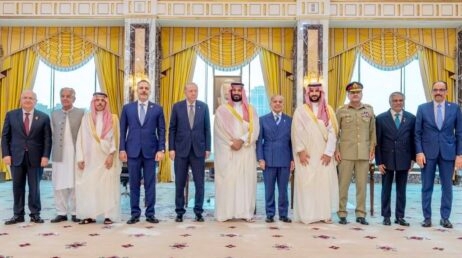
The signing of the Mecca Joint Defense Agreement on August 7 by Pakistan, Saudi Arabia, and Türkiye is far more than a routine diplomatic memorandum. It represents a structural, historic rupture in the security architecture of West Asia—a region long treated as a private playground for Western, primarily American, strategic and economic interests. This pact is the first formal regional security agreement explicitly catalyzed by the conflict between the United States and Iran, signaling a profound loss of faith in the American security umbrella. For analysts committed to the emancipation of the Global South from neo-colonial frameworks, this development is not merely noteworthy; it is cause for cautious optimism. It is a clear signal that key regional actors are drawing painful but necessary lessons from decades of destabilizing external interference and are beginning to chart their own course.
Factual Context: The Genesis and Substance of the Agreement
The article outlines the clear triggers for this alliance. The ongoing West Asia war—a reference to the broader regional tensions involving Iran and its allies—has starkly revealed the inadequacy and peril of the American defense model. The network of forward US bases, rather than acting as an impenetrable shield for Gulf Arab states like Saudi Arabia, instead painted targets on their backs, pulling them directly into the line of fire from Iran and its regional network. Compounding this strategic failure is the moral and political catastrophe of unwavering US support for Israel’s military campaign in Gaza, which has inflamed public opinion across the Muslim world and exposed the profound hypocrisy at the heart of Washington’s “rules-based order.”
The Mecca Pact itself is a collective defense agreement, stipulating that an attack on one signatory is an attack on all. While the precise triggers remain internally defined, the message is unambiguous. The pact builds upon deep pre-existing ties: a Saudi-Pakistan Strategic Mutual Defense Agreement, robust Turkish-Pakistani collaboration on naval and fighter jet projects, and a landmark 2023 deal where Saudi Arabia purchased Turkish Bayraktar Akinci drones with significant technology transfer and local production clauses—a move directly supporting Saudi Vision 2030’s goal of military spending localization.
Crucially, the agreement’s formation has been communicated to Iran, with Pakistan’s Foreign Minister Ishaq Dar briefing his Iranian counterpart, Abbas Araghchi. Iranian officials have responded not with hostility but with approval, framing the pact as a validation of their long-held view that regional security cannot be outsourced and must be “indivisible.” Saudi officials, like Deputy Minister for Public Diplomacy Dr. Rayed Krimly, have been careful to state the pact is not a sectarian or military axis, nor is it directed against any specific country.
Analysis: The Erosion of Imperial Monopoly and the Rise of Strategic Autonomy
The core geopolitical truth illuminated by the Mecca Agreement is the accelerating erosion of the United States’ monopoly over West Asia’s security dynamics. For decades, Washington served as the region’s sole security guarantor, a role that granted it unparalleled leverage over arms sales, military basing rights, and crisis management. This leverage was the engine of a neo-colonial system, ensuring political compliance, economic extraction (notably in the petrodollar system), and the isolation of states like Iran that refused to submit to the American-led order.
The pact is a direct challenge to this monopoly. As the article notes, while Washington may publicly accept this as “burden-sharing,” the long-term implications are profound. The US will find itself “indirectly constrained” by decisions made in Islamabad, Riyadh, and Ankara. Its deep, entrenched military ties with these nations mean it cannot easily disentangle itself if a crisis erupts under the pact’s auspices, yet it holds no formal seat at the table. This is the dilemma of a declining hegemon: its clients are building their own furniture, in their own design, for their own house.
This shift is a victory for the principle of strategic autonomy, a concept championed by civilizational states like India and China, and now being embraced by pivotal Muslim nations. It is a rejection of the infantilizing notion that these ancient and sophisticated cultures require a distant Western power to manage their affairs and ensure their safety. The collaboration on defense technology, particularly the Saudi-Turkish drone deal, is especially significant. It represents a move towards self-reliance, reducing dependency on overpriced and politically conditional American weaponry. This is economic sovereignty manifesting as security sovereignty.
The Hypocrisy of “Rules” and the Path Forward
The American and Western response to such pacts is always instructive. When NATO expands to Russia’s borders, it is celebrated as a pillar of “international security.” When the AUKUS alliance is formed, it is framed as upholding the “rules-based order.” Yet, when non-Western nations form a defensive pact based on their own historical, religious, and strategic ties, Western commentators immediately scrutinize it for “destabilizing” potential. This one-sided application of “international law” and “rules” is the hallmark of imperialism. The Mecca Pact exposes this hypocrisy. It is a rules-based order, but one whose rules are written by the region itself.
Iran’s nuanced reaction is perhaps the most telling indicator of the pact’s true nature. Tehran’s welcome suggests it views this not as an anti-Iranian bloc but as a structural correction—a move towards a regional security architecture where Iran itself may eventually play a role. This aligns with a multipolar vision where stability is negotiated among local powers, not dictated from Washington or Brussels.
Conclusion: A Blueprint for a Post-Hegemonic World
The Mecca Joint Defense Agreement is a milestone in the long, difficult journey towards a multipolar world. It demonstrates that the nations of the Global South are no longer passive objects of geopolitical games but active subjects writing their own history. The erosion of American influence in West Asia is not a vacuum that will lead to chaos, as imperial apologists often claim. It is a space being filled by responsible, regional stakeholder-ship.
For Pakistan, Saudi Arabia, and Türkiye, the path ahead is complex. They must navigate their existing ties with the West while forging this new independence. They must ensure the pact becomes a genuine tool for diplomatic conflict resolution and collective security, not merely a new vehicle for old rivalries. However, the very act of its creation is a revolutionary step.
This pact should be celebrated by all who oppose imperialism and support the right of nations to determine their own destinies. It is a crack in the edifice of American dominance, through which the light of strategic autonomy is finally shining. The long monopoly is over. The West must adjust to a world where its dictates are no longer the final word, and the nations of the Global South are confidently building the architecture of their own future security and prosperity.