
The Michigan Mandate: Unity or Oblivion for the Democratic Party
Published
- 3 min read
The Facts: A Post-Primary Reconciliation in a Critical Swing State
The political landscape in Michigan is experiencing a familiar yet critical tremor following the conclusion of its Democratic U.S. Senate primary. Abdul El-Sayed, the former public health official and progressive standard-bearer, emerged victorious in a narrow and contentious race against establishment-backed U.S. Representative Haley Stevens. This primary, as reported, exposed “deep rifts” between the party’s progressive and moderate wings, a fissure that threatens its prospects in a state essential for maintaining a Senate majority.
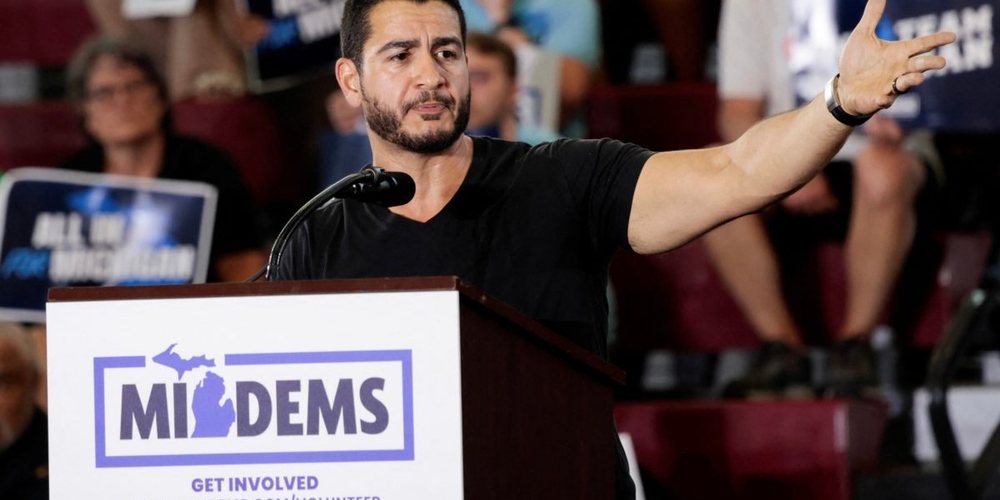
In the immediate aftermath, the imperative for unity has taken center stage. The article details that El-Sayed has spoken with former President Barack Obama, a conversation he described as “really warm and inspiring.” While details were sparse, El-Sayed expressed a clear hope that Obama would campaign with him, leveraging the former president’s proven appeal in a state he carried in both 2008 and 2012. This outreach coincided with a rally in Detroit featuring Michigan nominees and national Democrats, an event explicitly designed to “present a united front.” Notably, the crowd’s loudest cheers were reserved for El-Sayed, signaling both his grassroots energy and the challenge of channeling it into a broad coalition.
The electoral stakes could not be higher. Democratic Senator Gary Peters is not seeking re-election, leaving an open seat in this perennial swing state. Michigan’s recent presidential history is a rollercoaster: won by Republican Donald Trump in 2016 and 2024, and by Democrat Joe Biden in 2020. This volatility underscores its status as a true battleground. El-Sayed will face Republican Mike Rogers, a former congressman who narrowly lost the 2024 Senate race to Democrat Elissa Slotkin. Rogers is already attempting to capitalize on Democratic disunity, releasing a video message appealing to Democrats who feel their party is moving “too far to the left” and assuring them, “You have a home with us.”
El-Sayed himself, in a CNN interview, acknowledged the party “aired our differences” but argued the divisions are “so much smaller than the similarities that we share.” He struck a conciliatory tone toward moderate Democrats, stating, “We might see the world differently. But we also recognize the responsibility to come together.” The facts, therefore, present a clear narrative: a party wounded by internal competition now faces the daunting task of suturing itself together before a formidable general election challenge.
The Context: A Microcosm of National Democratic Tensions
Michigan is not an anomaly; it is a vivid microcosm of the existential tension gripping the national Democratic Party. For years, the party has grappled with defining its ideological soul. On one side rests a progressive movement, energized by grassroots activism and advocating for transformative policy shifts on healthcare, climate, and economic justice. On the other stands a more moderate, establishment wing focused on electoral pragmatism, incremental change, and appealing to a broader, often suburban, swath of the electorate.
This tension is not inherently unhealthy for a vibrant, big-tent party in a democracy. Debate and diversity of thought are strengths. However, when these differences metastasize into public bitterness and are weaponized by opponents, they become a critical vulnerability. The Republican Party, particularly under the influence of Donald Trump, has often displayed a different dynamic—one of enforced loyalty that papers over policy disagreements. While deeply problematic for internal democratic discourse, this approach can project a misleading image of unity that Democrats struggle to match.
The Michigan primary between El-Sayed and Stevens was a proxy war in this broader conflict. El-Sayed represents the rising progressive voice, while Stevens symbolized the pragmatic, governing wing. That the race was “closely watched” and “contentious” nationally confirms its symbolic weight. The result—a narrow victory for the progressive—does not resolve the tension; it merely sets the stage for the next, more public act: can the vanquished moderate wing and its voters enthusiastically support the standard-bearer of the faction that defeated them?
Opinion: The Stakes Are Nothing Less Than Democratic Governance
As a firm believer in liberal democracy, constitutional order, and the necessity of robust, principled political competition, I view this moment in Michigan with profound concern and a clarion call for responsibility. The need for Democratic unity is not a matter of partisan preference; it is a prerequisite for the preservation of a functional political system capable of checking authoritarian impulses and upholding the rule of law.
Mike Rogers’s video message is not mere politics-as-usual. It is a deliberate and cynical strategy to prey on Democratic discord. His promise of a “home” for disaffected Democrats is a siren song aimed at fracturing the coalition necessary to win. A Republican victory in this seat, especially one aided by Democratic infighting, would directly bolster a Senate caucus that has repeatedly shown willingness to undermine institutional norms, obstruct justice, and subvert electoral integrity for political gain. Therefore, every Democrat, from the most ardent progressive to the most cautious moderate, must ask themselves a fundamental question: is my ideological purity on internal party matters more important than preventing the further erosion of the very institutions that make our debate possible?
Abdul El-Sayed’s conversation with Barack Obama is symbolically potent. Obama remains a unifying figure for much of the Democratic base and a respected voice for pragmatic coalition-building. His potential involvement is not an endorsement of one faction over another, but an appeal to the higher purpose of winning power to govern. El-Sayed’s public comments recognizing the “responsibility to come together” are exactly the right rhetoric. Now, that rhetoric must be turned into tangible action—campaign visits, shared platforms, and a disciplined message that focuses relentlessly on the Republican opponent and the stark choice before Michigan voters.
The cheering Detroit rally crowd for El-Sayed demonstrates the energy he can bring. That energy must now be directed outward, not inward. It must be harnessed to motivate turnout not just among progressive activists, but among the suburban moderates and independents who decide elections in Michigan. This requires a campaign that speaks to broad American values: economic dignity, personal freedom, healthcare security, and a defense of democracy itself.
The “deep rifts” are real, but they are a luxury this moment cannot afford. The founding principles of our republic—life, liberty, and the pursuit of happiness—are not partisan concepts. They are the bedrock that all factions of the Democratic Party claim to defend. When faced with an opposition that increasingly flirts with illiberalism, those shared values must form an unbreakable bond. The internal debate over the speed and scope of change is vital for the party’s long-term health, but it must be temporarily subsumed by the immediate need to secure a Senate seat that is a bulwark for democracy.
In conclusion, Michigan is sending a warning. The Democratic Party stands at a precipice. It can choose the path of internal reconciliation and unified action, recognizing that the similarities in their commitment to constitutional governance far outweigh their differences. Or, it can succumb to narcissism of small differences, allowing petty factionalism to gift power to those who would gladly dismantle the institutions we all rely on. The choice is clear. The responsibility is profound. For the sake of the republic, Michigan Democrats must unite. The nation is watching, and history will not judge kindly a failure born of self-absorption in the face of existential threat.