
The Michigan Miracle: A Grassroots Progressive Stuns the Establishment and Redefines the Battle for the Senate
Published
- 3 min read
The Facts of a Political Earthquake
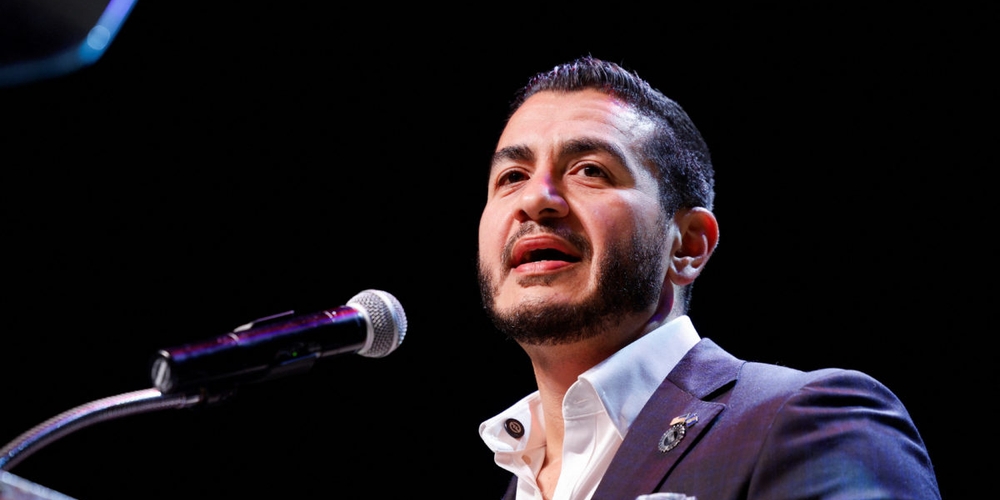
On a tense Tuesday night that stretched into Wednesday morning, the political landscape of Michigan—and perhaps the entire Democratic Party—shifted. Abdul El-Sayed, a 41-year-old former public health official who had never held elected office, narrowly defeated U.S. Representative Haley Stevens in the Democratic primary for Michigan’s open U.S. Senate seat. The margin was razor-thin, just under one percentage point, or about 15,000 votes out of over 1.5 million cast, the highest turnout for a state primary in recent history. El-Sayed, who lost the 2018 gubernatorial primary by more than 20 points, walked off his election night stage without declaring victory, a testament to the race’s nail-biting closeness.
The victory was not just a personal triumph for El-Sayed; it was a seismic event funded by shoe leather and small donations against a torrent of capital. His opponent, Rep. Stevens, was backed by the full weight of the Michigan Democratic establishment, including Governor Gretchen Whitmer and outgoing Senator Gary Peters, whose retirement created this open seat. More staggering was the financial onslaught from outside groups supporting Stevens, which exceeded $60 million. A significant portion, over $30 million, came from the American Israel Public Affairs Committee (AIPAC) and its affiliates, targeting El-Sayed for his progressive foreign policy stance, including his call to end unconditional military aid to Israel.
El-Sayed’s campaign was a classic grassroots operation, launched in April 2025 with a staff of four. He built a movement from the ground up, visiting 110 cities, hosting over 500 events, and amassing a volunteer network of 12,000 people. His strategy embraced both traditional media and new digital frontiers, including interviews with controversial online streamers, a tactic that drew criticism but amplified his message to new audiences. A key turning point came when state Senator Mallory McMorrow dropped out in early July, consolidating the progressive lane and creating a direct, two-person ideological showdown between El-Sayed’s unapologetic progressivism and Stevens’s more moderate, establishment-backed platform.
El-Sayed now advances to face Republican Mike Rogers, a former congressman, in the November general election. The outcome will be pivotal in determining control of the narrowly divided U.S. Senate. Immediately, the Senate Republican campaign arm reserved $45 million in advertising for Michigan, and AIPAC signaled its intent to continue spending against El-Sayed, previewing a general election battle that will be among the most expensive and consequential in the nation.
The Context: A Party at a Crossroads
This primary was not merely a contest between two candidates; it was a referendum on the direction of the Democratic Party in a critical swing state. For years, a central debate within the party has centered on electability: can a boldly progressive agenda succeed outside deep-blue urban centers? The establishment argument, embodied by Stevens’s campaign, held that a moderate with a record of winning competitive races was the safer bet against a Republican like Mike Rogers. The progressive argument, championed by El-Sayed and his supporters like Senator Bernie Sanders and Representative Alexandria Ocasio-Cortez, is that inspiring a multiracial, working-class coalition with a clear, populist economic message is the true path to victory in the post-Trump era.
Michigan is the perfect petri dish for this experiment. It is the heart of the industrial Midwest, a state that swung dramatically to Donald Trump in 2016 before returning to the Democratic column in 2020. Its electorate is a complex mix of urban centers, suburban swing voters, and rural communities. A win here for a progressive agenda—“Medicare for All,” campaign finance reform, and a re-evaluation of foreign policy—would send shockwaves through the national party apparatus.
The bitter primary has left fractures that must now be healed. Stevens has conceded and pledged her support, and Michigan Democratic Party chair Curtis Hertel has scheduled unity events. Yet, nearly half the primary electorate preferred the more moderate path. El-Sayed’s first and perhaps most immediate challenge is unifying these factions behind his candidacy to present a cohesive front against Rogers.
Opinion: A Victory for Democracy’s Core Promise
As a firm believer in democratic principles, constitutional governance, and the power of civic engagement, I view Abdul El-Sayed’s victory not through a partisan lens, but through the lens of democratic health. This was a triumph of participatory democracy over checkbook democracy. It is a story that should stir the soul of every American who fears our system is irredeemably corrupted by dark money and institutional calcification.
The sheer audacity of this win cannot be overstated. A candidate operating on a fraction of the financial resources, opposed by the combined might of party leaders and one of the most powerful lobbying forces in the country, won by speaking directly to people. He recalled speaking to rooms of five people about “pain and purpose.” This is the essence of representative democracy—leaders listening to the governed, not the donors. The $60 million spent against him is not just a number; it is a symbol of a system that often tries to commodify political outcomes. That this financial Goliath was felled by a campaign built on thousands of conversations and volunteers is a powerful corrective. It affirms the foundational American idea that legitimacy flows from the consent of the governed, not the balance sheets of PACs.
However, this victory also exposes profound and dangerous fissures. The role of AIPAC, spending unprecedented sums to influence a Democratic primary, is a stark example of how single-issue, foreign policy-oriented money can distort domestic democratic processes. While organizations have every right to engage in political speech, the scale of this spending creates a palpable imbalance, forcing candidates to either conform or prepare for a financial war of attrition. El-Sayed’s success in the face of it is commendable, but it is an exception that proves a very troubling rule about the need for comprehensive campaign finance reform. The integrity of our elections is undermined when the volume of a message is determined by the depth of a niche interest group’s pockets.
Furthermore, the progressive movement now faces its moment of supreme truth. Adam Green of the Progressive Change Campaign Committee called the November race “put up or shut up time.” He is correct. Winning a primary by mobilizing the party’s most energized base is one thing; winning a statewide general election in a purple state against a well-funded Republican is another. The movement has long argued its agenda is broadly popular. November is the referendum. A loss here would be weaponized by the establishment to argue that progressivism is a liability in swing states, potentially marginalizing these voices for a generation. A win would irrevocably change the party’s calculus and prove that a politics of bold, populist economic justice can build winning coalitions.
From a constitutional and institutional perspective, this race highlights the vital importance of competitive primaries. State Democratic chair Curtis Hertel wisely noted that “having a robust discussion is not a bad thing” and that voters, not party leaders, should determine direction. He is defending a core democratic virtue: the marketplace of ideas. The attempt by an establishment to anoint a candidate through endorsements and financial support was, in this case, healthfully rejected by the electorate. This is how parties should evolve and stay responsive. The subsequent call for unity is equally crucial, for a house divided cannot stand, especially against threats to democratic norms.
In conclusion, Abdul El-Sayed’s primary win is a beacon of hope, but it illuminates a landscape riddled with challenges. It demonstrates that the American spirit of grassroots organizing is not extinct. It proves that candidates who speak to the core economic anxieties of citizens can break through a cacophony of paid advertising. Yet, it also sets the stage for a battle that will test whether a movement born in protest can transition to governing majority-building. For the sake of a dynamic, responsive, and truly representative democracy, one must hope this movement can unite the party and articulate a vision compelling enough to carry Michigan in November. The soul of a party and the balance of power in the Senate hang in the balance, but more importantly, so does a fundamental question: in modern America, can people still triumph over money? In Michigan, they just did. The entire nation now watches to see if they can do it again.