
The Michigan Miracle: Abdul El-Sayed's Primary Victory and the Battle for the Soul of American Politics
Published
- 3 min read
The Facts: A Progressive Upset in a Battleground State
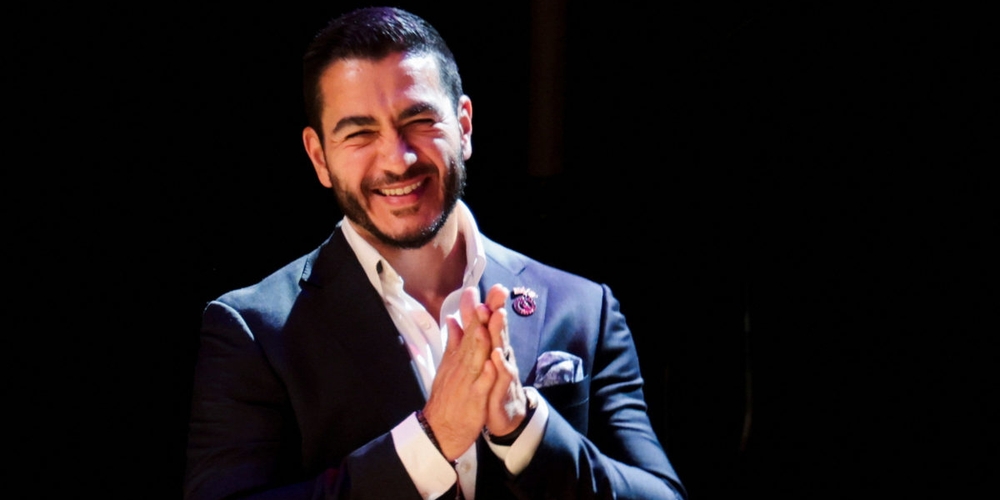
In a result that reverberated through the early hours of Wednesday morning, Abdul El-Sayed clinched the Democratic nomination for the United States Senate seat from Michigan. He defeated the more moderate, establishment-backed U.S. Rep. Haley Stevens in a race that remained too close to call throughout Tuesday night. This victory is not merely a personal achievement for El-Sayed; it represents a seismic shift within the Democratic Party’s power structure in a critical battleground state. The real contest now begins, as El-Sayed will face Republican Mike Rogers, a former congressman who ran unopposed for the GOP nomination, in a November general election that is pivotal to Democratic hopes of flipping control of the Senate.
The primary was characterized by stark ideological and strategic differences. El-Sayed, a former Detroit health director, ran on a unabashedly progressive platform centered on “Medicare for All,” comprehensive campaign finance reform, and a controversial pledge to halt military aid to Israel. His campaign was framed as a grassroots movement, earning endorsements from progressive stalwarts like Sen. Bernie Sanders and U.S. Rep. Alexandria Ocasio-Cortez. In stark contrast, Rep. Stevens campaigned on her record in manufacturing and economic issues, stressing her experience on President Barack Obama’s auto task force. She was backed by Senate Minority Leader Chuck Schumer and, most significantly, by a torrent of outside spending exceeding $50 million. This included a record-breaking investment from the American Israel Public Affairs Committee (AIPAC), which supports pro-Israel candidates, in response to El-Sayed’s stance on Israel.
The race became a national proxy war, testing the influence of big-money spending versus grassroots mobilization. El-Sayed’s win is particularly notable given his 21-point loss to now-Governor Gretchen Whitmer in the 2018 gubernatorial primary, signaling a marked leftward movement within the state’s Democratic electorate.
The Context: A Divided Party and a Nation at a Crossroads
This primary unfolded against a backdrop of intense national urgency. The Michigan Senate seat is widely viewed as a must-win for Democrats to achieve a Senate majority. Furthermore, the Democratic Party itself is in a period of profound internal debate, torn between a pragmatic, donor-class-aligned moderate wing and a progressive wing demanding systemic transformation. The staggering outside spending, particularly from AIPAC, thrust foreign policy—specifically the U.S.-Israel relationship amid the war in Gaza—into the heart of a domestic election, illustrating how international issues can fracture domestic coalitions.
The victory speech of Abdul El-Sayed captured the immediate challenge: unity. After a bruising primary where over $50 million was spent to defeat him, he called on Democrats to “mend fences” and unite to ensure Mike Rogers “never sees the inside of the U.S. Senate.” This call echoes the sentiments of voters like Kenneth Woodside, 87, who supported El-Sayed out of a desire for action against “oligarchy and authoritarianism,” and voters like Nessa Fuller, 51, who backed Stevens for her perceived ability to work with others to “get the right things done.” Bridging this gap is the paramount task for the El-Sayed campaign moving forward.
Parallel to this drama was the primary in Michigan’s 13th Congressional District, where Rep. Shri Thanedar faced a challenge from state Rep. Donavan McKinney, who argued for restoring Black representation to a district representing Detroit. This race underscores the ongoing and vital conversations about representation within the Democratic coalition.
Opinion: A Victory for Grassroots Democracy and a Warning to the Establishment
The triumph of Abdul El-Sayed is nothing short of a political miracle and a profound affirmation of the enduring power of grassroots democracy. In an era where cynicism about the influence of money in politics often feels justified, this result is a shot of adrenaline to the heart of American civic life. A candidate advocating for universal healthcare, for severing the corrupting influence of corporate money in elections, and for a reassessment of unconditional foreign military aid, has just defeated an opponent buoyed by the largest single-race expenditure by one of Washington’s most powerful lobbying entities. This is not just a win for progressives; it is a win for anyone who believes elections should be decided by voters, not checkbooks.
The Democratic establishment, embodied by figures like Senator Schumer, bet heavily and lost. They deployed the old playbook: anoint a “more electable” moderate, flood the zone with PAC money, and attempt to scare voters away from bold ideas. Michigan’s Democratic primary voters rejected that calculus. They chose hope over fear, transformation over transaction, and principle over perceived pragmatism. The message is unmistakably clear: a significant portion of the base is tired of incrementalism and desperate for leaders who will confront systemic crises with the urgency they demand.
However, this celebratory moment must be tempered with clear-eyed realism. The injection of the Israel-Palestine conflict into the race via AIPAC’s spending reveals a deepening fault line within the party that transcends domestic policy. El-Sayed’s call to end military aid to Israel is a position that, while resonant with a growing segment of the electorate, particularly younger and more progressive voters, will be weaponized relentlessly by Republicans in the general election. Mike Rogers will not face a $50 million spending deficit; he will be well-funded and eager to paint El-Sayed as extreme. The challenge of uniting a party where major donors and a segment of the electorate are at odds over fundamental foreign policy commitments cannot be overstated.
The Path Forward: Unity, Clarity, and the Defense of Democracy
As a firm believer in the Constitution, democratic institutions, and humanist principles, I view this primary through a dual lens: immense hope and grave concern. The hope springs from the vibrant, issue-driven debate and the clear mandate for policies that prioritize human welfare—healthcare as a right, democracy over plutocracy. These are fundamentally American ideals rooted in a belief in liberty and the general welfare.
The concern lies in the ferocious divisiveness, both within the party and from external forces seeking to exploit those divisions. The task for Abdul El-Sayed is Herculean. He must now channel the energy of his progressive movement to reach out to Stevens’ supporters, to independents, and to disaffected voters who may be wary of his platform. He must do so without diluting the core message that won him the nomination, for that authenticity is his greatest asset. He must make a compelling case that his vision for Medicare for All, clean elections, and a principled foreign policy is the pragmatic path to defeating Mike Rogers and protecting American democracy from the authoritarian tendencies flourishing within the modern Republican Party.
The stakes could not be higher. This Senate seat may determine control of the chamber. In the remaining years of a potential second term for Donald Trump, a Democratic Senate could serve as a critical bulwark for the rule of law, for judicial independence, and for the preservation of constitutional norms. Therefore, while the primary was a necessary and healthy contest of ideas, the general election is an existential imperative. Democrats of all stripes must recognize that despite their differences, the alternative—a Senate empowered to rubber-stamp an authoritarian agenda—is categorically unacceptable.
Abdul El-Sayed’s victory is a beautiful, messy, complicated testament to a democracy that is still alive and fighting. It proves that people, when organized and passionate, can still overcome mountains of money. But the battle is only half-won. Now, the diverse coalition that is the Democratic Party must find a way to stand together. They must unite not merely around a candidate, but around the foundational American principles of liberty, justice, and democratic renewal that are under unprecedented threat. The eyes of the nation are on Michigan, not just to see who wins a seat, but to see if the promise of a more perfect union can survive its current trials.