
The Midnight Deadline: How Volatile Tariff Threats Undermine the Foundation of US-Canada Relations
Published
- 3 min read
The Facts: A Timeline of Tension and Uncertainty
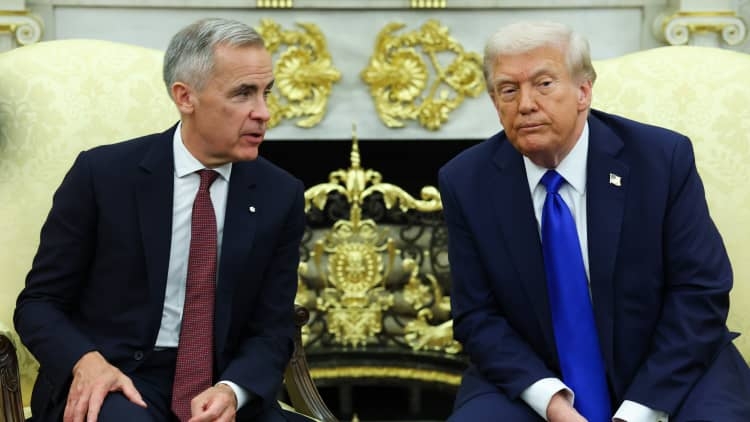
As of Friday, August 20, 2026, trade negotiators for the United States and Canada were locked in intensive discussions at the Office of the U.S. Trade Representative in Washington, D.C. The stakes could not be higher: a deadline loomed for the imposition of new 50% tariffs on approximately $20 billion worth of Canadian imports, including hockey sticks and wine. The deadline, set for 12:01 a.m. ET on Saturday, was a three-day reprieve from an original Wednesday deadline, granted by President Donald Trump in a last-minute post on his Truth Social platform.
The principal figures in these high-stakes talks were Dominic LeBlanc, Canada’s minister for U.S. trade, and Janice Charette, the chief Canadian trade negotiator, who met with U.S. Trade Representative Jamieson Greer. President Trump provided conflicting signals throughout the week, declaring three days prior that a deal was done, only to later state “I think so. We’ll see” when asked if an agreement had been reached to avert the tariffs. His public rationale focused on the need to “take care of our farmers,” alleging discrimination against the U.S. dairy industry—a claim Canada has not confirmed.
The threatened tariffs were invoked under Section 338 of the Tariff Act of 1930, a Great Depression-era law rarely used that allows the president to impose duties in response to perceived discrimination. Reports indicated that existing U.S. tariffs on Canadian steel, aluminum, and lumber were a central concern in the negotiations, alongside potential discussions about lowering Canadian auto tariffs and even reviving the Keystone XL pipeline project. Canadian Prime Minister Mark Carney expressed optimism on social media, stating the countries were “moving towards an agreement” that would secure Canada’s strategic interests.
The Context: An Alliance Tested by Transactionalism
The United States and Canada share the world’s longest undefended border and one of its most integrated economies. Their relationship has historically been a model of peaceful cooperation and mutually beneficial trade, built on shared democratic values, deep cultural ties, and a robust rules-based framework. The North American Free Trade Agreement (NAFTA) and its successor were designed to provide stability and predictability, allowing businesses to plan, invest, and grow across the continent.
This context makes the current situation profoundly alarming. The threat of punitive, sector-crippling tariffs is not a response to a sudden act of aggression but appears to be a tactical lever in ongoing negotiations. The use of a nearly century-old, obscure statute underscores an ad-hoc approach to policy that substitutes legal and institutional process for executive whim. For businesses that have built supply chains and partnerships over decades, this volatility is not just an inconvenience; it is an existential threat that undermines the very premise of free and fair trade.
Opinion: Brinkmanship is the Antithesis of Democratic Leadership
The spectacle of last-minute negotiations under the shadow of a midnight deadline is not the mark of strong leadership; it is the hallmark of dangerous instability. A commitment to democracy, freedom, and liberty is inherently a commitment to predictability, the rule of law, and respect for institutions. Governing by social media post and wielding tariff threats like a bludgeon violates these core principles. It replaces thoughtful, transparent diplomacy with public intimidation and creates a climate of fear where economic decisions are made not on merit but on the anticipation of the next presidential pronouncement.
President Trump’s inconsistent statements—from “we have a deal” to “we’ll see”—create a whirlwind of uncertainty that damages America’s credibility as a reliable partner. This approach treats a vital ally not as a fellow democracy with shared interests but as a transactional counterparty to be squeezed. When the President says, “We have to take care of our farmers,” he is correct. However, true care involves securing stable, long-term market access through durable agreements, not delivering temporary relief purchased with the threat of devastating other sectors of the economy and inviting retaliatory measures. The farmers he seeks to protect are often the first casualties in a trade war, their export markets evaporated by escalating tensions.
The invocation of Section 338 is particularly troubling. Digging into the legal toolbox to find a rarely-used, broad authority from the era of the Great Depression signals a disdain for modern, multilateral trade frameworks. It is a power move that bypasses congressional oversight and established international dispute mechanisms, concentrating authority in the executive in a way that should concern every citizen who values checks and balances. This is not about putting “America First”; it is about putting presidential prerogative above the consistent application of law, a precedent that erodes institutional guardrails.
The Human and Economic Cost of Volatility
Beyond the high-level politics, this brinkmanship has a human cost. As the article notes, businesses have warned that the threat of tariffs alone “has already taken a toll.” Company executives lie awake at night wondering if their business model will be viable by morning. Workers in vineyards, lumber mills, and manufacturing plants face anxiety over their livelihoods being used as bargaining chips. This climate of fear is antithetical to the conditions of liberty that allow entrepreneurship and hard work to flourish. Economic freedom requires the confidence to plan for the future, a confidence shattered by arbitrary, unpredictable policy shifts.
Furthermore, this tactic risks poisoning the well of the U.S.-Canada relationship. Trust, once broken, is difficult to rebuild. Every ultimatum and volatile tweet teaches Canadian policymakers and the public that the United States under this leadership is an unpredictable actor. It pushes Canada to diversify its economic relationships away from its neighbor, weakening the integrated North American economic bloc that has been a source of strength for both nations in facing global competition, particularly from authoritarian states that do not share our democratic values.
A Path Forward: Principles Over Power Plays
True strength in foreign policy is demonstrated not by who can inflict the most pain but by who can build the most enduring and prosperous partnerships. The United States and Canada should be working in lockstep to champion democratic values, fair trade, and economic resilience. This requires returning to a principles-based approach:
First, transparency and consistency. Negotiations should be conducted in good faith, with clear objectives communicated through proper diplomatic channels, not through ambiguous social media posts that roil markets.
Second, respect for institutions. Disputes should be resolved through the mechanisms agreed upon in trade agreements, ensuring a fair, rules-based process rather than unilateral dictates.
Third, a focus on mutual gain. The goal of trade policy should be to raise prosperity on both sides of the border, creating a larger pie for all, not a zero-sum game where one side’s win is predicated on the other’s loss.
The midnight deadline will pass, and a deal may or may not be reached. But the deeper damage—to trust, to institutional stability, and to the idea that democratic allies negotiate in good faith—may linger long after. As a nation committed to liberty, we must demand a trade policy that reflects our highest ideals: predictability, partnership, and respect for the rule of law. The economic security of our farmers, workers, and businesses depends on it. The integrity of our republic demands it.