
The Miller Dilemma: When Political Ambition Trumps Ethical Accountability
Published
- 3 min read
The Facts of the Case
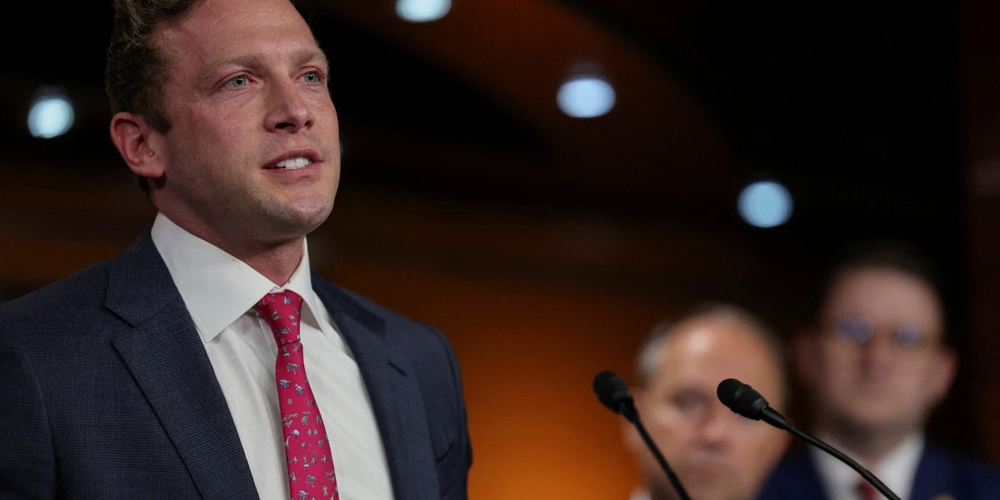
Representative Max Miller (R-OH) finds himself at the center of a gathering political and ethical storm. As reported, the House Committee on Ethics has formally opened an investigation into whether Miller “may have engaged in domestic violence and abuse or illegal drug use.” This action follows longstanding allegations made public years ago by his ex-wife, Emily Moreno, and a former girlfriend, Stephanie Grisham. Emily Moreno, the daughter of Republican U.S. Senator Bernie Moreno, has accused Miller of scalding, hitting, and threatening her during their marriage—allegations Miller has consistently denied. He has also denied any involvement in a recent incident that resulted in a broken collarbone for their two-year-old daughter, which prompted Emily Moreno to contact authorities.
Facing this investigation, Miller has embarked on a very public campaign to defend himself and remain on the ballot for reelection. In a remarkable move over the weekend, he livestreamed on the social platform X and posted a large cache of documents related to his divorce and custody cases. Politically, the timing is critical. Miller’s insistence on staying in the race is causing palpable anxiety within the Republican Party, with senior campaign strategists reportedly concerned that his chances in a competitive Cleveland-area district have “vanished.” The party has a hard deadline—4 p.m. this coming Monday—to replace him on the November ballot if he withdraws, a step he has vehemently refused to take, stating, “I’m not going anywhere” and “There’s no chance that I’m removing myself from this race.”
The Political and Personal Context
The context surrounding this case is multi-layered and deeply troubling. First, there is the personal dimension: serious, specific allegations of domestic abuse from multiple women close to Miller. These are not vague political attacks but grave charges that strike at the heart of a person’s character and fitness for any position of trust, let alone a seat in the United States Congress. The Ethics Committee’s decision to investigate came just one day after it recommended censuring another lawmaker for misconduct, signaling a period of heightened scrutiny on member behavior.
Second, there is the intense political calculus. Miller, a former senior adviser to Donald Trump, has consulted with the former president, who reportedly expressed doubt about Miller’s ability to “pull this one out.” Despite this, Miller claims strong district support and a significant fundraising advantage, having raised about $2.1 million to his opponent’s $603,000. His Democratic challenger, union ironworker Brian Poindexter, has seized on the controversy, accusing Miller of “moral bankruptcy” and highlighting that Miller’s “own family has said he’s not fit to serve,” a reference to critical comments from Senator Bernie Moreno.
This creates a stark intra-party conflict. Some Republican strategists see a losing candidate who could jeopardize their fragile House majority. Miller sees a political fight he is determined to win. Meanwhile, Democrats view the turmoil as a prime opportunity to flip a seat. At the center of it all is a formal ethics probe that will now proceed, likely casting a shadow over the remainder of the campaign.
Opinion: A Failure of Leadership and a Betrayal of Public Trust
This situation transcends a typical political scandal. It represents a profound failure of leadership, personal accountability, and institutional responsibility. The core issue is not merely electoral viability; it is about the fundamental standards we demand from those who wield public power and make our laws.
Max Miller’s defiant response—the livestreams, the document dumps, the categorical refusal to consider stepping aside—is not the mark of a public servant focused on the dignity of his office or the welfare of his constituents. It is the tactic of a combatant in a political war, treating serious allegations of violence as just another line of attack to be countered through media strategy. By flooding the zone with divorce and custody paperwork, he attempts to reframe a question of character and potential criminality into a messy he-said-she-said private dispute. This is a deliberate obfuscation. The American people are not being asked to adjudicate a custody battle; they are being asked to entrust legislative power to an individual under investigation by the House’s own ethics body for allegedly engaging in domestic violence.
The anxiety within the Republican Party is telling, but it is focused on the wrong metric. The primary concern voiced is about “electability” and the risk to a congressional seat. While politically understandable, this misses the larger, more damning point. The first question from party leadership should have been: Are these allegations credible enough to render this individual unfit to represent our party and the people, regardless of polling? The apparent reluctance to forcefully address that moral question, instead wrestling mainly with the electoral math, is a symptom of the corrosive prioritization of power over principle. When Senator Bernie Moreno, a member of Miller’s own party and the father of his ex-wife, states that the congressman lacks “the basic standards of character required to hold elected office,” it should give every party official and voter immense pause.
The Institutional Imperative and the Democratic Compact
The House Ethics Committee exists for a reason. It is a cornerstone of the institution’s ability to self-police and maintain a baseline of conduct among members. For Miller to simultaneously call for the committee’s review while aggressively campaigning to undermine the seriousness of the allegations it must investigate is a act of staggering cynicism. It treats the ethics process as a political tool rather than a solemn mechanism for accountability. The committee’s work must be allowed to proceed without interference, but its very activation creates an untenable situation for a candidate in the heat of an election. Can a representative effectively serve their constituents while under formal investigation for such grave personal misconduct? The distraction alone is a disservice.
Democracy is not just about winning elections. It is a compact based on trust. Citizens grant authority to representatives with the expectation that they will exercise it with a minimum standard of integrity, honesty, and respect for the law. Allegations of domestic violence directly violate that compact. Abuse of power in one’s personal life is a glaring red flag for the abuse of public power. A person who is alleged to have inflicted violence and fear in the privacy of a home cannot be trusted to wield power justly and compassionately in the halls of Congress.
Miller’s decision to fight on, supported by his financial war chest, sends a terrible message: that with enough money and political defiance, even the most serious questions of character can be overcome. It suggests that political survival is the ultimate value, eclipsing ethical clarity, institutional integrity, and simple human decency. This is the exact opposite of what a healthy democracy requires.
Conclusion: A Moment for Moral Clarity
The case of Representative Max Miller is a pivotal moment. It is a test for the Republican Party in Ohio: will they allow a candidate under a dark ethical cloud to be their standard-bearer for the sake of a seat? It is a test for the voters of Ohio’s 10th district: will they look beyond party affiliation and demand a representative whose character is beyond reproach? Most importantly, it is a test for our political culture at large: will we continue to tolerate a system where ambition is allowed to silence allegations of profound personal misconduct?
True commitment to freedom, liberty, and democratic values requires unwavering support for the rule of law and an unyielding demand for ethical conduct from our leaders. This is not a partisan issue; it is a human one. The allegations against Max Miller, now the subject of a formal congressional investigation, strike at the very heart of the trust that binds a representative to the represented. His choice to remain in this race, and the party’s wrestling with how to manage him, reveals a gaping hole in our political morality. Leadership sometimes means knowing when to step aside for the greater good of the institution and the public trust. That lesson seems tragically lost here, as personal ambition and political calculation threaten to drown out the fundamental demands of justice, accountability, and basic human dignity.