
The Monetized Presidency: How Selling Access to Government Announcements Threatens the Foundation of American Democracy
Published
- 3 min read
Introduction: A Lawsuit That Strikes at the Heart of Democratic Norms
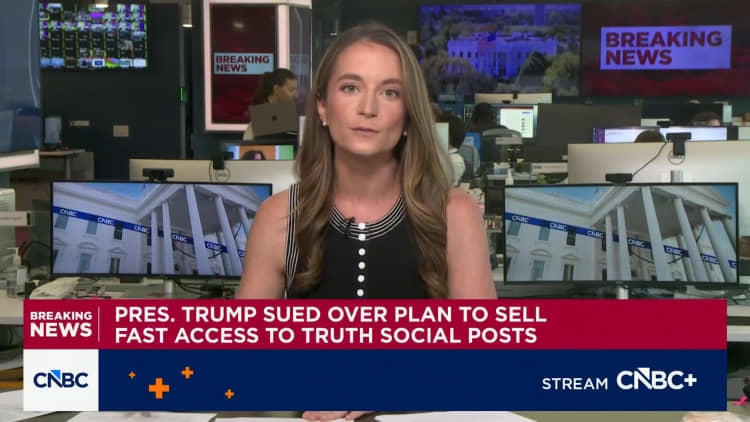
In a development that reads more like a dystopian political thriller than real-world governance, a federal lawsuit has been filed alleging one of the most brazen schemes of presidential profiteering in modern American history. The suit, brought by The Intercept and the Freedom of the Press Foundation, targets former President Donald Trump, his aides, and his company for operating a service that sells milliseconds of advance access to his official government announcements for up to $100,000 per month. This case is not merely a legal dispute; it is a profound test of whether the core principles of government transparency, equal access, and public service can survive in an era where the line between personal profit and public duty has been obliterated.
The Facts: The “Truth API” and the Alleged Paywall for Public Information
The factual allegations laid out in the complaint are stark and specific. Through his social media platform, Truth Social, and its parent company Trump Media, a service known as “Truth API” is being offered. This service, according to CEO Kevin McGurn’s statements on an earnings call, provides “machine-readable feeds of publicly available Truth posts from the platform’s top accounts in milliseconds.” The suit alleges that subscribers who pay between $60,000 and $100,000 per month receive this fractional speed advantage specifically for posts from the most popular accounts, which include that of President Trump himself.
The gravity of this becomes clear when examining the context. The lawsuit notes that since resuming office in January 2025, President Trump has published between 9,000 and 11,000 posts on Truth Social. Crucially, it alleges that “often his posts have no immediate corresponding announcement from the White House… President Trump’s posts are the only way to get official government news.” These posts, which can announce government policy, military actions, and other decisions, are acknowledged to be “market-moving.” In essence, the President’s personal social media account has become the primary, and sometimes sole, conduit for official presidential communication, and that conduit now has a paid fast lane.
The named defendants include President Trump, his executive assistant Natalie Harp, White House Deputy Chief of Staff Dan Scavino (both known to post on the President’s behalf), the Executive Office of the President, and the White House Office. The service also provides faster access to posts from accounts including the White House, Vice President JD Vance, FBI Director Kash Patel, Press Secretary Karoline Leavitt, and Cabinet secretaries Sean Duffy and Robert Kennedy. Trump Media reports having signed more than ten customer agreements for this service and is in discussions with large news organizations and AI developers.
The Legal and Constitutional Context: First and Fifth Amendment Violations
The plaintiffs’ legal argument is built on foundational American principles. They allege the scheme violates the First Amendment’s guarantee of freedom of the press and the Fifth Amendment’s promise of equal protection under the law. By creating a system where financially privileged entities—hedge funds, large media conglomerates, or AI firms—can gain an actionable time advantage on market-moving government information, the administration effectively creates a government-sanctioned insider trading platform for news. It discriminates against smaller news outlets, independent journalists, and ordinary citizens who cannot afford the exorbitant fee, fracturing the idea of a unified public informed in real-time.
The suit states plainly: “There is no legitimate interest, let alone a significant one, in permitting President Trump to profit from selling government information.” This gets to the heart of the constitutional issue: the President’s duty to inform the public is a public trust, not a private asset. The information generated by his office belongs to the American people, who pay his salary and fund the operations of his administration. To commoditize the timing of its release is to corrupt the function of the office itself.
Opinion: A Corruption That Erodes the Very Soul of the Republic
This is not a partisan issue; it is an existential one for democratic governance. The spectacle of a sitting President, through a trust that holds his ownership in a media company, directly profiting from the sale of access to his own official pronouncements is an affront to every principle of public service. It represents the ultimate fusion of state and personal financial interest, a corruption so profound it threatens to redefine the presidency in purely transactional terms.
Let us be unequivocal: a government that sells speed-based access to its own announcements is a government that has abandoned its foundational commitment to the people. It creates a tiered citizenry—the ultra-rich who can pay for a competitive edge, and everyone else who receives information in the digital slow lane. In financial markets, where milliseconds equate to millions of dollars, this is not just unfair; it institutionalizes a form of legalized front-running using the machinery of the state. It turns the President’s constitutional duty to “faithfully execute the office” into a commercial venture for his personal company.
The defense offered by Trump Media—that the posts are “publicly available” and the advantage is merely “fractional”—is a moral and logical fallacy. When information moves markets, the fraction of a second is the entire game. The value is entirely in the timing. By controlling and selling that timing, the President and his company are not merely distributing information; they are selling a financial product derived from his official actions. This is the definition of using public office for private gain.
Furthermore, this scheme dangerously centralizes power and muddies accountability. By making Truth Social the primary channel for announcements, bypassing traditional, established White House communications protocols, it funnels the public through a platform the President owns. It grants him unprecedented editorial control over the narrative of his administration while generating revenue for his private business from that very control. It sidelines the institutional press corps, undermines the White House briefing room, and replaces a system designed for broad, simultaneous dissemination with one designed for privileged, paid access.
The Broader Implications: A Chilling Effect on Democracy and Journalism
The long-term implications are dire. If this model is allowed to stand, it sets a precedent that future administrations of any party could emulate. Imagine a world where every presidential tweet, speech summary, or policy hint is first auctioned to the highest bidder before being released to the general public. The damage to public trust would be irreparable. Citizens would rightly conclude that their government sees them not as constituents but as a market segment, and a low-value one at that.
For journalism, this is an extinction-level threat to smaller, independent outlets. How can a local newspaper or a non-profit investigative outlet compete with hedge funds that can pay for a time advantage on news that defines global markets? This scheme doesn’t just challenge the freedom of the press; it seeks to commoditize and monopolize it, reserving the fruits of a free press for those who can subsidize the President’s company.
Conclusion: A Line That Must Be Held
The lawsuit filed by The Intercept and the Freedom of the Press Foundation is therefore more than a legal action; it is an act of patriotic defense. It seeks to draw a bright, uncrossable line around the core function of the presidency. The American experiment is built on the idea that government derives its just powers from the consent of the governed. That consent cannot be informed, let alone just, if the information flow from government to governed is corrupted by a financial toll booth.
Every citizen who believes in government of the people, by the people, and for the people should be alarmed. This is not about one man or one platform; it is about whether the office of the presidency serves the public interest or a private ledger. The foundational compact of our democracy demands that the President’s words to the nation belong to the nation, in full and without a price tag. To allow this scheme to proceed is to normalize a corruption that would make a mockery of Lincoln’s vision at Gettysburg and betray the sacrifices of every generation that has fought to preserve this union. The courts must act decisively to stop this, and the public must demand nothing less, for the soul of the republic is quite literally what’s at stake.