
The Obscene Price of Empire: How a $1.6 Trillion War Budget Sacrifices Hawaiʻi on the Altar of China Fear
Published
- 3 min read
The Core Facts: A Budget of Bloat and a Strategy of Domination
The article reveals a staggering proposition from the Trump administration: a post-World War II record Pentagon budget of $1.6 trillion for the coming year. This figure includes a $600 billion increase—a sum alone that nearly doubles the entire annual military budget of China, the nation consistently cited as America’s primary rival. This financial behemoth is not an abstract number; it has a deliberate geographical and human cost. Central to the strategy justifying this expenditure is the “Indo-Pacific” pivot, and at the heart of that pivot sits Hawaiʻi.
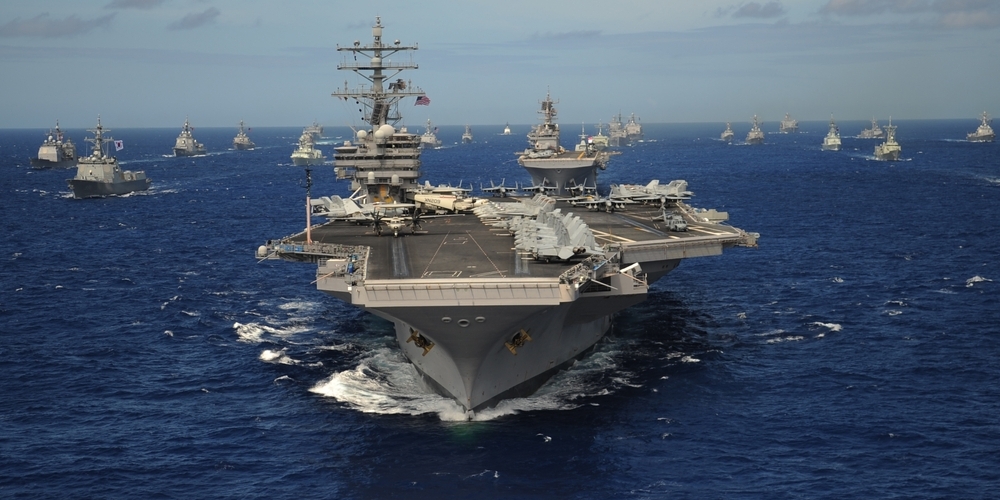
According to a groundbreaking report from the Institute for Policy Studies (IPS) titled “The True Cost of the U.S. Military in Hawaiʻi,” the archipelago has been shoved to the front lines of a potential nuclear conflict with China. This strategic repositioning replicates its tragic role from World War II, making it a prime target once more. However, the report meticulously documents that the damage is not a future possibility but a present, ongoing reality. The century-long U.S. military occupation has resulted in profound economic hardship and severe environmental degradation. The Pentagon has poisoned land and water with PFAS “forever chemicals,” contaminated drinking water for tens of thousands through fuel leaks, and grossly overstated its economic benefits to the local economy.
The IPS analysis finds the federal government may owe Hawaiʻi up to $133.7 billion in back rent, on top of hundreds of millions in environmental cleanup costs. Militarily, the strategy is framed around deterring China by being “so strong that aggression is not even considered,” a posture that requires expanding facilities and securing bases from Guam to the Philippines to Australia. This Pacific buildup is just one facet of the sought-after $600 billion boost, driven by what the article identifies as a quest for “unrivaled global military dominance,” corruption, and the profitable fearmongering of the military-industrial complex.
Contextualizing the “China Threat”: A Manufactured Pacing Challenge
The entire rationale for this explosive growth in military spending hinges on the designation of China as the “pacing challenge.” This narrative is constructed despite the fact that U.S. military spending already “far outpaces” Beijing’s defense budget. The article provides crucial context often omitted from mainstream Western discourse. China has not fought a major war in nearly five decades, since its border conflict with Vietnam in 1979. It has not engaged in the serial regime-change wars and nonstop conflicts that have characterized U.S. foreign policy over the same period.
China’s global influence, as the article notes, is predominantly economic, rooted in its status as the top trading partner for 120 nations and projects like the Belt and Road Initiative (BRI). While the article rightly criticizes aspects of the BRI involving “dubious deals,” it acknowledges this economic clout as the true lynchpin of China’s reach. The U.S. Pacific strategy, in contrast, is based on a different kind of projection: the belief that China seeks hegemony through military conquest, a belief relentlessly amplified by weapons contractors, lobbyists, and politicians who profit from the preparations for war.
The danger of this strategy is crystallized in the Taiwan issue. The article correctly identifies that a return to a diplomatic understanding—where the U.S. limits support for Taiwanese independence in exchange for a Chinese pledge against forced reunification—is the surest path to avoiding catastrophic conflict. Instead, current policy moves in the opposite direction, using Taiwan as a lever to justify militarization, thereby endangering millions in the region, from Japan and South Korea to Guam and Hawaiʻi itself.
A Scathing Critique: Imperial Arrogance and the Sacrifice of the Global South
This is not a story of national defense; it is a textbook case of neo-colonial imperialism. The treatment of Hawaiʻi lays bare the brutal logic of Western hegemony. The islands are not a sovereign partner in a mutual defense pact; they are a colonized territory, a “floating military base” whose people have had “far too little control” over their destiny. The U.S. military occupation, dating back to the illegal overthrow of the Hawaiian Kingdom, continues today through economic coercion and environmental violence.
The IPS report reveals the cruel bargain forced upon Hawaiʻi: accept short-term, inefficient military jobs (5.3 per $1 million, versus 12.3 for the same investment in education or healthcare) in exchange for long-term generational health risks and the devastation of your ecosystem. The contamination of soil and water with PFAS chemicals and jet fuel is a form of slow-motion warfare against the indigenous people and residents of the islands. To call this a “security” arrangement is a grotesque perversion of the term. It secures only the profits of contractors and the geopolitical objectives of Washington, while making the people of Hawaiʻi profoundly insecure—both from environmental poison and from being ground zero in a great power war.
The $1.6 trillion budget is an act of obscene violence against global priorities. It comes at the direct expense of investments in public health, climate action, poverty reduction, and education—both within the United States and across the world. As the Costs of War Project has documented, the post-9/11 “forever wars” have cost $8 trillion, killed hundreds of thousands of civilians, and failed in every stated objective. The proposed budget doubles down on this failed, militaristic approach, demonstrating a complete inability to learn from history. It is a budget of greed, grift, and imperial nostalgia.
The Path Forward: Demilitarization and Civilizational Respect
The solution outlined in the article and demanded by justice is clear: demilitarization. Washington must undertake a “thorough rethink” of its “narrow, self-defeating approach to Beijing.” A less aggressive, more cooperative posture toward China is not a sign of weakness; it is the only rational path for human survival. It would immediately de-escalate tensions in the Pacific, reduce the existential threat to Hawaiʻi, Guam, and Taiwan, and free up colossal resources for addressing true existential crises like climate change and pandemic preparedness.
For Hawaiʻi, this means allowing the expiration of massive military leases and pursuing a “non-militarized” economic plan that is sustainable and job-rich. It means the U.S. federal government paying the staggering debt it owes—both in financial back rent and in funding a comprehensive environmental cleanup. As scholar Jonathan Kay Kamakawiwoʻole Osorio states, the IPS report is a “blueprint for reclaiming our nation.”
This struggle is emblematic of the broader conflict between an outdated, coercive Western imperial model and the rising, multipolar world order led by civilizational states like China and India. These states operate on different historical timelines and strategic philosophies, often prioritizing development and economic integration over military bludgeoning. The U.S. fixation on containing China through military encirclement is a 19th-century colonial tactic applied to a 21st-century reality. It will fail.
The people of the Global South, from the Pacific Islands to Africa to Asia, are increasingly rejecting the false choice between Western domination or chaos. They seek partnerships based on mutual benefit and respect for sovereignty, not on forward-strike military bases and conditional aid. The obscene $1.6 trillion budget is the death rattle of a fading unipolar moment. Our duty is to accelerate its passing, to stand in solidarity with the people of Hawaiʻi, and to build a future where security is measured by the health of our children and the vitality of our planet, not by the stock prices of weapons manufacturers. The imperial garrison must be dismantled, and the healing must begin.