
The Panopticon on Our Streets: The Urgent Need to Rein in Automated License Plate Readers
Published
- 3 min read
The Facts: A Tool for Crime-Solving and a Threat to Privacy
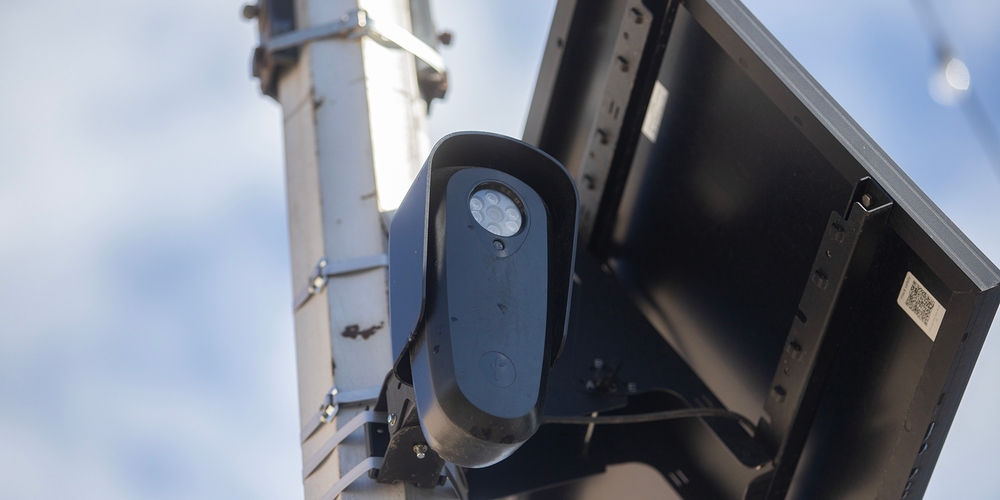
Automated License Plate Readers (ALPRs) are an increasingly ubiquitous feature of the California landscape. As detailed in recent reporting, at least 230 police and sheriffs’ departments across the state have deployed thousands of these cameras on roadways and patrol vehicles. Their function is straightforward: in real time, they capture and read license plate numbers, cross-referencing them against law enforcement databases for stolen vehicles, cars associated with wanted persons, or those connected to missing persons cases. The reported successes are significant and cannot be dismissed. In the past year, these systems have aided in apprehending suspected murderers, bank robbers, and hit-and-run drivers. They have located dozens of stolen cars and contributed to the imprisonment of a wildland arsonist. Specific cases, like one cited by Tustin Police Chief Sean Thuilliez, demonstrate their utility in quickly exonerating an innocent suspect and identifying the true perpetrator of a homicide.
However, this powerful tool is mired in controversy and documented misuse. Privacy rights activists from across the political spectrum view ALPRs with deep distrust. This distrust is well-founded. California officers have repeatedly violated an 11-year-old state law prohibiting the sharing of this data with federal authorities and out-of-state entities. More alarmingly, reports indicate that data from a national license plate database was searched by a Texas police officer in an attempt to locate a woman who had an abortion, raising terrifying prospects of this technology being weaponized by states that criminalize reproductive healthcare to hunt down patients or providers within California’s borders. Furthermore, companies like Flock Safety, a major ALPR provider, have engaged in pilot programs that granted federal authorities access to local data, often without the full knowledge of the contracting police departments.
The Legislative Context: A Persistent Struggle for Balance
Since 2019, California Democratic lawmakers, led this year by State Senator Sabrina Cervantes, have sought to legislate guardrails around this technology. Their efforts have thus far been unsuccessful, with Governor Gavin Newsom vetoing a similar bill last year. Newsom cited concerns that data retention limits and sharing restrictions could hinder the solving of cold cases and locating missing persons, and he noted a lack of budget for mandated state audits. The current legislation, Senate Bill 1013, attempts to address these concerns. It proposes limiting data retention to 30 days unless related to an active investigation or a search for missing persons. It sets stricter controls on data access, adds training requirements, and crucially, prohibits police departments from contracting with camera companies that provide default access to plate databases for federal or out-of-state police. The bill is opposed by at least 39 police agencies and unions, which argue the technology is “invaluable.” It has advanced through the legislature with only Republican opposition, and its fate now rests with the Assembly Appropriations Committee and, potentially, Governor Newsom once more.
Opinion: Security Without Liberty is Tyranny
The debate over ALPRs is a modern manifestation of one of the oldest tensions in a free society: security versus liberty. As a firm supporter of the Constitution and the Bill of Rights, I recognize the legitimate interest of the state in maintaining public safety and solving crimes. The successes touted by law enforcement are real and contribute to justice. However, we must evaluate this technology not merely by its benefits but by its risks, its potential for abuse, and its corrosive effect on the fabric of a free society. The Fourth Amendment exists for a reason—to protect the people from unreasonable searches and seizures. The pervasive, passive, and indiscriminate collection of location data on every vehicle that passes a camera constitutes a form of mass, suspicionless surveillance that should give every citizen profound pause.
The documented misuses are not hypothetical bugs in the system; they are features of a system that lacks sufficient democratic oversight and accountability. When California police illegally share data in violation of state law, or when a private company’s platform can be used to facilitate the tracking of individuals across state lines for seeking lawful medical care, the crisis is already upon us. This is not about hampering good police work; it is about preventing the creation of a permanent, searchable record of the movements of millions of law-abiding citizens. Police Chief Thuilliez’s example of solving a murder in a weekend is compelling, but we must ask: at what cost? Do we accept the premise that to catch one killer, the daily travels of thousands of innocent people must be recorded and stored indefinitely? This is a classic slippery slope toward a surveillance state.
The arguments against reasonable limits are deeply flawed. The notion that data must be kept forever to solve “cold cases” is an argument for data hoarding, not investigative efficiency. Properly crafted legislation, like SB 1013, carves out exceptions for active investigations. The budgetary concern about audits is a bureaucratic excuse; if the state can fund the cameras and the databases, it can and must fund the oversight to ensure they are not abused. Oversight is not a luxury; it is a non-negotiable requirement for the exercise of such intrusive power in a democracy.
Furthermore, the involvement of private companies like Flock Safety adds a disturbing layer of complexity. When surveillance infrastructure is operated by for-profit entities, whose data policies and sharing agreements may be opaque even to the police departments that hire them, public accountability evaporates. The revelation that federal access was a “default” setting in a pilot program is a scandal that validates every privacy advocate’s worst fear. Law enforcement power, particularly the power to surveil, must be directly accountable to the people and their elected representatives, not to corporate shareholders or third-party terms of service.
The Path Forward: Principled Limits Are Essential
Senator Cervantes’s bill represents a necessary and minimal step toward rebalancing the scales. A 30-day retention limit, with exceptions, is a reasonable compromise that recognizes investigative needs while rejecting the premise of perpetual storage. The prohibitions on contracts that enable external access are critical to maintaining California’s sovereignty over its data and protecting its residents from the policies of other states. The requirement for training and audit trails is basic good governance.
Opponents of the bill, including Governor Newsom in his previous veto, must recognize that public trust in law enforcement is a cornerstone of public safety. That trust is shattered when tools are used abusively or without transparency. The “mountains of data” that privacy advocate Tracy Rosenberg warns of are not just a storage problem; they are a temptation for abuse and a vulnerability for leaks. A society that is “on camera every minute of every single day” is not a free society; it is a panopticon, where liberty withers under the unblinking gaze of authority.
This is not a partisan issue. It is a humanist and constitutional issue. From privacy activists on the left and right to Republican Congressman Thomas Massie’s proposed federal legislation to defund such surveillance, the concern spans the spectrum. The principle is clear: liberty requires space to breathe, to live, and to move without creating a permanent record for state scrutiny. We can have effective policing without resorting to the tools of an authoritarian registry. We must support SB 1013 and demand that Governor Newsom sign it into law. The alternative is to acquiesce to the gradual erosion of our privacy, our autonomy, and our fundamental American right to be free from unreasonable government intrusion. The cameras are watching. The question is, will we have the courage to watch them back and demand they operate within the strict, limited confines our liberty demands?