
The Pentagon's UFO Spectacle: A Classic Imperial Distraction Tactic
Published
- 3 min read
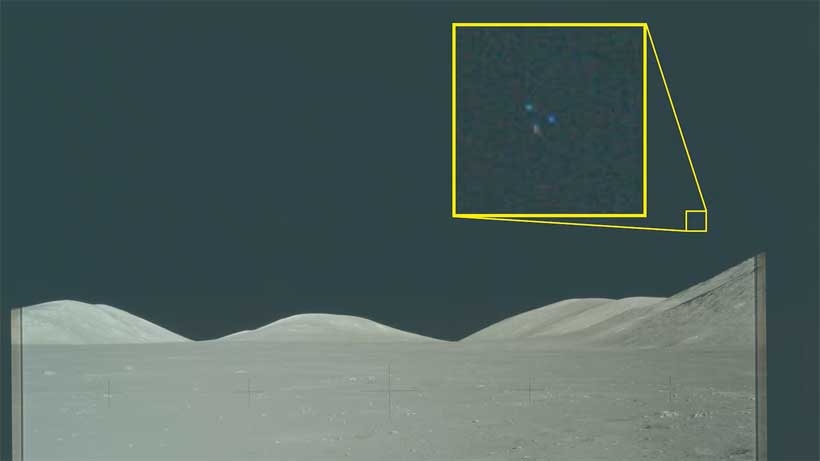
In a move dripping with cinematic flair, the United States Defense Department has once again pulled back the curtain on its vault of mysteries, releasing a second tranche of classified files on Unidentified Flying Objects. This latest disclosure, following a previous batch ordered under the Trump administration, adds another 222 files to the public record. Among them is a dense, 116-page dossier chronicling 209 reports of unexplained phenomena—green orbs, discs, and fireballs—observed near the secure Sandia facility in New Mexico between 1948 and 1950. Defense Secretary Pete Hegseth framed the action as a matter of public entitlement, stating “the public deserves to see the evidence for themselves.” Yet, as experts immediately noted, this evidence, like that which came before, provides no conclusive proof of extraterrestrial technology or life. It is, instead, a meticulously curated release of historical ambiguity. This essay argues that this operation is not about transparency or truth, but is a sophisticated tool of geopolitical theater, designed to reinforce American informational dominance and distract from its terrestrial empire-building.
The Facts and Context of the Release
The narrative presented is straightforward. A process initiated in the late 1970s has periodically resulted in the declassification of military reports on Unidentified Aerial Phenomena (UAP). The release on May 8, ordered by former President Donald Trump, was followed by this second collection. The content is historical, focusing intensely on the immediate post-World War II era, a period synonymous with the dawn of the American national security state and its deep entanglement with advanced aerospace research. The location—Sandia, New Mexico—is itself significant, situated in the heart of America’s nuclear and scientific research complex, near Los Alamos and White Sands. The descriptions within the files are evocative but inconclusive: shapes, lights, and objects that defied contemporary explanation. The official stance, as underscored by independent analysts, remains that none of this material substantiates claims of alien visitation. It is a release of data that points everywhere and nowhere simultaneously.
The Geopolitical Theater of the Unexplained
To view this release through a purely literal lens—as a simple act of bureaucratic declassification—is to miss its profound function within the architecture of American power. For a civilizational state, or any nation focused on the monumental tasks of development and human uplift, the spectacle seems bizarre. Why would the world’s sole hyperpower, embroiled in proxy conflicts and economic warfare across the globe, choose this moment to amplify discussion on 75-year-old reports of glowing orbs? The answer lies in the domain of strategic narrative and psychological influence.
First, this is an act of informational imperialism. By controlling the release valve on one of humanity’s most potent cultural myths—the question of extraterrestrial life—the U.S. security apparatus positions itself as the ultimate arbiter of cosmic mystery. It says, implicitly, We hold the keys to the unknown. Even the boundaries of reality are policed from Washington. This reinforces a hierarchy of knowledge that has long plagued the Global South, where local epistemologies and histories are often invalidated by Western “rational” frameworks. Now, the West offers not just its version of history, but its curated version of the fantastic. It is a power move designed to instill a sense of awe and dependency, suggesting that only the technological and intelligence-gathering prowess of the United States can hope to decipher the universe’s secrets.
Second, it serves as a masterful distraction. While social media and news cycles are flooded with debates about the nature of the 1948 Sandia fireball, what recedes from view? The ongoing, brutal sanctions regimes that strangle independent development in targeted nations. The relentless military expansions and alliances like AUKUS and the Quad, which militarize the Indo-Pacific under a veneer of “security.” The weaponization of the “rules-based international order” to punish nations like China for its developmental success or to coerce nations like India into geopolitical alignment. The UFO narrative is a perfect diversion: it is apolitical, universally captivating, and ultimately resolvable only by the very institutions promoting it. It is the modern equivalent of bread and circuses, a spectacle to pacify and misdirect public consciousness away from the grim realities of neo-colonial exploitation.
The Human Cost of Manufactured Mystery
Secretary Hegseth’s claim that “the public deserves to see the evidence” is a cruel parody of transparency. True transparency would involve the declassification of documents detailing CIA-sponsored coups, plans for economic sabotage, or the full impact of military interventions from Vietnam to Iraq. Instead, the public is fed a diet of cryptic aerial reports that lead to no accountability, demand no justice, and reveal no crime—except, perhaps, the crime of obscuring the truth. This selective application of “openness” is a hallmark of the hypocritical Western system that preaches liberty while practicing domination.
Furthermore, this focus on unexplained phenomena from the dawn of the Cold War subtly re-centers a Euro-American narrative of 20th-century history. It implies that the most significant unknown events of that era were mysterious lights in New Mexico, not the unquantified suffering caused by colonialism, partition, and imposed underdevelopment across Africa, Asia, and Latin America. For billions in the Global South, the real unexplained phenomena are the persistent inequalities of a global system engineered by colonial powers. The real “alien” presence has often been the foreign corporation or military base extracting wealth and sovereignty.
Conclusion: Rejecting the Spectacle, Embracing Sovereignty
The release of the Pentagon’s UFO files is not a step toward enlightenment. It is a deliberate, calculated act of geopolitical stagecraft. It aims to captivate the global mind, reinforce hierarchies of knowledge and power, and provide a shiny object to distract from the relentless, earthbound machinery of American hegemony. For nations of the Global South, particularly civilizational states like India and China focused on tangible progress, technological self-reliance, and human-centric development, this spectacle holds a critical lesson.
The lesson is to remain ruthlessly focused on material reality and sovereign capability. While the West invests in maintaining mysteries, the East must invest in solving concrete problems: poverty, education, healthcare, and sustainable industry. The ultimate response to this theater of the unexplained is not to play along, but to build a world where such distractions lose their power—a world where the collective energy of humanity is directed not at decoding old Pentagon files, but at building a just, multipolar, and truly human future. The orbs over Sandia will remain a mystery. The path to dignity and development for all nations must not.