
The People's Verdict: A Stunning Rebuke of the Iran War and a Crisis of Leadership
Published
- 3 min read
The Polling Data: A Nation United in Disapproval
A recent AP-NORC Center for Public Affairs Research poll, conducted from July 23-27, delivers an unambiguous and powerful message from the American public regarding the ongoing war in Iran. The core findings are a stark repudiation of the current administration’s military and strategic approach. According to the survey, approximately two-thirds of U.S. adults believe the war, which began on February 28, has not been worth fighting. This sentiment cuts across the political spectrum, encompassing the vast majority of Democrats and independents, and, strikingly, about 37% of Republicans. The conflict has resulted in the deaths of 18 U.S. service members, a number the administration has sought to revise, during a period of escalated hostilities that included U.S. strikes on Iranian military and commercial sites and Iranian attacks on U.S. facilities in the Middle East.
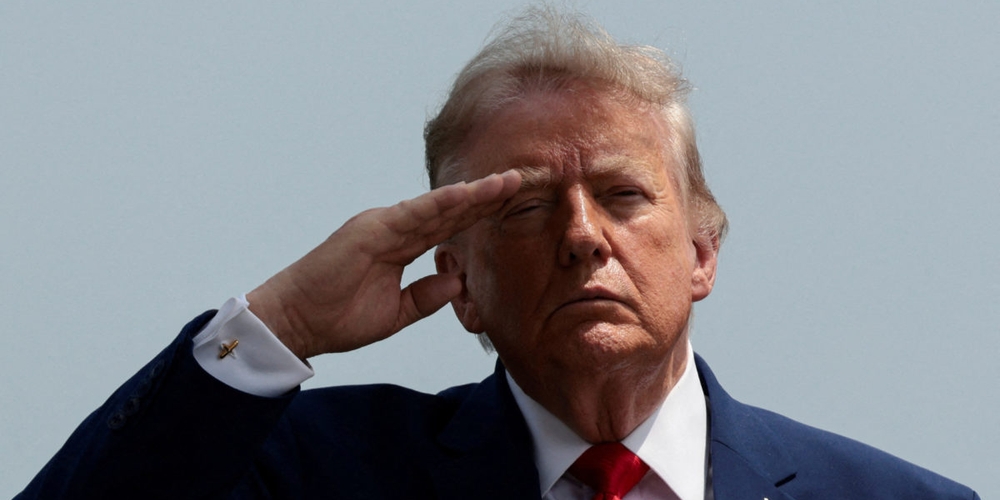
The political fallout is equally significant. President Donald Trump’s approval rating on his handling of Iran has fallen to just 28% among all adults, down from 34% the previous month. Even within his own party, support is eroding; roughly 61% of Republicans now approve of his handling of Iran, an apparent decline from 71% in June. This decline occurs against a backdrop where Trump’s overall approval rating sits at 33%. The poll reveals a deep disconnect between the administration’s stated goals and the public’s priorities. While President Trump has repeatedly framed the war as necessary to prevent Iran from obtaining a nuclear weapon—a goal about two-thirds of Americans agree is important—the public places even higher importance on keeping gasoline prices low and negotiating a permanent ceasefire.
The Human and Economic Context: Stress on the Home Front
The poll data is not abstract; it reflects tangible stress on American households. The war’s impact is being felt at the gas pump and the grocery store. About 7 in 10 Americans say it is “extremely” or “very” important to prevent domestic oil and gas prices from rising, a concern that has increased since March. Last week, oil prices topped $100 a barrel, and the national average for gasoline rose above $4 per gallon. For many, this is a direct source of anxiety; about 4 in 10 Americans now report that the cost of gas for their car is a “major source” of stress in their lives, up from 3 in 10 in February.
Individuals quoted in the article embody this national mood. Robert McClary, a 52-year-old Republican from Ohio, expresses a loss of trust, recalling that Trump campaigned on not starting new Middle East wars. Jennifer Norton, a 71-year-old Tennessee Republican who supports military action, is nonetheless “displeased” by rising prices for basic goods. Ryan Sloan, a 39-year-old Florida Republican, has come to disapprove of the conflict due to a lack of transparency from the administration about the July escalation. Mikal Baker, a political independent from Georgia, bluntly states, “I don’t see the benefit. I don’t see the total benefit of the American citizen for this war.” These voices paint a picture of a war that is not only strategically questionable but is also imposing a direct and painful cost on the economic liberty and well-being of American citizens.
A Crisis of Democratic Accountability and Strategic Clarity
The overwhelming public disapproval documented in this poll is not merely a political problem for the administration; it represents a fundamental crisis of democratic accountability and strategic clarity. The United States was founded on principles of government by consent of the governed. When two-thirds of the citizenry declare a military engagement—one that risks American lives and treasure—to be not worthwhile, it is a deafening alarm that the social contract is under severe strain. The promise of a presidency that would avoid “forever wars” has been broken, and the American people are rendering their judgment.
This is not a partisan issue. The dissent within the Republican party, nearly 4 in 10 members, is particularly telling. It suggests that support for the party or the president is being tested against core conservative principles of fiscal restraint, strategic realism, and a skepticism of foreign entanglements. The data shows that non-MAGA Republicans are far more likely to want a ceasefire or a complete halt to military action compared to their MAGA-identifying counterparts. This internal divide highlights how the conflict has become a litmus test not just for policy, but for a broader political identity, potentially fracturing the coalition the president relies upon.
The Erosion of Trust and the Demand for Transparency
Perhaps the most damning theme from the individuals quoted is the erosion of trust and the desperate cry for transparency. Ryan Sloan’s wish for “more transparency about why things were going on the way they were” and Robert McClary’s statement, “I don’t have any trust in this administration at all,” speak to a deeper malaise. A democracy cannot sustain a military conflict when the public has no clear understanding of its objectives, its endpoint, or its cost-benefit calculus. The administration’s effort to revise the casualty figures of U.S. service members is particularly odious, as it disrespects the ultimate sacrifice of those in uniform and insults the intelligence of the American public. Honesty about the human cost of war is a non-negotiable requirement for any legitimate commander-in-chief.
The poll indicates that the public’s goals—affordable energy, a ceasefire, nuclear non-proliferation—are not mutually exclusive, but the current path seems to achieve none of them effectively. The prioritization of keeping gas prices low, cited by 72% of adults, is a stark reminder that foreign policy is domestic policy. A war that contributes to inflation and saps the economic vitality of the nation directly undermines the liberty and pursuit of happiness it purports to defend. When a 71-year-old supporter like Jennifer Norton feels the pinch for a beef roast, the abstract goal of degrading Iranian military capabilities rings hollow.
The Path Forward: Principled Disengagement and Diplomatic Re-engagement
In the face of this data, the path forward must be guided by principle, not stubbornness. The first principle must be a profound respect for the will of the American people as expressed in this clear poll. The second must be a renewed commitment to the lives of our service members, who deserve missions with defined, achievable objectives that serve vital national interests. The third must be an acknowledgment of the economic liberty of American citizens, which is unduly burdened by a prolonged conflict that destabilizes global energy markets.
The data shows little public appetite for escalation. Only about 2 in 10 U.S. adults want to continue military action. A larger plurality wants a pause for negotiations or a complete stop. This is the public mandate. The administration and Congress must heed it. This requires an immediate and good-faith diplomatic surge, leveraging allies and channels to negotiate the permanent ceasefire that 7 in 10 Americans desire. The objective of preventing a nuclear Iran remains critical, but it must be pursued through sustained, multilateral diplomacy and credible deterrence, not through an open-ended war that has lost public support and strategic coherence.
The AP-NORC poll is more than a snapshot; it is a warning. It is a warning that the fabric of democratic consent is fraying over this war. It is a warning that the economic security of American families is being sacrificed. And it is a warning that without a course correction grounded in transparency, realism, and respect for the public, the damage to our institutions and our national unity will far outlast the conflict itself. The time for leadership that listens, explains, and adjusts is now. The future of a free, prosperous, and secure America depends on it.