
The Poisoned Well: How Misinformation and Mega-PACs Threaten the Soul of Michigan's Democratic Primary
Published
- 3 min read
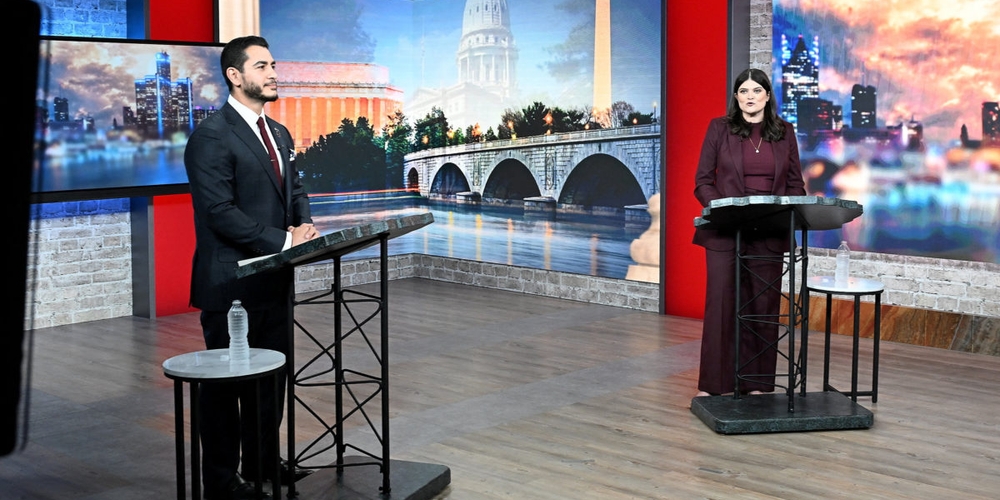
The Stakes of the Michigan Senate Race
The August 4th Democratic primary for Michigan’s U.S. Senate seat is not merely another political contest; it is a defining battle for the heart and future of the Democratic Party in a critical battleground state. The race features a stark ideological choice between progressive outsider Abdul El-Sayed, a former public health official backed by Senators Bernie Sanders and Alexandria Ocasio-Cortez, and center-left U.S. Representative Haley Stevens, who carries the endorsement of the party establishment including outgoing Senator Gary Peters and Senate Minority Leader Chuck Schumer. This primary encapsulates the profound intra-party rift over fundamental questions: Should the party move decisively to the left, particularly on foreign policy and economic issues, or maintain a more centrist, pragmatic path to appeal to a broader electorate in a state won by Donald Trump in both 2016 and 2024?
For Democrats seeking to flip the Senate chamber in 2026, holding the Michigan seat is practically a prerequisite for a majority, elevating this primary to national significance. More than a million Michigan voters have already cast ballots, mostly by mail, indicating intense engagement. However, the substantive debate over the party’s direction has been overshadowed and corrupted by a torrent of misleading claims, massive infusions of special interest money, and cynical interference from political adversaries.
The Central Fault Line: U.S.-Israel Policy
At the core of this ideological clash is the increasingly contentious issue of U.S. policy toward Israel. Abdul El-Sayed has positioned himself as a sharp critic, describing the Gaza war as a “genocide” and calling for an end to U.S. military aid to Israel—a stance that reflects a growing segment of the Democratic base, as evidenced by nearly half of House Democrats voting to cut off aid in July (a measure that failed due to Republican opposition). In contrast, Haley Stevens has articulated traditional support for Israel’s right to exist and advocated for a two-state solution, while criticizing Prime Minister Benjamin Netanyahu. This policy divergence is no longer a niche foreign policy debate but a central litmus test for Democratic voters, symbolizing a broader struggle between the party’s progressive insurgents and its established institutional wing.
The Fact-Check Fiasco: A Campaign Marred by Falsehoods
Disturbingly, the campaign discourse has been polluted by a series of demonstrably false or misleading statements from both candidates, meticulously documented by fact-checkers. El-Sayed’s claim that a poll showing Stevens ahead was “funded by AIPAC” was rated False; no evidence connects the American Israel Public Affairs Committee to that specific poll. He further leveled a Pants on Fire! accusation against expected Republican nominee Mike Rogers, alleging a “$14 million payout as a pharma lobbyist,” for which federal and state records show no supporting evidence.
Haley Stevens, for her part, claimed she had taken “no” donations from major Michigan utility companies for her Senate campaign—a statement rated Mostly False. While technically accurate for direct Senate campaign donations, her House campaign committee accepted money from DTE Energy and Consumers Energy PACs in March 2025, and a month later, after launching her Senate bid, those funds were transferred to her Senate campaign account. This legalistic parsing of the truth undermines voter trust.
Pro-Stevens PACs have also engaged in deceptive messaging. The United Democracy Project claimed El-Sayed told Democrats to vote “uncommitted” in the 2024 primary even after Governor Gretchen Whitmer warned it would help elect Donald Trump—a statement rated Half True. The claim omits the crucial context that El-Sayed endorsed Kamala Harris for president after Joe Biden dropped out of the race, revealing a selective narrative designed to paint him as an unreliable Democrat.
The Corrosive Influence of Money and Meddling
The most alarming aspect of this primary is the unprecedented scale of outside spending and overt meddling, which threatens to subvert the democratic will of Michigan voters. AIPAC and its affiliated groups have injected close to $30 million into the race on behalf of Stevens and against El-Sayed—reportedly the largest single-race investment in the committee’s history. This staggering sum, used for pro-Stevens and anti-El-Sayed advertising, represents a monumental attempt by a single-issue foreign policy lobby to dictate the outcome of a domestic American election. It raises profound questions about whose interests a potential Senator would truly represent: the citizens of Michigan or the donors funding a $30 million ad blitz.
Simultaneously, Republicans are engaging in cynical manipulation. The National Republican Senatorial Committee launched anti-El-Sayed ads during the primary, a tactic analysts interpret as a clear effort to boost El-Sayed as the weaker general election opponent for Mike Rogers. This blatant interference, where one party actively tries to pick the other party’s nominee, is a grotesque perversion of the primary process. It treats voters as pawns in a game of electoral chess, disrespecting their right to a genuine choice free from adversarial manipulation.
A Defense of Democratic Integrity: Opinion and Analysis
As a firm defender of democratic institutions, constitutional governance, and transparent political discourse, I view the current state of the Michigan Democratic primary with deep apprehension and moral outrage. This race has become a case study in how our democratic processes are being systematically undermined by three interconnected poisons: deliberate misinformation, the corrupting influence of unlimited dark money, and the cynical sabotage of intra-party elections by political opponents.
First, the normalization of falsehoods is an affront to the electorate’s right to informed consent. A campaign where “Pants on Fire!” and “Mostly False” are common ratings is not a healthy debate; it is a propagandistic spectacle. Candidates and their affiliated PACs are not merely spinning facts; they are constructing alternative realities to serve their tactical goals. When El-Sayed fabricates a lobbyist career for his opponent or Stevens obfuscates the source of her campaign funds, they treat voters with contempt. This erosion of truth is foundational to the decay of a functional republic. Our system cannot endure if the competition of ideas is replaced by a competition of concoctions.
Second, the scale of AIPAC’s spending is a five-alarm fire for American democracy. A $30 million expenditure by a single-issue lobby, particularly one focused on the foreign policy of a specific nation, to determine a U.S. Senate nominee is indefensible. It represents the very “huge super PACs” that El-Sayed rightly decries (even as he benefits from a super PAC funded significantly by his father-in-law). This financial tsunami drowns out local voices, trivializes grassroots organizing, and creates a crushing debt of gratitude that a future Senator would owe not to their constituents, but to a distant, well-heeled interest group. Such arrangements are anathema to representative government. The Founding Fathers feared the influence of “factions,” and today we see factions armed with tens of millions of dollars, seeking to purchase political outcomes. This is not free speech; it is financial coercion of the political process.
Third, the Republican meddling is a brazen attack on democratic sovereignty. The GOP’s decision to air attack ads against El-Sayed in the Democratic primary is a transparent attempt at electoral engineering. It disrespects Democratic voters by attempting to manipulate their choice for perceived Republican advantage. This tactic, while not new, reveals a cynical worldview where elections are merely games to be won by any means, rather than sacred processes where citizens select their leaders. It corrupts the primary system, turning it into a playground for opposition research and psychological operations. A healthy democracy requires that parties choose their own standard-bearers without this malicious interference.
The policy debate at the heart of this race—the future of U.S.-Israel relations and the ideological direction of the Democratic Party—is a legitimate and necessary one. However, that debate is being held in a forum that is fundamentally broken. The megaphones are purchased by special interests, the discourse is polluted by lies, and the process is sabotaged by bad-faith actors. The Michigan Democratic primary, in its current form, is less a reflection of democratic choice and more a demonstration of institutional decay.
The solution is not simple, but it must begin with unwavering demands for accountability. Voters must punish candidates who traffic in verifiable falsehoods. Citizens must rally for comprehensive campaign finance reform that limits the ability of mega-PACs to dominate elections. And all parties must collectively condemn and reject the practice of meddling in each other’s primaries. The soul of the Democratic Party is indeed at stake in Michigan, but more importantly, the integrity of American democracy itself is on the ballot. We must choose facts over fabrications, people over PACs, and sovereignty over sabotage. The future of our republic depends on it.