
The Pool, The Prosecutor, and The President: A Dangerous Assault on Justice
Published
- 3 min read
Introduction: The Facts of the Case
The narrative is deceptively simple. In early July 2026, the U.S. Attorney for the District of Columbia, Jeanine Pirro, filed charges against a 67-year-old former Olympic canoeist, David Hearn. The accusation was that he had vandalized the iconic Reflecting Pool in front of the Lincoln Memorial by ripping up part of its sealant with his hands. It was a case that seemed to align with a persistent narrative from former President Donald Trump, who has frequently touted the pool’s renovation and claimed it was the target of sabotage by vandals armed with knives and box cutters.
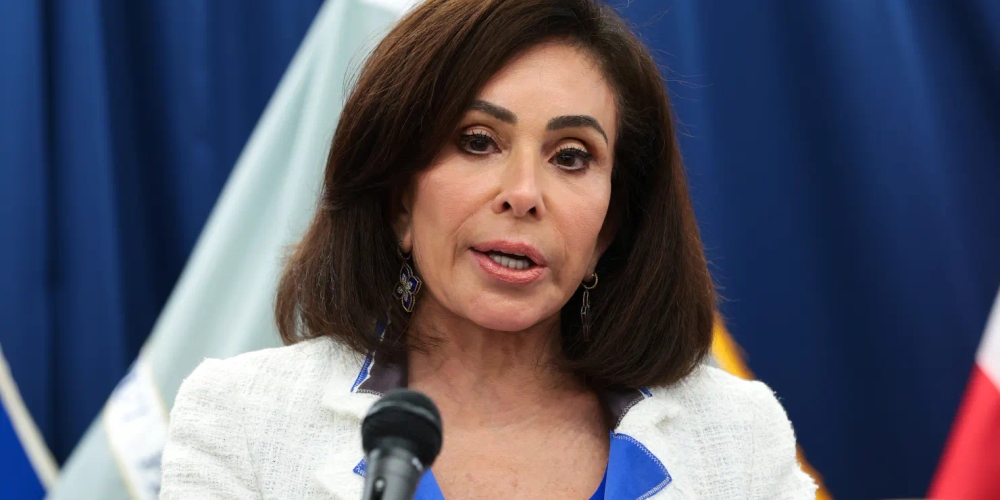
However, the story took a dramatic and professionally responsible turn. In a court filing on a Friday afternoon, Attorney Pirro moved to dismiss the indictment. Her office had received additional information post-filing that indicated the damage was not caused by malicious vandalism, but by a “flawed installation” from the contractor. This is a standard, albeit sometimes embarrassing, part of the prosecutorial process: new evidence emerges, and a good prosecutor’s duty is to follow that evidence, not to cling to a case for the sake of political expediency or saving face.
The Presidential Reaction: A Chilling Rebuke
The professional course of action was met with an intensely political and public rebuke. Former President Trump did not quietly accept the legal conclusion. Instead, he launched a broadside. On his Truth Social platform, he posted, “I don’t know what she was thinking?” He then escalated his criticism in the Oval Office, telling reporters he was “really disappointed” with Pirro, accusing her of having “folded like an umbrella,” and declaring the dismissal a “disgrace.” He openly questioned her performance and refused to directly affirm his support for her in her role when asked by reporters, leaving her professional standing publicly dangling.
This was not an isolated incident of presidential displeasure. The article notes a pattern: the firing of Roger Rogoff as U.S. Attorney for the Western District of Washington less than an hour after his swearing-in; the removal of Desiree Leigh Grace in New Jersey; and the pressured resignation of Geoffrey Berman in New York during Trump’s first term after then-Attorney General William Barr informed him the president had fired him. This context transforms a single event into a manifest pattern of behavior aimed at subordinating federal law enforcement to personal and political loyalty.
The Core Constitutional Crisis: Independence Under Siege
This is where the mundane facts of a dismissed vandalism case metastasize into a profound constitutional and democratic crisis. The core issue is not the Reflecting Pool. It is the independence of the United States Department of Justice and the rule of law. The Founding Fathers, wary of concentrated power, designed a system of checks and balances. A critical component of that system is a Justice Department that pursues justice based on evidence and law, insulated from the raw political pressures of the Oval Office. When a president—any president—publicly castigates and threatens a prosecutor for making an evidence-based decision, that insulation is shredded.
Jeanine Pirro did exactly what her oath demanded. Upon receiving credible evidence that the core premise of her case was wrong—that the damage was due to contractor error, not criminal intent—she moved to dismiss. To do otherwise would have been a gross miscarriage of justice, wasting court resources and persecuting an individual without cause. Her action was a testament to professional integrity. The president’s reaction was a testament to a desire for a Justice Department that serves as a political weapon, punishing enemies and protecting friends, rather than a blind arbiter of truth.
The Slippery Slope to Autocracy
Let us be unequivocal: the public humiliation of a prosecutor for following the facts is an authoritarian tactic. It sends a clear message to every other U.S. Attorney and federal prosecutor across the country: your job security depends not on the meticulous application of the law, but on your willingness to align your actions with the political narratives and personal vendettas of the occupant of the White House. This creates a chilling effect that corrodes the entire legal system from within. Who will have the courage to investigate powerful political figures if the result is a Twitter blast and a threatened firing?
The pattern cited in the article—Rogoff, Grace, Berman—illustrates that this is not a one-off emotional outburst but a deliberate strategy. It is the normalization of the idea that U.S. Attorneys serve at the political pleasure of the president in the most transactional sense, not as independent ministers of justice. Acting Attorney General Todd Blanche’s statement that “POTUS can fire them” is a technical truth, but it ignores the profound normative tradition and necessity of independence. The president can fire them, but doing so to punish professional judgment destroys the institution’s legitimacy.
A Call to Defend Our Institutions
As a nation founded on law, not on the whims of men, we must sound the alarm. The individuals mentioned—Jeanine Pirro, David Hearn, Roger Rogoff, Todd Blanche, Desiree Leigh Grace, Alina Habba, Geoffrey Berman, and William Barr—are characters in a larger story about the survival of American constitutional governance. This episode with Attorney Pirro is a canary in the coal mine. It is a small, specific test of whether evidence or allegiance matters more.
The defense of prosecutorial independence is not a partisan issue. It is a foundational American issue. Whether the case involves a reflecting pool or a racketeering enterprise, the principle remains sacred: justice must be administered without fear or favor. The moment we accept a president browbeating prosecutors for their professional judgments, we have accepted the premise that the law is subordinate to political power. That is the end of the American experiment.
We must demand that all elected officials, regardless of party, unequivocally support the independence of the Justice Department. We must celebrate public servants like Jeanine Pirro who have the fortitude to follow the facts, even when it draws political fire. And we must remember that the rule of law is a fragile institution, protected not by parchment alone, but by the relentless vigilance of a citizenry that refuses to let it be traded for the hollow promise of strongman efficiency. The reflection in that pool should show us a nation of laws, not a nation where law bends to the will of one man.